Stairlift Financing: Your Actual Options for Paying Without Draining Your Savings

Quick Takeaways:
- Stairlift financing is available through provider payment plans, home equity loans, VA grants, and state assistance programs.
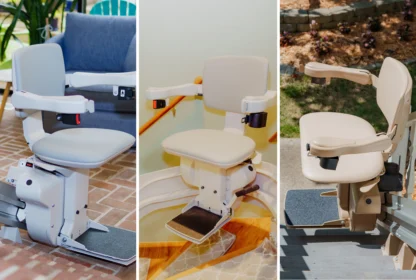
- Straight stairlifts typically run $3,000-$5,000 installed; curved models $8,000-$15,000+.
- Traditional Medicare does not cover stairlifts, but some Medicare Advantage plans and Medicaid waivers may help.
- A stairlift may qualify as a medical expense tax deduction if prescribed by a physician.
- Financing through a local provider typically includes installation, warranty, and service — costs that online-only purchases skip.
Stairlift financing is one of those topics where the internet tends to give you either a vague run-around or a list of options with no real numbers attached. If you found this page because someone in your household had a fall, a difficult doctor’s appointment, or a close call on the stairs, you deserve a straight answer. Here it is: yes, financing options exist, they are more accessible than most people expect, and this guide will walk through each one without hiding the math.
A stairlift is not an impulse buy. Most people do not go looking for one until something happens that makes the stairs feel genuinely unsafe. That means by the time you are researching, the urgency is real — and finding out the cost only after a sales call is the last thing you need. So let’s start with the numbers.
What Does a Stairlift Actually Cost Before You Finance Anything?
Before any financing conversation makes sense, you need a realistic price anchor. Here is what stairlift pricing typically looks like for a professionally installed unit:
- Straight stairlift (single straight run of stairs): $3,000 to $5,000 installed
- Curved stairlift (stairs with a landing or turn): $8,000 to $15,000+ installed
- Outdoor stairlift (weatherproof rail system): $4,000 to $6,500 installed
Those ranges account for installation, a standard warranty, and the consultation process. What pushes the number up is stair length, rail complexity, weight capacity requirements, and whether you want optional features like a swivel seat or remote controls.
One thing that often gets overlooked when comparing prices: buying a stairlift from a local installer is not the same thing as buying just the chair. When you work with a company like 101 Mobility, the price includes a certified installer, a warranty backed by someone you can actually call, and ongoing service if something needs adjustment. That context matters when you start comparing options.
Stairlift Financing Options: What You Can Actually Use
There is no single best way to finance a stairlift — the right option depends on your credit, homeownership status, military service history, and how quickly you need the equipment. Here is a clear breakdown of what is available.
Financing Through Your Stairlift Provider
Many local stairlift providers, including 101 Mobility, offer stairlift financing options that let you spread the cost over monthly payments. This is often the most straightforward path because it is handled in one place — no separate loan application, no HELOC paperwork, no third-party lender to coordinate with.
Terms vary by provider and by the financing partner they work with, but monthly payment plans on a mid-range straight stairlift can bring the out-of-pocket cost down to a manageable range for most budgets. Ask specifically about the interest rate, the loan term, and whether there is a prepayment penalty.
Home Equity Loans and HELOCs
If you own your home and have built up equity, a home equity loan or home equity line of credit (HELOC) is worth considering. Both let you borrow against your home’s value, typically at interest rates lower than personal loans or credit cards.
A home equity loan gives you a lump sum with a fixed repayment schedule. A HELOC works more like a credit line you draw from as needed. Either can work for a stairlift purchase, and the interest may be deductible depending on how the funds are used. Consult a tax advisor on that piece.
VA Grants and Benefits
For veterans, two federal programs are worth knowing about. The Specially Adapted Housing (SAH) grant and the Special Housing Adaptation (SHA) grant both fund home modifications for veterans with qualifying service-connected disabilities. Stairlifts and accessibility modifications often qualify. 101 Mobility’s VA mobility benefits page has more detail on navigating the process.
These grants do not need to be repaid, which makes them among the most valuable financing tools available to eligible veterans. The application process takes time, so if this applies to you, start sooner rather than later.
State and Local Assistance Programs
A number of states run grant or low-interest loan programs for aging residents who need home modifications to remain safely in place. These are often administered through Area Agencies on Aging, state housing finance agencies, or Medicaid Home and Community Based Services (HCBS) waiver programs.
The availability and terms vary significantly by state. Your first call should be to your local Area Agency on Aging (findable through eldercare.acl.gov). Some states also have Community Development Block Grant (CDBG) funds that flow through county programs and cover accessibility modifications.
Does Medicare or Insurance Cover Stairlift Financing?
This question comes up constantly, and the honest answer is: it depends on the coverage type, but traditional Medicare does not cover stairlifts.
Here is how different coverage types break down:
- Original Medicare (Parts A and B): Does not cover stairlifts. Stairlifts are not classified as durable medical equipment under Medicare’s definition.
- Medicare Advantage (Part C): Some plans include home modification benefits. Coverage varies widely by plan, so call your plan directly and ask specifically about stairlift or home safety equipment.
- Medicaid: Medicaid waiver programs in many states cover home modification equipment. Eligibility and scope vary by state.
- Long-term care insurance: Some policies include durable medical equipment or home modification coverage. Review your policy or contact your insurer.
If you are unsure what your plan covers, the question to ask is: does my plan cover home modifications or durable medical equipment for fall prevention? Getting a prescription or letter of medical necessity from a physician can sometimes strengthen a coverage request.
Is a Stairlift Tax Deductible?
Potentially, yes. A stairlift may qualify as a medical expense deduction under IRS rules if it is prescribed by a physician to address a medical condition. There is a key nuance: the deduction applies to the portion of the cost that does not increase your home’s value. Because stairlifts are generally considered medically necessary equipment rather than home improvements, they typically meet this condition. See our post on whether stairlift tax deductible status applies for a more detailed breakdown.
For 2024, you can deduct medical expenses that exceed 7.5% of your adjusted gross income. For many retirees, healthcare costs already push past that threshold, making the stairlift deduction worth claiming. Talk to a tax advisor about your specific situation.
Local Provider vs. Buying Online: Where Stairlift Financing Makes a Real Difference
If you have done any research online, you have probably seen lower prices from national wholesalers or direct-from-manufacturer sites. Here is what those prices typically exclude.
| Factor | Local Franchise (101 Mobility) | Online Wholesaler |
|---|---|---|
| Financing available | Yes — payment plans offered | Rarely |
| Professional installation | Included | Typically not included |
| Local warranty service | Yes — local tech on call | Ship-back or DIY |
| Ongoing repair support | Yes | Limited or none |
| Free in-home consultation | Yes | No |
| Total cost of ownership | Predictable with service included | Lower sticker, higher long-term risk |
The sticker price is only part of the math. A stairlift that costs $500 less upfront but requires you to coordinate your own installation, ship the unit back for warranty service, and pay out of pocket when something fails 18 months in is not actually the better deal. A local franchise partner builds the total cost of ownership into one relationship — and that is worth pricing into the comparison.
Frequently Asked Questions
What credit score do I need to finance a stairlift?
Requirements vary by lender, but most provider financing programs work with a range of credit profiles. If your credit is limited, home equity options or grant programs may be a better path than unsecured financing. Ask the provider directly about the credit requirements for their specific program.
How long does it take to get stairlift financing approved?
Provider financing can often be approved within a day or two. Home equity loans typically take two to four weeks. VA grants take longer — sometimes several months — so if you need the equipment quickly, a provider payment plan or short-term financing is the more practical starting point.
Can I rent a stairlift instead of buying one?
Yes. Rental options exist for situations where the need is temporary — after surgery, during recovery, or for a family member visiting. Rental costs vary but are generally far lower than a purchase. The tradeoff is that long-term rental costs can add up, so if the need is likely permanent, purchasing with financing usually makes more financial sense.
Are there stairlift financing options specifically for seniors on a fixed income?
Several programs are designed with fixed-income households in mind. State aging assistance programs, CDBG grants, and Medicaid waiver programs often use income thresholds to qualify applicants. VA grants for eligible veterans are also not income-dependent. A local accessibility provider can often point you toward programs in your specific area.
Does financing through a local provider cost more than going to a bank?
Not necessarily. Provider financing rates are competitive with personal loans and often more accessible than HELOCs for people who do not own their home or have limited equity. The real advantage of provider financing is convenience — one point of contact for the product, installation, and payment — not just the rate.
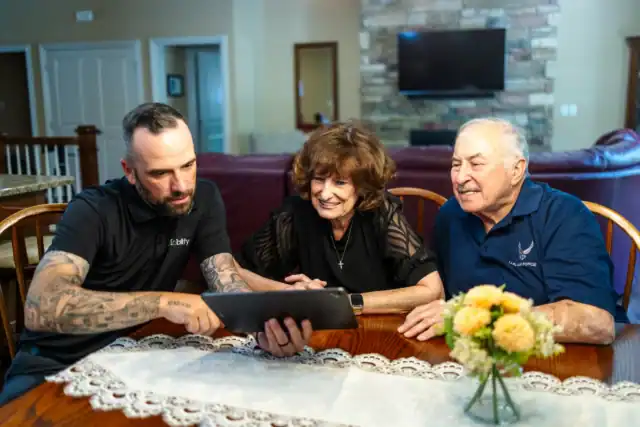
Ready to Talk Through Your Options?
| You now have a clear picture of what stairlift financing actually looks like — the numbers, the options, and the questions worth asking. 101 Mobility offers free in-home consultations with no pressure and no obligation, so you can walk through your specific staircase, budget, and timeline with someone local who knows the products. Schedule your free stairlift consultation today and get real answers before you commit to anything. |