Quick Takeaways:
- Staircase geometry determines the type. A straight stairlift only works on a straight, uninterrupted run of stairs.
- Curved stairlifts are custom-fabricated to your home’s exact measurements, which drives both cost and lead time.
- Straight installs can happen same-day. A curved model typically takes 2 to 6 weeks from measurement to installation.
- The cost gap is real. You are paying for a precision-built rail, not a brand premium.
- An in-home measurement is the only reliable way to confirm which type your staircase requires.
By the time most buyers reach this question, they have already settled on a stairlift. What they have not settled on is which kind. That might seem like a product preference, but it is not. The straight-versus-curved stairlift distinction is determined by the geometry of your staircase. There is one right answer for your home, and it is not a matter of taste.
Below is the engineering breakdown. Rail fabrication, installation differences, cost drivers, and a clear decision framework for each staircase type.
It Starts With Your Staircase Geometry
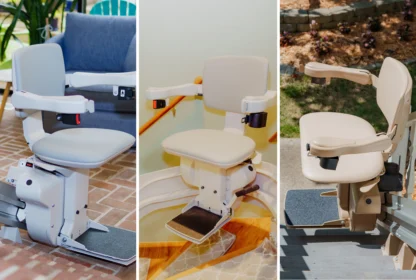
A straight stairlift requires a staircase that runs in one unbroken line from bottom landing to top. No turns. No intermediate landings. No curves. If your stairs qualify, a standardized rail is cut to length, mounted to the treads, and the unit can be operational the same day.
A curved stairlift is engineered around a custom-fabricated rail built to your staircase’s exact profile. It handles 90-degree turns, 180-degree switchbacks, intermediate landings, and helical configurations. If your home has an L-shaped or split-level staircase, a curved rail is not the premium option. It is the only one that fits.
Worth saying plainly: you are not choosing between two versions of the same product. The staircase tells you which category applies.
How the Rail Engineering Differs
Straight rails are production parts. They come from inventory in standard lengths, get cut on-site if needed, and mount to the treads without any custom fabrication. The installation process is fast because nothing is being built specifically for your home.
Curved rails are made-to-order. Before fabrication can begin, a technician comes to your home to capture precise measurements of every section of the staircase. The angles, the landing dimensions, the transition points. Those measurements drive a custom rail-bending process at the manufacturer’s facility. Bruno, one of the primary manufacturers 101 Mobility works with, uses precision bending equipment to ensure the carriage moves cleanly through every transition. That smooth ride is not about comfort features. It is a mechanical result of a rail built to the exact geometry of that particular staircase.
Straight Rail: What the Spec Looks Like
Standardized rail length, tread-mounted (not wall-mounted), folds flat when not in use. Because the rail ships from stock, installation is typically completed same-day or within 24 hours of delivery. For more on the timeline, see how long stairlift installation takes.
Curved Rail: What the Spec Looks Like
A curved stairlift begins with a measurement visit, not an installation appointment. After measurements are submitted to the manufacturer, production typically runs 2 to 6 weeks depending on configuration complexity. The rail arrives pre-formed to your staircase profile. Installation on delivery day is precise and predictable because the rail does not require any on-site modification. 101 Mobility manages the measurement visit, production coordination, and installation as one continuous process.
| Straight Stairlift | Curved Stairlift | |
| Rail type | Standardized length | Custom-fabricated to home |
| Staircase fit | Straight stairs only | Any configuration |
| Lead time | Same-day or next-day install | 2 to 6 weeks (fabrication) |
| Cost | Lower (standardized parts) | Higher (precision build) |
| Measurement visit | Not required | Required before fabrication |
Cost: What You’re Actually Paying For
A straight stairlift costs less because the rail is a production component. Nothing is built specifically for your home. That keeps manufacturing costs down and timelines short.
A curved stairlift costs significantly more because you are commissioning a one-off part. Not a premium brand tier. Not optional features. The cost reflects a rail engineered, bent, and fabricated to the geometry of your specific staircase. That work is priced into every curved unit regardless of brand. The curved stairlift pricing guide and the full stairlift pricing overview give real ranges by configuration so you can plan against actual numbers.
Installation Complexity and Timeline
A straight stairlift installation moves fast. The rail arrives ready to mount. A trained technician fits it to the treads, runs through calibration, and the unit is operational. Most straight installs wrap in a few hours.
Curved installations take longer, but the sequence is predictable once you understand it. The installation appointment comes after the fabricated rail arrives, which comes after the production run, which comes after the measurement visit. Each step feeds the next. What you are not doing is managing multiple handoffs between separate contractors. The 101 Mobility local franchise model means the technician who takes your measurements is working with the same team that coordinates production and schedules installation. For a full breakdown of what to expect on the timeline, the installation timeline post covers both stairlift types.
Which Type Fits Your Staircase
Straight stairs with no turns, landings, or curves: a straight stairlift is the correct fit. Any staircase with a turn, a landing, a curve, or a split-level layout: only a curved stairlift works.
One edge case worth noting: if your staircase is technically straight but you want the rail to wrap around a corner at the top or bottom landing for clearance reasons, a custom curved rail can handle that. It is not required for function, but it is an option when floor plan constraints make it useful. The cost and lead time are the same as any other curved configuration.
Frequently Asked Questions
Can a straight stairlift be installed on stairs that have a landing?
Not as a single unit. Straight stairlift rails cannot turn. One option is two separate straight units installed on either side of the landing, but that requires a manual transfer between them. For most configurations with a landing, a curved stairlift is the cleaner and more practical solution.
How long does the full process take for a curved stairlift from first call to installation day?
Budget 2 to 6 weeks between your measurement visit and installation. The range depends on the staircase configuration, the specific model selected, and the manufacturer’s current production queue. Straight stairlift installations, with no fabrication required, can often happen same-day or the day after the unit ships.
Is the cost difference between straight and curved stairlifts really that large?
Yes. A curved stairlift typically costs two to three times more than a comparable straight model. That gap comes from custom fabrication, not from the brand or the features. Every curved rail is built to one staircase. That engineering is priced into the unit. The stairlift pricing guide has current ranges for both types.
Do stairlifts attach to the wall, or just the stairs?
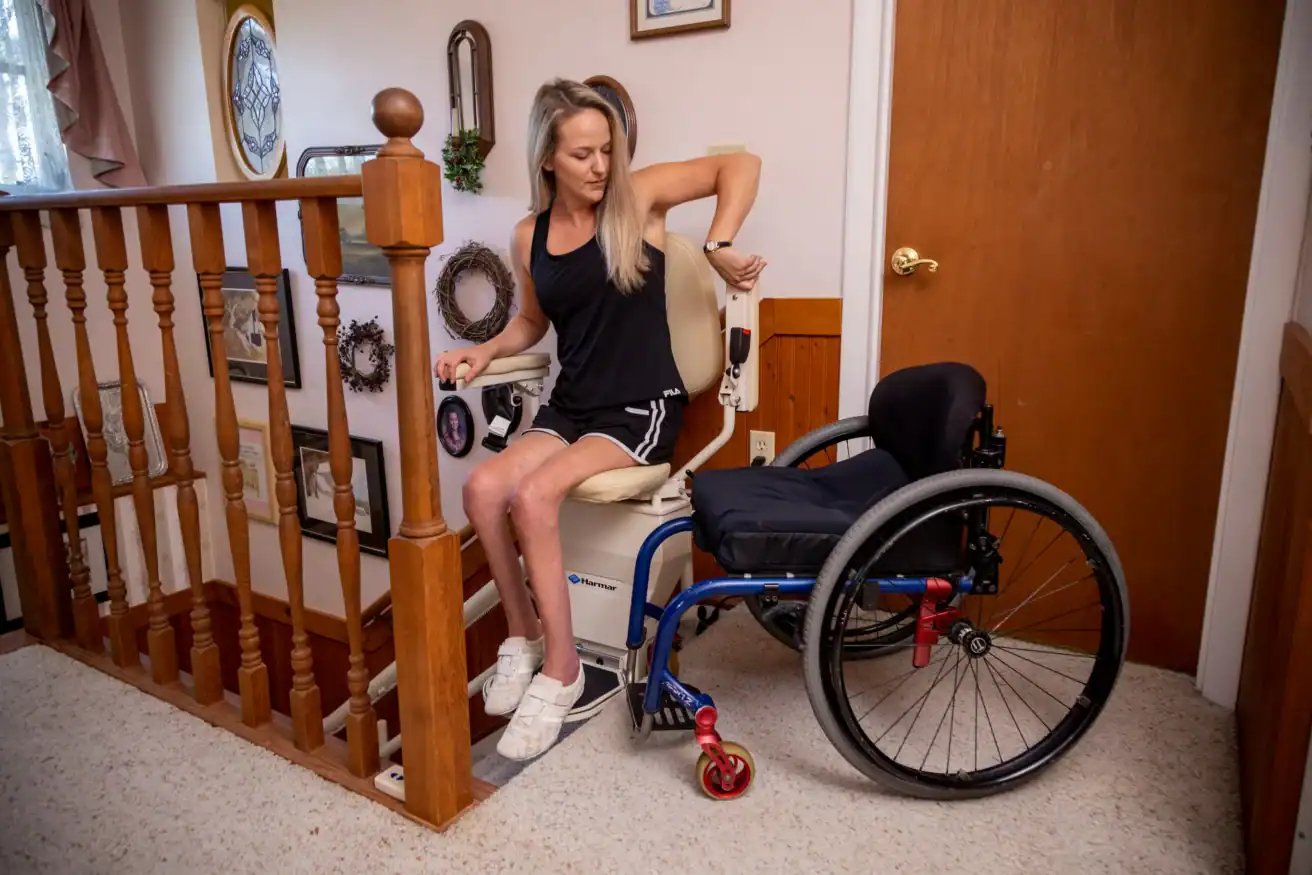
Just the stairs. Both straight and curved stairlifts mount to the stair treads. No wall attachment, no structural modification. This is a common misconception, and it matters for homeowners who are concerned about keeping walls or banisters intact.
Get a Measurement Before You Commit
| There is no way to determine which stairlift type your staircase needs without measuring it. Angles, landing dimensions, and clearance constraints all factor into whether a straight rail fits or a custom curved build is required. Guessing costs money. 101 Mobility’s local technicians handle the measurement, coordinate fabrication, and execute installation as one process. There is no handoff between vendors. Book a free in-home consultation. Schedule yours at 101 Mobility and get the exact spec for your staircase before you buy. |