Back-to-Routine Home Accessibility in Prairieville: Safer Movement Before Fall Schedules Return
As households in Prairieville shift out of summer mode, everyday movement often changes faster than the home does. Mornings become busier. Bathroom use becomes more time-sensitive. Caregiver coverage may tighten. Entry and exit points get used more often and with less flexibility.
That is why back-to-routine planning matters.
A home that felt manageable in a slower season can start to show friction once fall schedules return. Small barriers such as a difficult step, a narrow bathroom setup, an awkward transfer point, or a rushed morning exit can become daily problems. Reviewing those spaces before routines pick up can help make the home safer, easier to navigate, and more supportive of long-term independence.
For families thinking ahead, this is a practical time to review home accessibility options through 101 Mobility of Baton Rouge.
Why Back-to-Routine Accessibility Planning Matters in Prairieville
Seasonal routine changes affect how people move through the home.
In summer, there may be more flexibility around schedules, support, and timing. By late summer and early fall, many households return to more fixed patterns. School starts, work schedules become more structured, appointments increase, and caregivers may have less room to adapt on the fly.
That change can reveal mobility issues such as:
- Entry steps that feel harder during rushed departures
- Bathroom layouts that create delays or unsafe movement
- Bedroom-to-bathroom paths that are harder to navigate early or late in the day
- Transfer points that require more assistance than the household can consistently provide
- Areas where one small obstacle disrupts the entire routine
This is where aging in place planning becomes practical. It is not only about long-term needs. It is also about making daily life work better right now.
Where Fall Routines Often Create Safety Gaps
Morning exits and entry points
A front step, garage threshold, or uneven exterior transition may seem minor until it becomes part of a fast morning routine. Leaving the house safely matters more when timing is tighter and extra help is not always available.
If entry and exit take too much effort or create hesitation, that can be a sign the home needs a better access strategy.
Bathroom timing during busy parts of the day
Bathrooms often become more stressful when multiple household members are moving on the same schedule. Limited space, hard-to-reach fixtures, or unsafe transfers can increase risk during exactly the moments when people are least able to slow down.
Bathroom safety is often one of the most practical places to improve safer home routines.
Transfers and in-home movement paths
The route from bed to bathroom, bedroom to kitchen, or living room to exterior door should support consistent daily movement. If that path includes awkward turns, unstable transitions, or areas where help is always needed, routine pressure can make those issues more obvious.
Strong daily mobility support starts with the paths a person uses every day.
Caregiver coverage and household coordination
When schedules change, caregivers and family members may not always be available at the same times they were during summer. That can expose places where the home relies too heavily on manual assistance.
A better accessibility setup can reduce strain on both the individual and the person helping them.
A Simple Home Accessibility Checklist Before Fall Schedules Return
Use this quick review to identify where home accessibility in Prairieville may need attention before routines get busier.
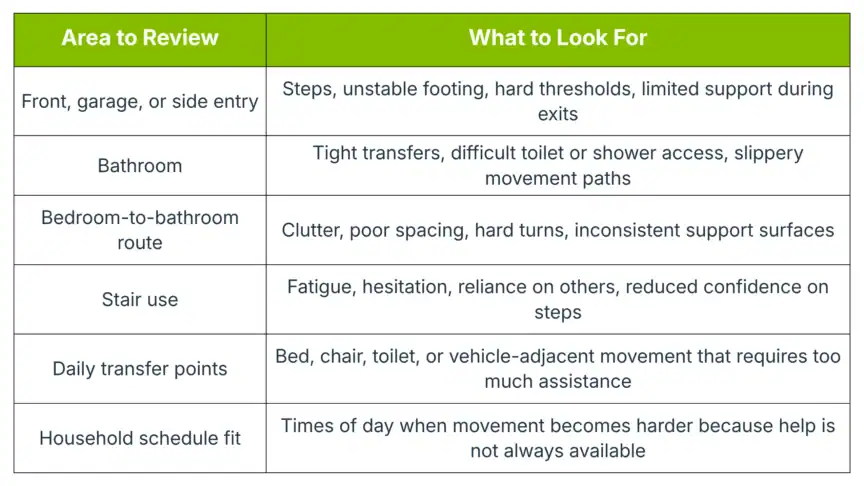
If several of these areas stand out, it may be time to review solutions with a local expert.
Which Accessibility Solutions May Help
The right answer depends on the person, the home, and the daily routine. In many cases, the goal is not to overhaul the entire house. It is to improve the few areas that affect movement every day.
Possible solutions may include:
- Wheelchair ramps for safer entry and exit
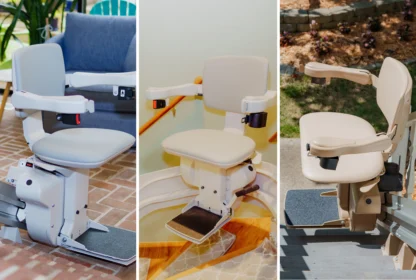
- Stairlifts for households where stairs disrupt daily access
- Bathroom safety solutions for more stable transfers and better support
- Platform lifts or other access solutions where elevation changes create challenges
- Transfer-related support options for reducing strain during routine movement
The most important step is choosing a solution that fits the actual routine, not just the floor plan.
To explore local products and services, visit 101 Mobility of Baton Rouge.
Back to Routine Accessibility Prairieville: How to Plan Without Overcomplicating It
A practical plan usually starts with three questions:
- Where does movement slow down or become unsafe during the day?
Focus on real routine points such as getting out the door, using the bathroom, or navigating stairs. - Which spaces matter most every single day?
Prioritize the areas used repeatedly, not the spaces used occasionally. - Would the right modification reduce dependence on timing or extra help?
Good accessibility planning supports consistency. It should make daily life easier even when the schedule is full.
This is where home accessibility Prairieville planning becomes most useful. It is not about guessing. It is about matching the home to the way the household actually functions.
Why Families Choose Professional Guidance
A common mistake is assuming a mobility challenge has only one solution. In reality, the best recommendation depends on layout, user needs, frequency of use, and who else is involved in the daily routine.
Professional guidance helps families:
- Understand which modifications fit the home
- Compare practical options without overbuying
- Plan around current needs and likely routine changes
- Improve safety without making the process feel overwhelming
For households preparing for a busier season, expert support can help turn a vague concern into a clear next step.
If the goal is to make fall routines safer and more manageable, a good place to start is to book a free consultation.
Key Takeaways
- Seasonal routine changes often reveal mobility issues that were easier to manage during summer.
- Entry points, bathrooms, stairs, and transfer areas are common pressure points.
- Small accessibility barriers can become major daily problems once schedules tighten.
- Practical planning supports independence, reduces caregiver strain, and improves consistency.
- Local expert guidance can help identify the right fit before fall routines fully return.
Frequently Asked Questions
When should a family review accessibility before fall?
Ideally before school-year and fall schedules fully settle in. Planning early gives households time to identify problem areas and choose practical improvements before daily pressure increases.
Is accessibility planning only for older adults?
No. It can help older adults, people recovering from surgery, individuals living with mobility limitations, and families supporting a loved one at home.
What part of the home should be reviewed first?
Start with the spaces used most often: entrances, bathrooms, stairs, and the main movement path between key rooms.
Does every home need a major modification?
Not at all. Sometimes the biggest improvement comes from addressing one routine bottleneck rather than changing everything at once.
How do families know which solution is right?
The best fit depends on the user, the layout, and the daily routine. A consultation can help narrow the options based on real use.
Make Fall Routines Safer Before They Get Busier
If your household is preparing for a shift back to school-year or fall schedules, now is a smart time to review how the home supports daily movement.
Whether the concern is an entry point, a bathroom setup, stair access, or overall routine flow, 101 Mobility can help identify practical next steps. Visit 101 Mobility of Baton Rouge to learn more, or Book a Free Consultation to discuss solutions tailored to your home and routine.