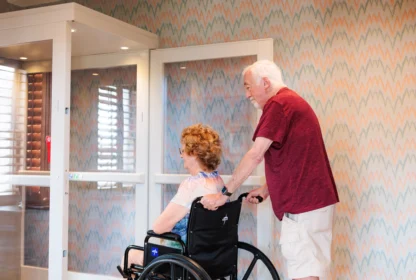
Home Lift Options in New Iberia: A First-Floor Alternative for Safer, Long-Term Access
When stairs start shaping where someone sleeps, how often they go upstairs, or whether a caregiver can safely help with daily movement, it may be time to look beyond short-term workarounds. For many families, home lift options New Iberia homeowners consider are not about luxury. They are about keeping the entire home usable, safer, and easier to navigate.
A well-chosen lift can help you avoid giving up access to an upstairs bedroom, skipping part of the house, or rushing into a move before it is truly necessary. For households focused on comfort, independence, and caregiver support, that can be a meaningful difference.
When stairs start changing daily life
The need for better vertical access does not always begin with a major health event. Sometimes it starts with smaller changes that add up over time.
You may notice that someone is:
- Avoiding stairs unless absolutely necessary
- Sleeping in a room that was never meant to be a bedroom
- Needing more help with transfers at the top or bottom of the stairs
- Skipping showers, laundry, or family spaces on another floor
- Worrying about falls during the day or at night
When that happens, the goal is not only to reduce strain. It is to restore safe, practical use of the home.
Home lift options New Iberia homeowners often compare
Not every multi-level home needs the same solution. The best fit depends on the layout, the user’s mobility, transfer needs, and long-term plans.
Home elevator
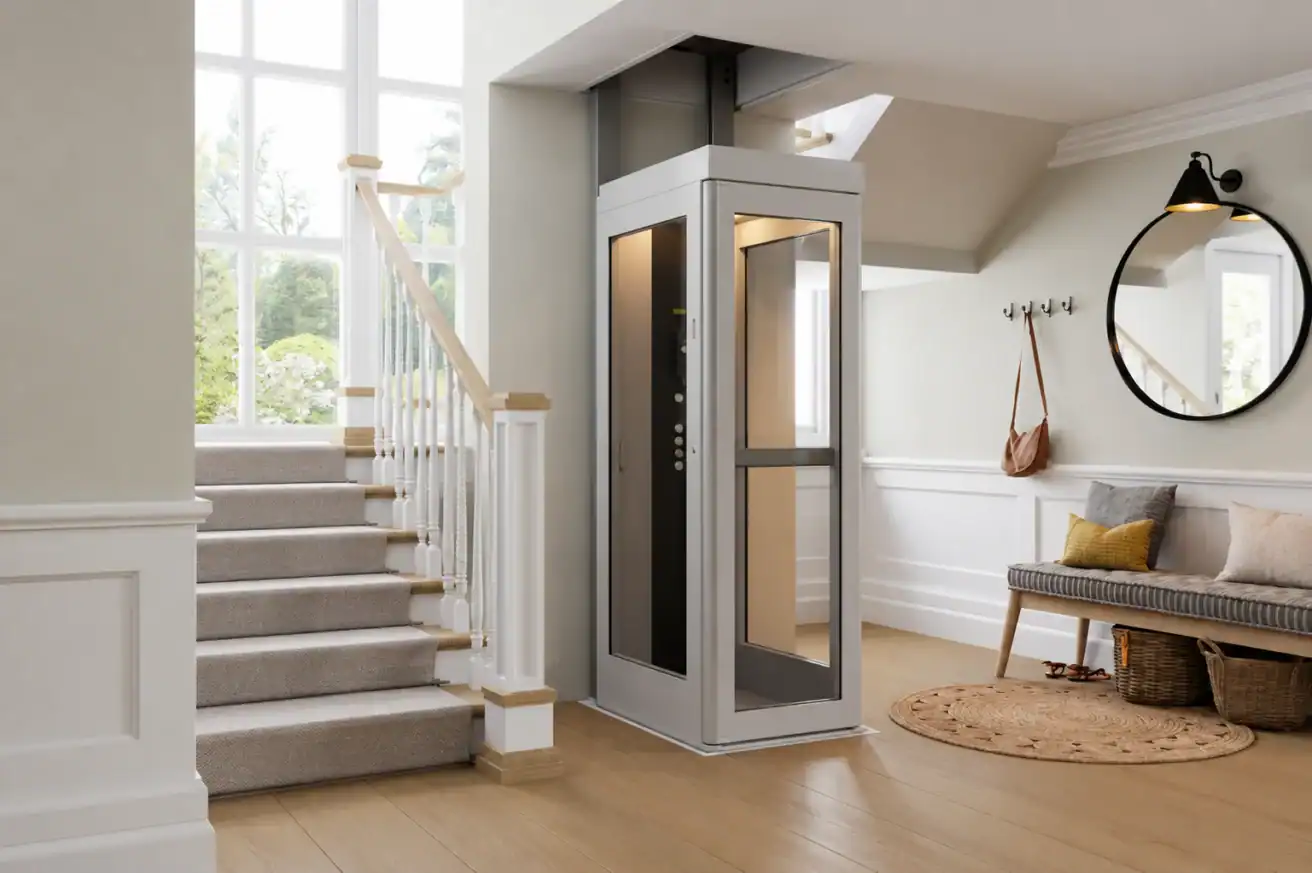
A home elevator New Iberia families consider is often the strongest long-term solution when full-floor access is the priority. It can support easier movement between levels without requiring someone to climb stairs or rely on repeated physical assistance.
This option may make sense when:
- Bedrooms and bathrooms are on different floors
- A homeowner wants a longer-term accessibility upgrade
- Caregiver support is already part of daily life
- The goal is smoother access for both people and personal items
- The household is planning ahead for changing mobility needs
Vertical lift
A vertical lift can be a strong option in the right setting. Depending on the home and the specific access challenge, it may help address elevation changes in a practical, direct way.
This option may be worth discussing when:
- A household needs a vertical travel solution tied to a specific access point
- Wheelchair or mobility device use is part of daily life
- Entry or level changes are creating repeated safety concerns
- The home needs a more structured accessibility solution than a temporary workaround
Stairlift vs. lift
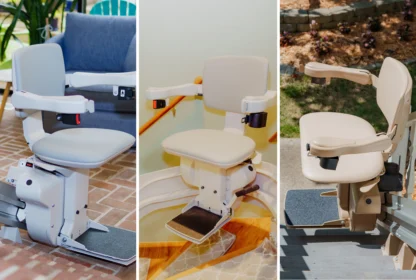
A stairlift can be a great fit for many homes, but it is not always the best answer for every caregiver situation. If transferring onto a seat is difficult, if mobility may decline over time, or if the goal is broader multi-level accessibility, a lift-based solution may be the better conversation to have.
When a home elevator or vertical lift may make more sense than moving downstairs
Families often try to solve stair problems by rearranging life around them. A dining room becomes a bedroom. Laundry gets carried by someone else. An upstairs bathroom stops being part of the routine.
That can work for a while, but it often narrows how the home functions.
A lift may be worth considering when the real objective is to keep the home working as a whole. Instead of treating the first floor as the only usable space, the right accessibility solution can help preserve normal routines, reduce physical strain, and support safer day-to-day movement.
That is especially important when caregiving is already involved. Repeated help on stairs can increase fatigue, create awkward transfer points, and add stress to tasks that happen every day.
What caregivers should consider before choosing a solution
Caregiver-focused planning should go beyond the question, “Can they still use the stairs?”
A better set of questions includes:
- Is stair use becoming slower, less steady, or less predictable?
- Does the person need help before, during, or after changing floors?
- Are transfers safe at both landings?
- Would a seated stair solution still work if mobility changes further?
- Is the current setup increasing physical strain on a spouse or family caregiver?
- Will this solution still make sense a year or two from now?
These questions matter because the safest option is not always the one that solves only today’s problem. In many cases, the best answer supports both the user and the person helping them every day.
A simple planning table for multi-level accessibility

Why aging in place planning matters before mobility becomes urgent
Good aging in place planning is easier when families still have time to compare options clearly.
Waiting until stair use becomes a daily risk can make the decision feel rushed. Planning earlier gives you room to assess the layout, think through future mobility needs, and choose a solution based on function instead of urgency.
That does not mean every home needs a major modification right away. It means understanding which options exist before access becomes more limited, more stressful, or more dangerous.
For many homeowners, that is the value of starting the conversation now.
What to expect from a consultation
A consultation should focus on how the home is actually being used.
That usually includes:
- Reviewing the floor plan and access points
- Talking through present and future mobility concerns
- Understanding whether the issue is stairs, transfers, wheelchair access, or overall home flow
- Comparing practical solutions based on layout and daily routines
- Recommending a product category that fits the home and the household’s goals
The right recommendation should feel specific to the space, not generic.
FAQ
What are the main home lift options in New Iberia?
The main options often discussed include home elevators, vertical lifts, and stair-access solutions, depending on the home layout, mobility needs, and whether the goal is seated stair travel or broader floor-to-floor access.
When is a home elevator a better option than rearranging the first floor?
A home elevator may be worth considering when important spaces like bedrooms or bathrooms are upstairs and the goal is to keep the whole home functional rather than limiting daily life to one level.
Is a vertical lift the same as a home elevator?
Not always. A vertical lift and a home elevator can serve different access needs depending on the home, travel distance, user mobility, and installation goals.
How do I know whether a stairlift or lift is the better choice?
That depends on transfer ability, caregiver involvement, future mobility changes, and whether the household needs stair-only access or a more complete multi-level accessibility solution.
Why start planning before stair use becomes impossible?
Planning early gives families more time to compare options, reduce pressure, and choose a solution that supports safety, comfort, and long-term independence.
Keep more of your home usable
If stairs are starting to shape daily routines, sleep arrangements, or caregiving demands, it may be time to explore a better long-term fit. A lift solution may help you keep access to more of your home without forcing unnecessary changes to how you live.
To learn which option may fit your layout and goals, visit 101 Mobility Lafayette or Book a Free Consultation to discuss your next step.