Accessibility Solutions After Surgery in Marrero: What Helps Most During Recovery

Recovering at home after surgery can be more difficult than many families expect. Even routine tasks like getting to the bathroom, using stairs, stepping through the front door, or moving from bed to chair can suddenly require more effort and carry more risk.
The right accessibility solutions can make recovery safer, less stressful, and more manageable. If you are planning for post-op care or helping a loved one return home, the goal is simple: reduce strain, improve safety, and make daily routines easier while healing.
Why recovery at home often feels harder than expected
After surgery, mobility is often limited by pain, weakness, fatigue, swelling, or movement restrictions. That can turn ordinary parts of the home into problem areas.
Common trouble spots include:
- Stairs between bedrooms and main living areas
- Front steps and uneven entryways
- Bathrooms with slippery floors and high tub walls
- Transfers from bed, chair, or toilet
- Narrow spaces that are harder to navigate with a walker or wheelchair
This is why home safety after surgery matters so much. A safer setup can help reduce fall risk, conserve energy, and make it easier to follow recovery instructions at home.
Accessibility solutions after surgery in Marrero that can make recovery safer
The best solution depends on the surgery, the home layout, and how long support will be needed. In many cases, a few targeted changes can make a major difference during recovery.
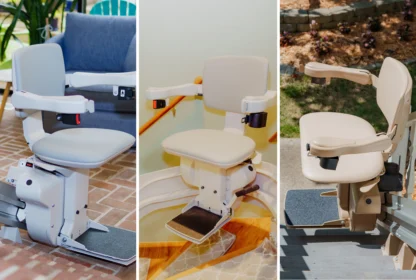
Stairlifts for safer access between floors
If the bedroom or full bathroom is upstairs, stair use may become one of the biggest obstacles during recovery. A stairlift can help reduce repeated strain and lower the risk of a misstep while healing.
A stairlift may be especially helpful when:
- Climbing stairs is painful or restricted
- Balance feels unsteady after surgery
- Energy needs to be conserved during the day
- A caregiver wants a safer alternative to assisting on stairs
For some households, a stairlift is the solution that makes recovery at home in Marrero much more realistic.
Ramps for safer home entry and exit
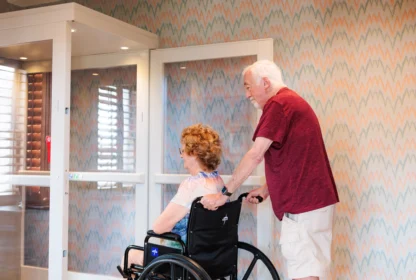
Entry steps can be a challenge after surgery, especially when a person is using a walker, wheelchair, or transport chair. A ramp can create smoother, safer access in and out of the home.
Ramps may help when:
- Front or garage entry has steps
- A mobility device is being used temporarily
- Follow-up appointments require frequent trips out of the home
- Caregivers need easier access while assisting
This is one of the most practical temporary mobility solutions for households dealing with short-term recovery needs.
Bathroom safety upgrades for daily routines
Bathrooms are often the most difficult room to use safely after surgery. Wet surfaces, tight turns, and sit-to-stand movements can all increase the risk of slipping or overexertion.
Helpful bathroom accessibility options may include:
- Grab bars near the toilet or shower
- Safer shower access
- Shower seating
- Transfer-friendly bathroom adjustments
For many families, improving bathroom access is the first step in smarter post-surgery accessibility planning.
Patient transfer and handling support
Some recoveries require more hands-on help. If moving between bed, chair, and bathroom is difficult, transfer support can help reduce physical strain on both the recovering person and the caregiver.
This may be important when:
- Weight-bearing is restricted
- Balance is severely limited
- A caregiver is helping with routine transfers
- Comfort and controlled movement are priorities
Temporary mobility solutions vs. longer-term changes
Not every recovery calls for a permanent home modification. Some people need help for a few weeks, while others discover that surgery has made an existing mobility challenge more noticeable.
Here is a simple way to think about the difference:
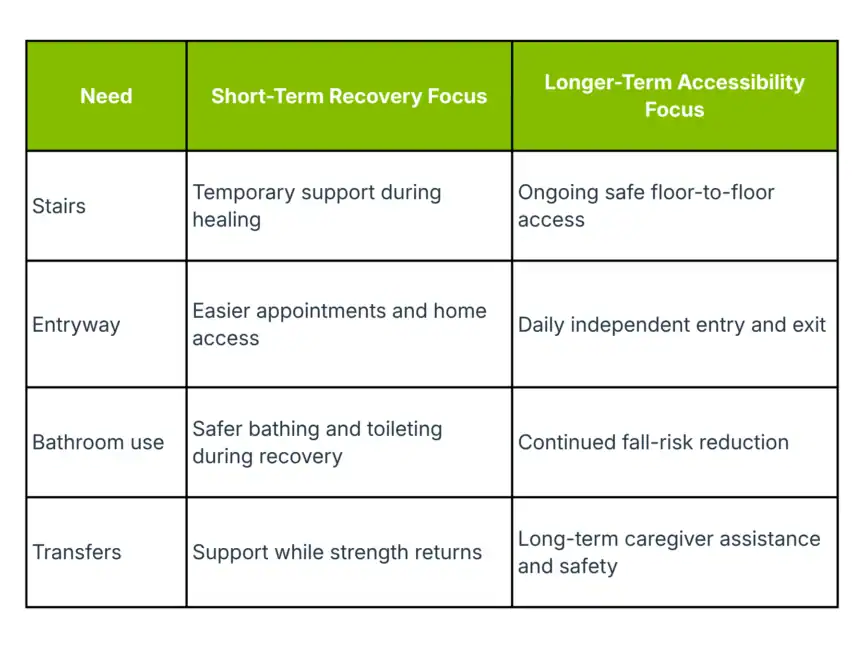
If the need is clearly temporary, a short-term plan may be enough. If recovery overlaps with aging in place or an existing mobility issue, it may make sense to choose a solution that continues to help after healing is complete.
What to prioritize first after surgery
The most useful approach is to focus on the parts of the home used every day.
Quick priority chart
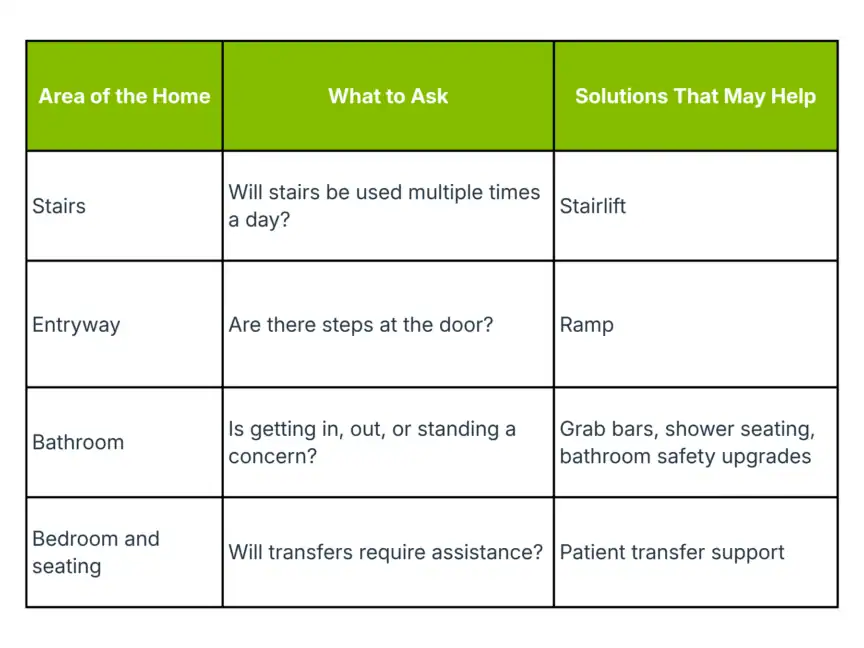
A good rule is to start with the places where a fall or strain is most likely.
How to plan for recovery at home in Marrero
If possible, start planning before the person returns home. That gives families more time to identify problem areas and choose the right support.
A simple planning process looks like this:
- Think through the daily routine from morning to bedtime.
- Identify the hardest tasks, especially stairs, bathing, and entry access.
- Match those challenges to practical accessibility solutions.
- Make sure the setup works for both the recovering person and the caregiver.
This kind of preparation can make recovery at home Marrero feel less overwhelming and more manageable from day one.
Why professional guidance matters
Choosing accessibility equipment is not just about finding a product. It is about finding the right fit for the home, the person, and the recovery period.
Professional guidance can help families:
- Assess the home layout
- Prioritize the biggest safety risks first
- Avoid choosing a solution that does not match the actual need
- Plan for both immediate recovery and possible future mobility needs
That is especially important when the situation involves multiple barriers at once, such as stairs, bathroom access, and caregiver support.
Frequently Asked Questions
What are the best accessibility solutions after surgery in Marrero?
The best solution depends on the person’s recovery needs and home layout. Common options include stairlifts for stairs, ramps for entry access, bathroom safety upgrades, and transfer support when caregiver assistance is needed.
Are temporary mobility solutions enough after surgery?
Sometimes, yes. If the limitation is expected to improve within a short recovery period, temporary mobility solutions may be the right fit. If mobility challenges are likely to continue, longer-term accessibility changes may make more sense.
How can I improve home safety after surgery?
Focus first on stairs, bathrooms, and entryways. Those are often the highest-risk areas. Reducing fall hazards and making everyday movement easier can improve safety right away.
What helps most with post-surgery accessibility at home?
The most helpful changes usually address daily routines: getting in and out of the home, using the bathroom safely, navigating stairs, and completing transfers with less strain.
When should families arrange accessibility support?
Ideally, before the person returns home. Planning ahead can make recovery smoother and help prevent avoidable safety issues.
Make Recovery Safer and Easier at Home
When healing at home feels uncertain, the right accessibility changes can make everyday life more manageable. From stair access to bathroom safety and easier entryways, practical solutions can reduce strain and support a safer recovery.
To explore the best options for your home, Book a Free Consultation or learn more about local support through 101 Mobility New Orleans.