Do You Need a Stairlift in Broussard? Signs It’s Time to Make Stairs Safer
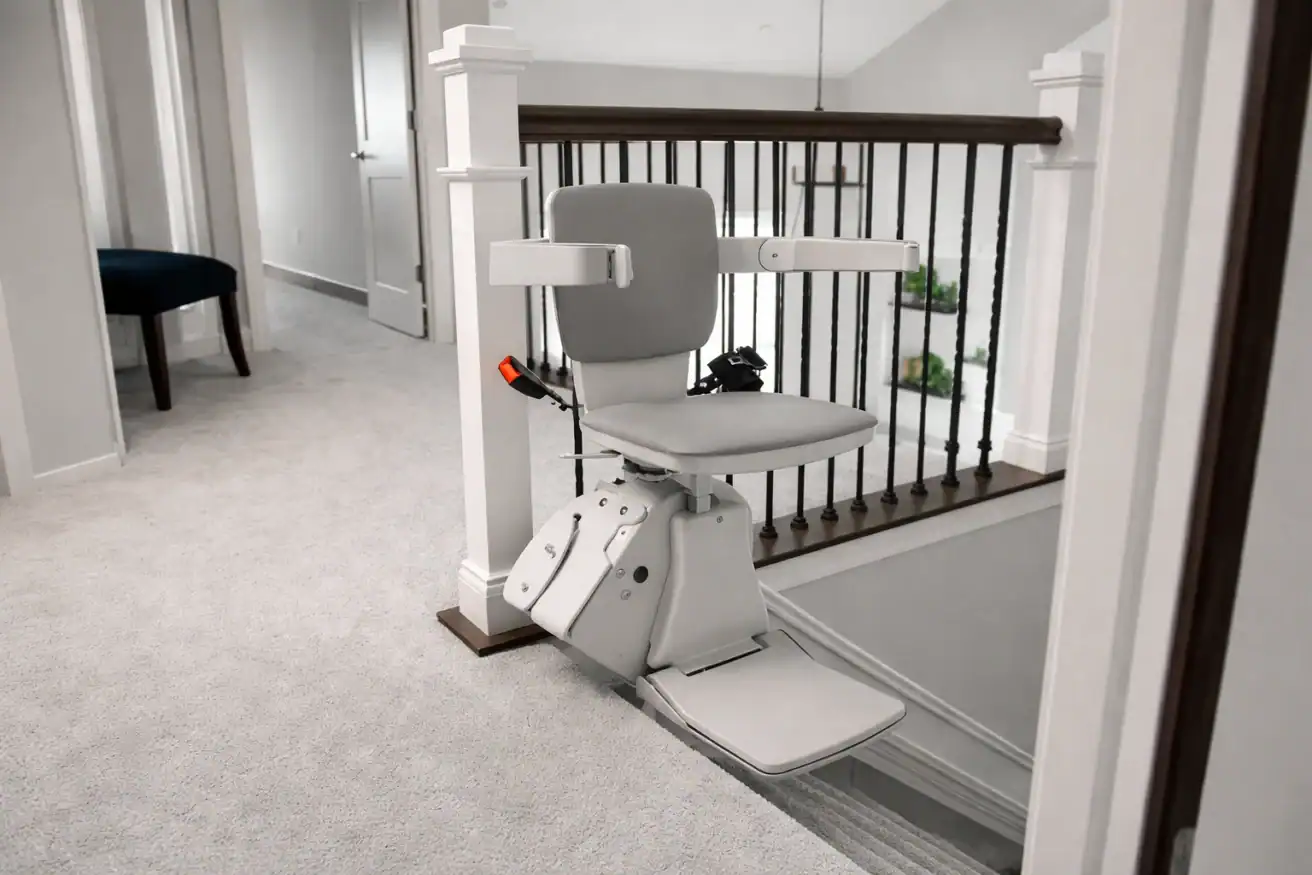
If using the stairs in your home is starting to feel slower, more painful, or less predictable, it may be time to look at a safer solution. In many multi-level homes, stairs are not just an inconvenience. They can become a daily safety issue that limits how comfortably you move through your own space.
A stairlift can make it easier to keep using every level of your home without the strain of climbing steps several times a day. For many homeowners in Broussard, that means staying independent, reducing fall risk, and avoiding a move that feels premature.
Why stairs become a bigger problem in multi-level homes
A two-story layout can work well for years, then gradually become harder to manage. What often changes is not the staircase itself, but how much effort and confidence it takes to use it safely.
Even one flight of stairs can become a problem when daily movement involves:
- Carrying laundry or household items
- Going up and down several times a day
- Managing arthritis, joint pain, or reduced balance
- Recovering from surgery or injury
- Needing support from walls or railings
When that happens, the upstairs or downstairs portion of the home can start feeling less usable. That is often the point when families begin looking at two-story home accessibility options.
7 signs it may be time for a stairlift in Broussard
A stairlift is not only for people with severe mobility limitations. In many cases, it becomes the right choice when stairs are creating friction, fatigue, or risk in everyday life.
1. You avoid the stairs unless you absolutely have to
If you are timing your day to reduce trips upstairs, sleeping in a different room, or postponing tasks because the stairs feel like too much effort, that is a meaningful sign. Avoiding part of your home usually means the stairs are already affecting daily life.
2. You feel pain, fatigue, or shortness of breath on steps
Stair climbing puts extra demand on the knees, hips, back, and lungs. If you regularly feel worn out after one trip up or down, the issue is no longer just convenience. It is function.
3. You rely heavily on railings or another person
Using the handrail is normal. Needing to grip it tightly every time, pausing mid-stair, or depending on someone nearby for support is different. Those are common signs that stair safety for seniors should be addressed sooner rather than later.
4. You have had a near fall, slip, or moment of panic
A near miss matters. Many families wait for an actual fall before making a change, but the better time to act is when the stairs first start to feel unsafe.
5. You are no longer using part of your home the way you used to
When bedrooms, bathrooms, storage areas, or hobby spaces on another floor start going unused, the staircase is limiting your home’s function. A stairlift can restore access instead of forcing you to rework your whole routine.
6. Recovery, arthritis, or mobility changes are making stairs harder
Mobility needs can change gradually or all at once. Recovery after surgery, worsening joint pain, reduced strength, or new balance concerns can all make a previously manageable staircase feel risky.
7. Family members are worried, even if you are trying to push through
Adult children and caregivers often notice stair strain before the person using the stairs says anything. If loved ones keep bringing it up, that concern may be based on real daily patterns they are seeing.
At-a-glance signs a stairlift may be worth considering

How a stairlift helps without forcing a move
For many homeowners, the goal is not simply to make stairs easier. It is to keep living well in a familiar home.
A stairlift helps by:
- Reducing the physical strain of repeated stair use
- Supporting safer daily movement between floors
- Restoring access to bedrooms, bathrooms, and living areas
- Helping people stay in the home they know
- Easing concern for family members and caregivers
This is why stairlifts are often part of a broader aging-in-place plan. Instead of treating a multi-level home as the problem, the right equipment can make the layout workable again.
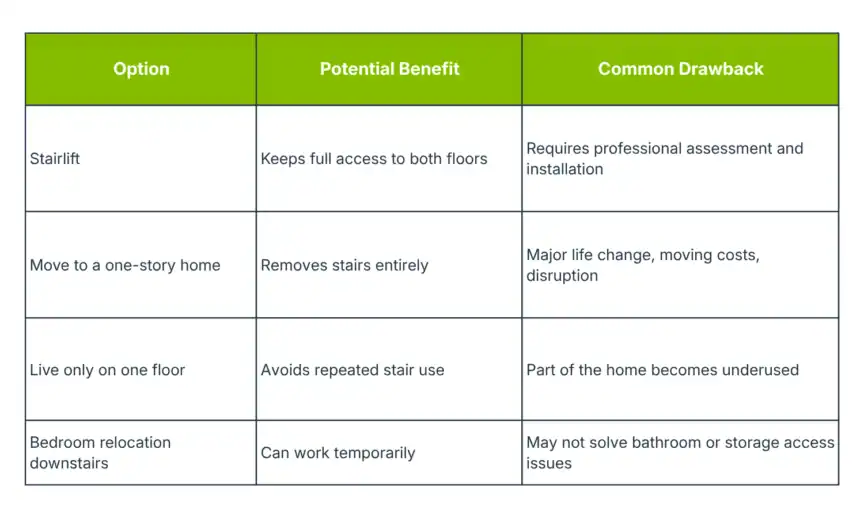
Stairlift vs. moving or rearranging your living space
When stairs become harder, families usually compare a few options. A stairlift is often the most practical when the goal is to preserve access without disrupting the entire home.
What to expect from stairlift installation in Broussard
A professional stairlift recommendation should start with the home, the staircase, and the person using it. Not every staircase is the same, and not every household has the same mobility goals.
A typical process includes:
- In-home consultation
A specialist looks at the staircase layout, safety concerns, and how the stairlift will be used day to day. - Product recommendation
The best fit depends on whether the staircase is straight or more complex, along with user needs and home setup. - Professional installation
Proper installation matters because the lift needs to operate smoothly and safely in the available space. - Demonstration and support
The user should understand how to operate the lift confidently and know where to turn for service questions.
If you are researching stairlift installation Broussard, focus on providers that offer consultation, installation, and ongoing support rather than just selling equipment.
Is a stairlift the right stair access solution for your home?
A stairlift is often a strong fit when:
- The home has more than one frequently used level
- The user can safely transfer on and off the seat
- The main barrier is stair climbing rather than full wheelchair travel between floors
- The goal is to improve access without moving
In some homes, other stair access solutions may also be worth discussing. The best path depends on staircase shape, mobility needs, and long-term plans. That is why an in-home consultation is usually the most useful next step.
For many families in Broussard, the question is not whether stairs have become harder. It is whether continuing to manage them the same way still makes sense.
FAQ
How do I know if I need a stairlift or just better habits on the stairs?
If stairs cause pain, fatigue, instability, or near falls even when you move carefully, the issue is likely bigger than habit changes. A stairlift may be worth considering when the stairs are affecting safety or limiting use of your home.
Is a stairlift only for seniors?
No. Stairlifts can help anyone whose mobility, balance, strength, or recovery makes stairs harder to navigate safely.
Can a stairlift help in a two-story home without major remodeling?
Yes. In many cases, a stairlift is one of the most direct ways to improve two-story home accessibility without changing the overall layout of the home.
What is the benefit of professional stairlift installation?
Professional installation helps ensure the lift is matched to the staircase, installed correctly, and ready for safe daily use. It also gives homeowners a clear place to go for service and support.
When should families start looking into a stairlift?
Usually sooner than they think. A near fall, daily stair strain, or avoiding part of the home are all good reasons to start the conversation before an emergency forces a faster decision.
Make stairs safer before they become a bigger problem
If stairs are becoming harder to manage, waiting rarely makes them easier. The right stairlift can help restore confidence, improve daily safety, and make your home work better for the way you live now.
To explore local options, visit 101 Mobility Lafayette or learn more about stair access solutions. When you are ready, Book a Free Consultation to find out whether a stairlift is the right fit for your Broussard home.