Split-level and bi-level homes are unique living spaces, and their short flights of stairs can become an obstacle for those with limited mobility. Navigating these multiple, smaller staircases throughout the day can be exhausting and, more importantly, can increase the risk of a fall. For individuals who would like to age in place or are looking to manage mobility challenges, finding a safe and reliable way to move between levels is essential.
Fortunately, several mobility solutions are specifically designed to address the unique layouts of split-level homes. This guide will explore the best options, from stairlifts to platform lifts, to help you regain full access to your home. We will break down each solution, compare their benefits, and answer common questions to help you make an informed decision for yourself and your family.
The Unique Challenge of Split-Level Homes
Unlike traditional two-story houses with one long staircase, split-level homes feature multiple short stair runs connecting various living areas. This design often includes staggered floors, such as a ground-level entrance that leads up to a main living area and down to a finished basement or garage.
This layout tends to present a challenge for accessibility. A single stairlift might not be sufficient if there are two or more separate staircases. This is why a comprehensive assessment is crucial for creating a safe, effective, and long-term plan for aging in place in a split-level home.
Top Mobility Solutions for Bi-Level and Split-Level Homes
When evaluating your options, the primary goal should be to ensure safe and effortless movement between all essential areas of your house. Below we’ll cover the most effective solutions.
Straight Stairlifts
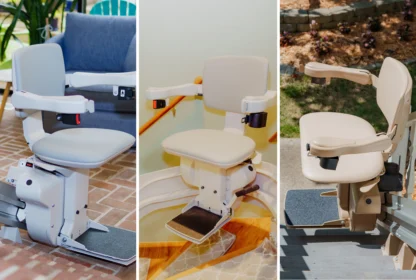
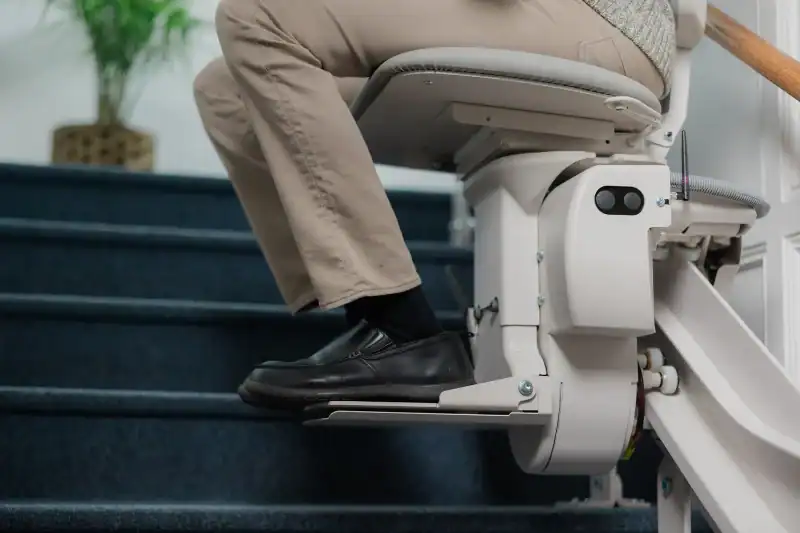
A straight stairlift is a motorized chair that travels along a fixed rail mounted directly to your stair treads. It is the most common and straightforward mobility solution available.
For a split-level home, a straight stairlift is an ideal choice for any single, straight flight of stairs. If your home has two separate straight staircases, for example, one going up to the bedrooms and another going down to the den, you might need two separate straight stairlifts. While this involves two distinct units, it is often a very cost-effective and efficient way to make your home fully accessible.
Best for: Homes with one or more separate, straight staircases without curves or landings.
Curved Stairlifts
Curved stairlifts operate similarly to straight models but run on a custom-manufactured rail. This rail is designed to follow the precise contours of a staircase that turns, curves, or crosses a landing.
This is often the most seamless solution for split-level homes with more complex layouts. A single curved stairlift can be engineered to navigate multiple flights of stairs connected by a landing. For instance, it can travel from the ground floor, across a flat landing, and continue up the next set of stairs to the main level. This allows the user to remain seated for the entire journey, providing a continuous and secure path through the home.
Best for: Staircases with turns, bends, or intermediate landings that connect multiple levels.
Vertical Platform Lifts (VPLs)
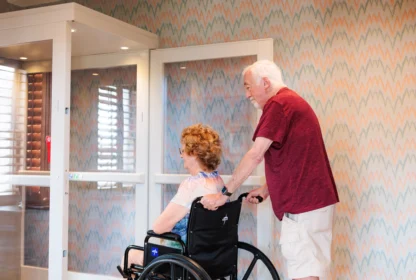
A vertical platform lift, sometimes called a porch lift, is an elevator-like solution designed to vertically transport a person, often along with their wheelchair, scooter, or walker. VPLs are enclosed by safety gates and move straight up and down between levels.
In a split-level home, a VPL can be installed next to a short flight of stairs, either indoors or outdoors. It provides a simple and direct way to bypass the steps entirely. This is an excellent option if a user relies on a mobility device, as it eliminates the need for transfers. It’s a robust solution that offers complete accessibility for wheelchair and scooter users who need to move between floors.
Best for: Wheelchair or scooter users who need to bypass short flights of stairs, both indoors and outdoors.
Home Elevators
For the ultimate convenience and accessibility, a residential or home elevator provides the most comprehensive solution. While it is the most significant investment, a home elevator adds substantial value and offers a permanent way to navigate a split-level home’s multiple floors.
An elevator can be designed to stop at every level of your home, from the basement to the top floor. This eliminates the need for navigating any stairs at all. It provides a safe, comfortable, and spacious way to move between floors and can easily accommodate multiple people, mobility devices, or even heavy items like laundry and groceries. Planning for a home elevator can be a key strategy for long-term aging in place.
Best for: Homeowners seeking a permanent, comprehensive accessibility solution that services all levels of the home.
Comparing Your Mobility Options
Each solution offers distinct advantages. The right choice comes down to what your specific needs, home layout, and budget are. The table below can help provide a clear comparison to guide your decision.
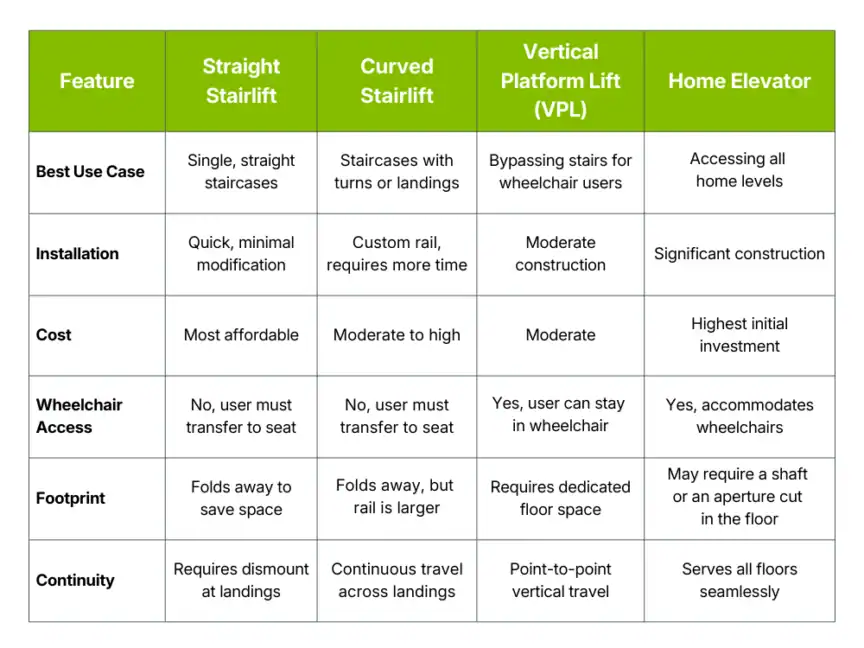
Frequently Asked Questions (FAQ)
1. Can a stairlift be installed on the short staircases in a bi-level home?
Yes. Both straight and curved stairlifts are excellent mobility solutions for bi-level homes. A straight stairlift works perfectly for a short, straight run of stairs. If your stairs have a landing or turn, a custom-built curved stairlift can provide a continuous ride.
2. My split-level home has two sets of stairs. Do I need two stairlifts?
It depends on the layout. If you have two separate, unconnected straight staircases, installing two straight stairlifts is often the most practical and affordable option. However, if the staircases are connected by a landing, a single curved stairlift can be configured to navigate both flights in one continuous journey.
3. What is the best option for a wheelchair user in a split-level home?
For wheelchair users, a vertical platform lift (VPL) or a home elevator are the most suitable solutions. A VPL allows the user to roll onto the platform and be lifted to the next level without transferring from their chair. A home elevator provides the most comprehensive access to all floors.
4. How much construction is required to install these solutions?
- Stairlifts: Require minimal construction. The rail is attached directly to the stair treads, not the wall, and installation is often completed in just a few hours.
- Vertical Platform Lifts: May require a concrete pad for outdoor installations and minor modifications to landings or porches.
- Home Elevators: Require significant construction, including building a hoistway or shaft through the different levels of the home.
5. Are these mobility solutions safe?
Absolutely. All modern mobility equipment is engineered with multiple safety features. Stairlifts include a seatbelt, obstruction sensors that stop the lift if something is in the way, and a swivel seat for safe entry and exit. VPLs and elevators have safety gates, emergency stop buttons, and backup power systems. Professional installation by certified technicians is key to ensuring maximum safety.
Invest in Your Long-Term Independence
Living in a split-level home should not mean sacrificing your freedom or safety. By exploring mobility solutions like stairlifts for split level homes, vertical platform lifts, and home elevators, you can create a secure and accessible environment for years to come. The right solution will not only prevent falls but also restore confidence and allow you to enjoy every part of the home you love.