When a loved one is diagnosed with Spinal Muscular Atrophy (SMA), the emotional weight can be felt. This guide focuses on explaining what SMA is, how it affects mobility over time, and which home modifications for SMA families make the biggest difference at every stage.
The goal is to keep your home feeling safe, accessible, and built around the person who lives there.
What Is SMA and How Does It Affect Mobility?
Spinal Muscular Atrophy is a genetic neuromuscular condition that weakens the muscles used for movement.
SMA is grouped into four types:
- Type 1: Diagnosed within the first six months of life. The most severe form; full mobility support is needed from early on.
- Type 2: Diagnosed between 6 and 18 months. Children can sit independently but rarely walk. Home modifications become essential early.
- Type 3: Diagnosed after 18 months. Individuals may walk at first but often transition to a wheelchair over time.
- Type 4 (Adult-onset): The mildest form. Muscle weakness progresses slowly, often into adulthood.
The key takeaway: mobility needs are not static. Proactive planning before a transition becomes a crisis is one of the most important steps a family can take.
Home Accessibility Modifications That Make a Difference
The right home modifications restore independence, reduce caregiver burden, and when done well can blend seamlessly into the home. Here are the highest-impact areas to address for SMA home accessibility.
Ramps and Entry Access
For most families, entry access is the first barrier. A single step at the front door becomes a real obstacle for manual and power wheelchair users. Wheelchair ramps for SMA can help to solve this without major construction:
- Portable ramps suit renters, modest step heights, or situations where flexibility matters. No installation required.
- Permanent modular ramps are better for multi-step entries and daily power wheelchair use. Professionally installed and load-rated for safety.
A properly graded entry ramp is often one of the first and most impactful home modifications families make.
Stair and Vertical Access Solutions
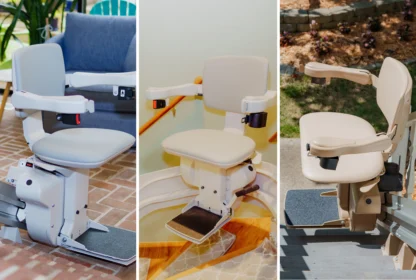
For many people living with SMA, a standard stairlift isn’t the most practical option. Transferring from a wheelchair to a lift seat often requires grip strength and core stability that may be difficult to manage.
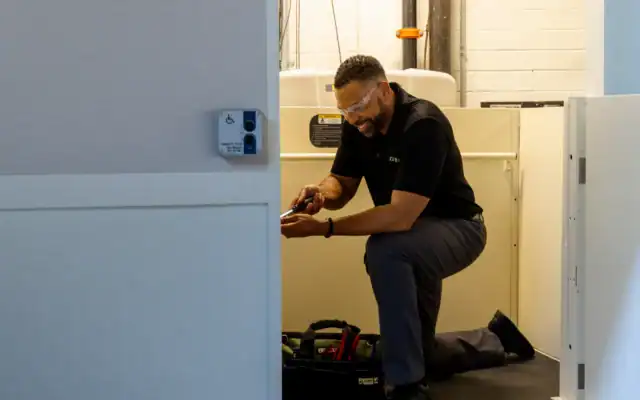
Vertical platform lifts (VPLs) can be a better match. The user rolls onto the platform in their wheelchair with no transfer needed, and the lift raises or lowers between levels. It’s smooth, safe, and requires no grip strength.
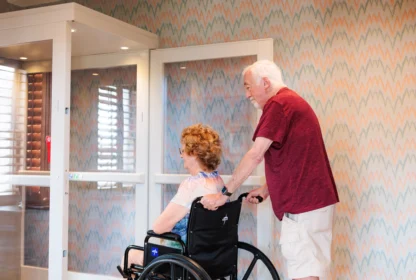
For multi-story homes, a residential elevator can provide the most comprehensive access serving every floor, accommodating caregivers and mobility equipment, and offering a permanent long-term solution.
Bathroom Safety and Modifications
The bathroom is where falls are most likely to happen, and limited muscle strength makes this room a priority. Key home modifications for neuromuscular disease include:
- Roll-in showers that eliminate curbs or tub walls so there is no transfer required
- Grab bars near the toilet, in the shower, and along walls for stability
- Handheld shower heads for bathing without reaching or repositioning
- Comfort-height toilets or raised seats to reduce the effort of sitting and standing
These changes don’t require gutting a bathroom and the result is a safer, more functional space without the clinical look.
Powered Mobility and Patient Handling Equipment
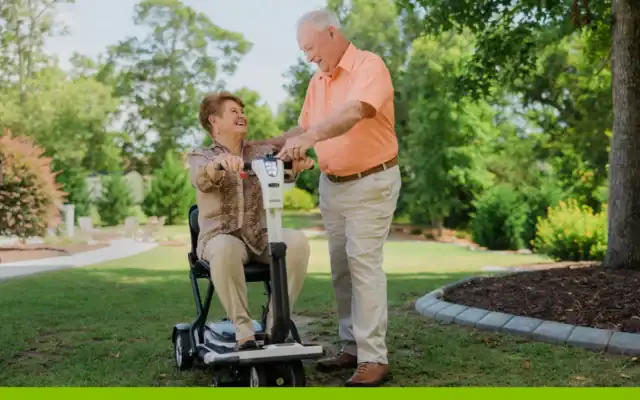
As SMA progresses, manual mobility becomes harder to sustain. A power wheelchair for spinal muscular atrophy isn’t a convenience; it’s the tool that makes the rest of the day possible. It preserves energy, supports independence, and reduces the physical demands placed on caregivers.
Power wheelchairs and scooters allow users to move through their home and community without exertion. For individuals with Type 2 or Type 3 SMA, the right power chair can be transformative.
Patient lifts are equally important for families managing daily transfers. Ceiling lifts and portable patient lifts help caregivers safely move a person between a bed, wheelchair, shower chair, or vehicle. They reduce injury risk significantly and make sustainable long-term caregiving possible.
The right equipment depends on the individual’s current capabilities, home layout, and available support. A local provider can help to assess your specific situation and match the equipment to the user.
Planning Ahead: How Mobility Needs Change Over Time
SMA is not a fixed condition. A child who walks today may transition to a power wheelchair in adolescence. An adult with Type 4 SMA may manage well for years before experiencing a noticeable shift. Families who plan ahead have more time to make thoughtful choices, explore funding, and get the right equipment properly fitted and installed.
A professional home assessment is the best starting point. A mobility specialist visits your home, evaluates how the space works for your loved one’s current needs, and identifies what modifications will provide the most benefit now and over time.
Working with a single provider who handles assessment, products, and installation also reduces the burden of coordinating multiple contractors. One team. One plan. Less for your family to manage.
Frequently Asked Questions
What mobility equipment is most important for someone newly diagnosed with SMA?
It depends on the SMA type and current function. For someone still walking but fatiguing easily, a lightweight scooter may be the first priority. For a wheelchair user, entry ramps and bathroom safety modifications are typically most urgent. A home assessment is the fastest way to identify where to start.
Can a home be modified for a power wheelchair without major construction?
In most cases, yes. Ramps, doorway widening, and vertical platform lifts are completed by certified technicians with minimal disruption.
Does insurance cover mobility equipment for SMA?
Many power wheelchairs and patient lifts are covered in full or in part by Medicare, Medicaid, or private insurance when prescribed and deemed medically necessary. Coverage for home modifications varies by plan and state.
How do I know if my loved one needs a patient lift vs. a power wheelchair?
These serve different purposes. A power wheelchair supports independent movement for someone who can’t push a manual chair. A patient lift assists with transfers such as, bed to wheelchair, wheelchair to shower, and is primarily a caregiver tool. Many families with SMA need both.
What is the difference between a vertical platform lift and a home elevator?
A vertical platform lift handles short vertical rises, typically one floor, and installs quickly with minimal construction. A home elevator travels between multiple floors, accommodates larger wheelchairs and multiple occupants, and requires a hoistway. Home elevators are the right fit for multi-story homes where full-floor access is the goal.

Finding the Right Mobility Partner for Your Family
Living well with SMA takes the right equipment and the right support. Those two things go together.
101 Mobility’s locally owned teams provide free in-home consultations, factory-certified installation, and ongoing support for families navigating SMA and other neuromuscular conditions. The goal is to understand how your family lives and build an accessibility plan that grows with you.
Ready to take the next step? Schedule a free consultation with your local 101 Mobility team.
Not sure where to begin? Explore our How to Choose the Right Mobility Solution resource for a straightforward breakdown of your options.
The right solution is out there. You don’t have to find it alone.