What To Expect with Professional Shower Grab Bar Installation in Lafayette
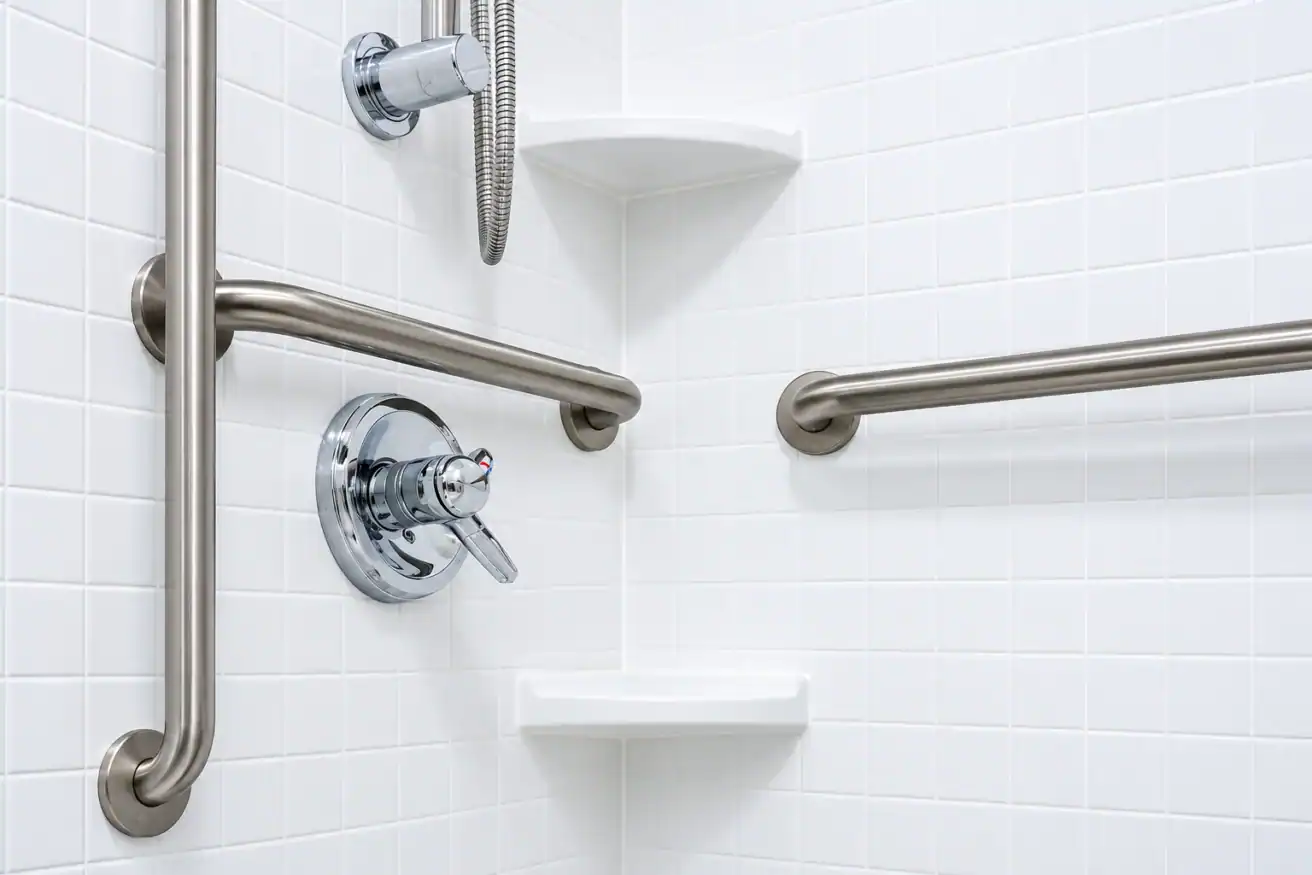
There is more to professional grab bar installation than just placing a bar in a wall and having it supported on both ends. There is a need to understand movement patterns throughout the bathroom and evaluate wall surfaces to determine support points. Grab bars can be added in countless locations to assist in movement throughout a bathroom. No height or location is ideal for every person or every shower.
When dealing with families in Lafayette, Youngsville, Broussard, and Carencro, I would rather start with your actual movement. At 101 Mobility of Lafayette, we assess the areas of movement that include where you enter the shower, where you stand, turn, or need support.
This determines if a grab bar is the only solution to assist with bathroom movement, or if other issues in the bathroom also need to be resolved to maximize independence and safety.
What Is A Shower Grab Bar Meant to Help With?
A shower grab bar gives a secure place to hold on to for support when moving throughout a bathroom.
This can be used when stepping into or out of the shower, when maneuvering throughout the bathroom, or when moving toward the tub or shower.
A grab bar is a support product, whereas a towel bar is designed to hold up towels. A shower curtain rod or towel bar can look like a grab bar, but they can be very deceptive. I can’t recommend using an ordinary towel bar to serve the same function as a grab bar.
101 Mobility sells professionally installed grab bars in different sizes and styles. Although the product is only one part of the recommendation, determining the location is the greater challenge. For example, a person may need a handhold while approaching the shower entrance while another person may not need support at that location.
Where Might Grab Bars Help Most?
There is no universal grab-bar arrangement that I would prescribe for every bathroom.
Instead, I look at the places where additional support might be useful in a person’s normal routine.
At the Shower or Tub Entrance
The area in front of the shower or tub is often the first place to be assessed.
It might be important to understand which direction you approach from, whether there is a threshold or tub wall, how you turn, and where you reach while entering and exiting.
A grab bar may provide a stable support while making that transition, but the location needs to align with the movement.
In the Shower
Inside the shower may also provide a location where a support is needed while standing, turning or repositioning.
Once again, there is not a universal position for all people, and a bar may be helpful for positioning the body in the position desired for support.
Next to the Toilet
Grab bars can also be beneficial next to the toilet. They can provide support when sitting down, standing up, or changing position.
Just because grab bars are beneficial near the toilet, doesn’t mean they are always in the same location. The bar’s location is dependent on the position of the other bathroom fixtures, the space available, and the customer’s movements.
There are also other bathroom safety products in addition to grab bars. It is helpful to know the other safety products because there are different reasons for a lack of support. For example, it may be a lack of a handhold, a slippery surface, or insufficient walking space, etc.
Do all Grab Bars Look Alike?
No, grab bars are available in various sizes, styles, and finishes. There are also various shapes and directions.
Support products do not always look like medical equipment. There may be several choices available that meet the family’s preferences for style, as well as function.
Here’s a simple way to differentiate the options:
| Grab Bar Style | Where it may be use | Main consideration |
|---|---|---|
| Straight Horizontal Bar | Along a wall where support is useful while moving or standing | Position should be in line with the persons reach and movement |
| Vertical Bar | Near an entry/exit where a hand hold at different heights maybe useful | Location is dependent on where a person approaches the area |
| Angled Bar | Where the movement maybe benefited from changing hand position | This should be located around the actual movement |
| Decorative Grab Bar | Where the appearance of the grab bar also needs to be taken into consideration | The product still has to fulfill the function of a support bar, decorative hardware is not the same |
The available styles and finishes should also be verified when selecting the product.
I do not select a product solely on the aesthetic value. Style has to be taken into consideration, but the primary concern is function. Does the bar support where it is attached.
Why is Professional Installation of a Grab Bar Important?
Grab bars can easily be attached to walls. But where it is attached and how it is attached needs to be considered for the surface of the wall, the layout of the bathroom and most importantly for the person using it.
Tiled showers, for example, present a different kind of installation from other types of wall finish. The installer must evaluate the actual surface and determine the best way to install.
The situation must be tailored to the person.
If a bar is placed in a location where you cannot reach it during the movement you are trying to support, it may not correct the issue you called about.
I have evaluated many calls for service where I ask the client how they enter the shower, where they steady themselves, and if there is any assistance, before determining where a bar should be placed.
Universal grab-bar heights, drill locations and mounting instructions should not be published. They belong to the actual situation and the installer.
Are Grab Bars Helpful Without a Total Bathroom Renovation?
Yes, grab bars can be beneficial without an entire bathroom renovation.
If the main issue is that you need a stable handhold while entering the shower, or a handhold while turning to leave the shower or use the toilet, a grab bar can help solve this issue.
A total bathroom renovation may not always be necessary.
If the true issue is not enough space to safely cross the shower threshold, not enough space in the doorway, not enough space to make a transfer, or an overall poor layout for the mobility device, adding a grab bar may not fully solve the problem.
101 Mobility has a range of bath products from smaller bath safety products to larger bathroom safety solutions. This allows us to look beyond the grab bar if the layout of the room creates the barrier.
In this case, I would suggest the smaller improvement if it sufficiently addresses the issue. If the layout of the shower and/or bathroom needs to change to fully resolve the issue, I would let the customer know and not suggest an additional grab bar.
What happens when we have a Grab Bar Installation?
There are several steps to the process that begin before anything is actually attached to the wall.
We have an open discussion to identify the movements that a person finds most difficult. This can be anything from entering and exiting the shower, standing while bathing, turning while bathing, moving to the toilet, and moving between different areas in the bathroom.
Next, we assess the room.
We consider where the person naturally reaches for. We determine what surfaces are available to be worked on. Then we decide where the support is actually needed and where the requested location is in relation to the movement.
After the best location is decided, the technician installs the product on the wall surface and using a method that is appropriate for that particular surface.
The last step is handoff. The customer is shown how to use the product correctly and given safety tips.
You should have a general sense of where the bar will be providing support and how it relates to the bathroom routine we discussed. Other limitations of the space should also be identified and not give the appearance that the bar is solving a problem it is not.
101 Mobility has service and support for accessibility products and has a local point of contact should a customer have questions after the installation.
If you are not certain if the issue in your Lafayette area bathroom requires a grab bar or if more changes are needed, a good starting point is to call us and request a free consultation. We can look at the room, listen to your routine, and determine potential issues and what type of assistance is needed.
Frequently Asked Questions
Can grab bars be installed in tiled showers?
Grab bars can be professionally installed in most tiled showers. The wall surface and the intended support location still need to be evaluated to determine an appropriate way to install the bar in that particular bathroom.
Are there decorative grab bars?
Yes. There are grab bars in various styles and finishes. While appearance is important, the bar still needs to be appropriate for the location and the support function it is intended to serve.
Is a towel bar ok?
A towel bar should not be used in place of a grab bar. Grab bars are support products and towel bars are not.
Do I need grab bars outside the shower as well?
Maybe. The answer really depends on how you get in and out of the shower. You may need a support point right when you get into the shower, or you may need support further in. I’d look at the actual movement and prescribe based on that rather than prescribing a bar outside every single shower.
Can grab bars be near a toilet?
Yes, if support is needed for getting on and off the toilet, or for getting up from a sitting position to a standing position, then grab bars can be considered near a toilet. The location of the toilet, neighboring walls, available space, and the individual’s movement can help determine the best placement.
What if my bathroom is small?
Smaller bathrooms can still have useful accessibility options. Limited space may impact which grab bar position or other bath safety product works best, so the space should be evaluated, rather than prescribing a standard option.
About the Author
Jonas Boutte is the owner of 101 Mobility of South Louisiana and serves Lafayette and surrounding communities. He has hands-on training from accessibility-equipment manufacturers and works with customers from the initial home consultation through product recommendations, installation coordination, and ongoing support.