Stairlift Fit in Broussard: What a Professional Installation Should Include
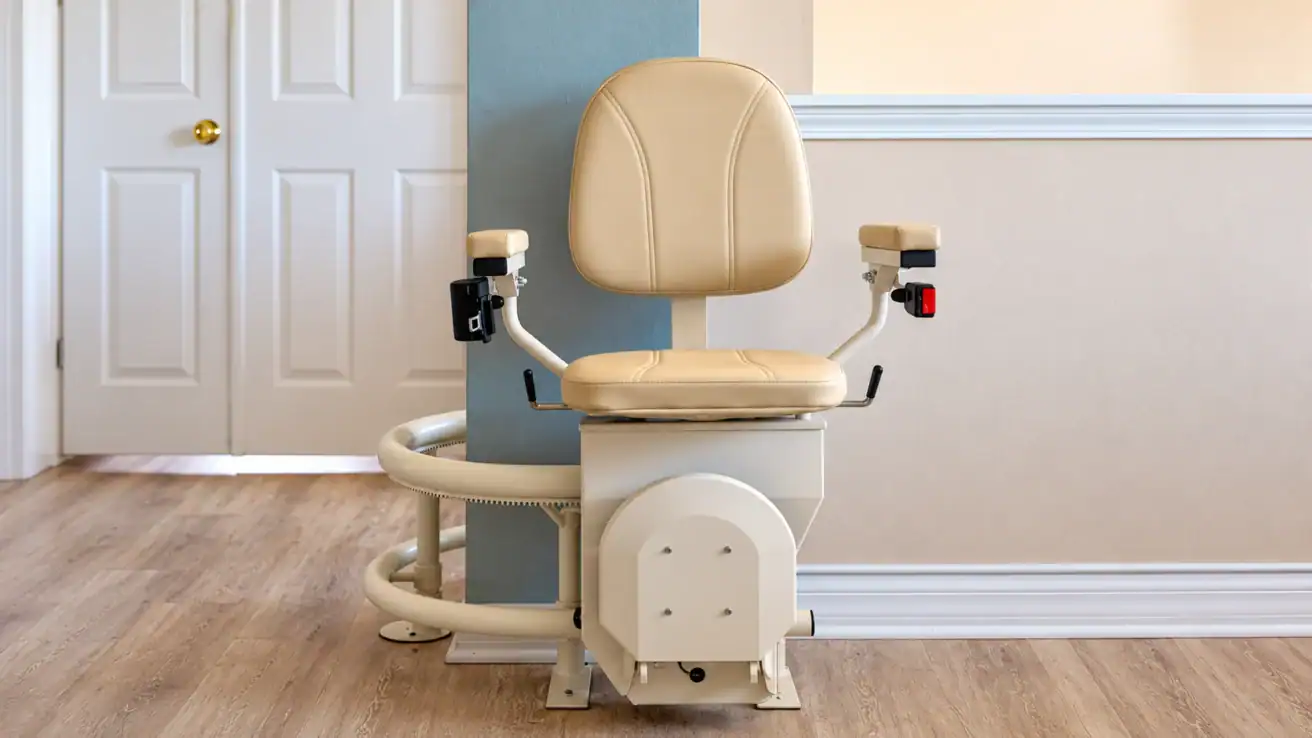
A stair lift is more than just the rail. There is the clearance when the lift is folded, the width of the stairs, and the needs of the household. There are landing and transfer needs. I have to consider the entire staircase from the rail, to each step, to the clearance at the bottom. I have to consider the use case and the traffic on the stairs. I also have to consider the location of doors.
I look at the same elements of the staircase as the folks I work with at 101 Mobility of Lafayette, but I look beyond the staircase. I look at the other household members and how the stair lift will impact them.
There are a number of different stair lifts to choose from. However, there is only one stair lift per household. So, it is my job to understand the household and where the best location is for the rail. It is also my job to understand the user and the needs of household members to provide a stair lift that is the best fit for the household.
A staircase in Youngsville must account for an open space on one side, and the positioning of the rail and handrail.
Staircases in Milton and Maurice may provide enough space for a stair lift, but may be lacking adequate headroom at the top.
Just because staircases have similar widths, doesn’t mean there aren’t differences in how a stair lift would need to be utilized.
Are Straight or Curved Rails Needed for the Staircase?
I will address the rail shape after the path of the rail has been determined.
A straight stairlift, by definition, is intended for use on a straight staircase.
A curved stairlift is used on a staircase with changes in direction, including landings.
| Rail Systems | Staircase Paths |
|---|---|
| Straight | Straight |
| Curved | Intermediate Landing |
| Curved | Winder |
| In some cases, two straight stairlifts may be an option | Two Straight Flights of Stairs with a Landing |
A tradeoff would be a landing transfer between the two stairlifts.
If the stairlift user can not transfer between the two stairlift seats, then the alternative equipment arrangement does not solve the access problem.
Swing Outs, Widths and Other Design Features Can Limit Stairlift Usability
While the width of a staircase provides a basic constraint, other design constraints and features may limit the use of a stairlift.
I consider many factors when doing a site visit, such as knee and rail positions, chair width, armrests, footrests, existing handrails, and the position of the lift when it folds up.
I look at the whole picture.
Stairlifts fold down to other positions to take up less space when they’re not in use. I try to determine if the space between the stairlift and the staircase is enough for other people to pass through.
When considering stairs and stairlifts, I look at a number of clearances such as knee clearances, handrail clearances, etc.
It’s good to consider if a caregiver or other person needs space to maneuver near the stairlift.
A stairlift that frees up space on the stairs for everyone else to use is ideal. Stairlifts that make the stairs unusable by everyone else are unacceptable.
When assessing the bottom of the stairs, I look at how the prospective user of the stairlift engages the stairlift chair. I look to see if there are obstructions in the lower stairs and hallways. If there are obstructions, I may want to look at a different model of stairlift with a different position of the rail.
The main concern at the top of the stairs is to determine if the prospective user of the stairlift can engage the chair in a position to get off the chair and move to another location.
I check the turning radius of the swivel seat, if there is one, to see if there is sufficient clearance on the landing.
A door in the line of travel can be overcome through customization, but often requires a longer rail.
The stairlift can be calibrated for the upper level run, but may still obstruct doors and block corridors and walking paths. Because of this, clearances need to be evaluated on all flights of stairs.
Sizing a stairlift is only part of the equation, the user also needs to be evaluated.
The user’s size and weight is just part of the equation. The user also needs to be able to sit down and get up. The user may need to be turned to sit.
Prior knowledge of the user can also help with control and armrest positioning. Footrest position also needs to be adjusted based on the user. A mobility aid, like a cane or walker, may also need to be taken along on the trip. A stairlift will only take the user. Other aids are left behind.
Two different users will require a different stairlift.
Because a stairlift is part of a system of a staircase, it may impact how other users, like siblings, use the stairs.
What I want to find out:
- How many people use the stairs?
- Do caregivers need space to assist?
- Is there a door at the bottom of the staircase?
- Is there a hallway that intersects with the stairlift?
- Where will the stairlift be parked?
- Can the rest of the family use the hallway or other routes that intersect the folded stairlift?
The answers to these questions will affect the location of the handrail and the types of models that I will compare.
I have to plan for the stairlift to be parked and cleared to move.
A Situation Where A Stairlift Won’t Work
There are cases where I will look for an alternate solution to a stairlift.
An alternate solution may be warranted where:
- A person is confined to a wheelchair
- It is not safe or practical for a person to transfer to and from a stair lift
- There is not enough space on the stairs to ensure clear passage for a stairlift
- There are inadequate open spaces on the upper and lower levels to ensure a safe and feasible means of transfer
- There are not sufficient space on the upper and lower levels to ensure that the stairlift will bring the occupant to an area that is safe and accessible
- A stairlift will not be the only means of transport for all members of the household
- There is not enough space in the staircase to provide clear passage between the levels for a lengthy period of time
My focus is on the safety and comfort of the occupants and not how to stretch the limits to fit a stairlift in a house.
A stairlift will be rented only for the period that it is warranted. A rental will be considered only if it is available. Current stairlift rentals depend on the product and local inventory.
| Stage | Expected Outcome |
|---|---|
| Assessment | Review staircases and landings. Analyze user and household. Identify potential obstructions. |
| Measure | Determine required clearances and measure staircase dimensions. |
| Recommend | Select stair lift to accommodate the user and staircase. |
| Plan | Determine clearance requirements for parking and charging of stair lift. Determine the position of handrails. |
| Implementation | Position and secure stair lift to the rail in accordance with plans. |
| Evaluation | Verify travel and function stair lift. Test controls. Demonstrate to user how to operate the stair lift. |
| Training | Inform user of features of stair lift and how to use it. |
| Post-Installation Support | Provide a means of contacting the service and repair organization. |
The chair lift and rail are considered one system. So are the controls, transfers, landings, and other clearances.
What Happens After the System is Installed?
After the system is installed, I test it to see if it will work over the entire length of the staircase. I also test how the user will get on and off the chair at the top and bottom of the staircase. I also test the swivel feature if the chair has that function. I simulate parking the chair lift and check clearances to see if the equipment charges as it should. I also demonstrate to the household how the system will work and whom to contact if they need service.
After the sale, our service and support staff are available for maintenance, diagnosis and repair.
Our evaluation of your home begins with a free in-home consultation. If you are in the Broussard, Youngsville, Milton or Maurice areas, come see us to see if a stairlift works for you. There, we will look at the accessibility of both landings, measure the rise of your staircase and assess the abilities of the client to determine the stairlift configuration best for you.
Do you have staircases that have a tight Run? Will a stairlift fit that?
Many factors contribute to determining if a staircase is too narrow for a stairlift. These include the width of the handrails, folds on the seat and other cleared areas. Each case is assessed on an individual basis.
How do I determine if a stairlift is Straight or Curved?
In general terms, a stairlift is Straight if the Rail does not require Turns and a Curved stairlift does.
Will a stairlift block clear passage on the staircase?
Again, this all depends on the width of the staircase, the model of stairlift, where the rail is positioned and the level of use the staircase has.
Can a stairlift be installed if a door obstructs the landing?
Possibly. I account for door swings during my plans. I have to analyze many factors. For example, I have to see how the rail is positioned, where the seat can park, what direction the seat swivel is restricted to, and if the door can still be used.
Can a single stairlift be used by two people?
Yes, in theory. Each individual has to be able to use the stairlift comfortably. So, it could mean that the controls have to be in a position where they can both easily use them, or the seat width has to be large enough to allow both to sit on it comfortably.
What is the process after the installation of a stairlift?
There are a wide range of services that can be performed after the installation of a stairlift. These can range from providing the customer with training on how to use the stairlift, performing preventative maintenance, to repairing the stairlift.
About the Author
Jonas Boutte is the owner of 101 Mobility of South Louisiana and has hands-on training from mobility and accessibility manufacturers including Bruno, Harmar, Stiltz, Staying Home, EZ-ACCESS, National Ramp, and others. He helps families throughout Lafayette and surrounding communities evaluate stairlifts and other accessibility solutions based on the person, staircase, home layout, and daily routine.