Vehicle Lifts for Wheelchairs: Which Option Is Right for Your Parent's Vehicle?
Quick Takeaways:
- Most solutions fall into three common categories: hitch-mounted carriers, under-vehicle platforms, and in-vehicle lifts for vans.
- The right option depends on your vehicle type, your parent’s level of independence, and how often they travel.
- Professional installation protects both safety and vehicle warranty; this is not a DIY purchase.
- A locally certified installer handles everything from vehicle assessment to final calibration — no juggling separate providers.
- 101 Mobility offers free in-home consultations and carries multiple vehicle lift solutions for different needs and vehicle types.
Getting a parent with a wheelchair from point A to point B sounds straightforward until you start sorting through the options. Hitch carriers, van lifts, under-vehicle platforms, the terms can get confusing fast. Here’s the simple version. If your parent uses a manual or power wheelchair and you need to figure out which vehicle lift makes transportation workable, you are in the right place.
The short version: vehicle lifts for wheelchairs come in three main types, and the right one depends on your parent’s vehicle, whether they transfer out of the chair before travel, and how often they need to get around. We cover all three, explain the tradeoffs, and walk through what professional installation looks like so you know what to expect.
The Main Types of Vehicle Lifts for Wheelchairs
Here is a quick comparison before we go deeper:
| Type | Best For | Vehicle Fit | Key Tradeoff |
| Hitch-mounted carrier | Folded manual or power wheelchairs | SUVs, trucks, minivans | Chair must be empty during transport |
| Under-vehicle platform lift | Power wheelchairs, scooters | Minivans, full-size vehicles | Requires more vehicle clearance |
| In-vehicle lift (van) | Users who remain seated in chair | Minivans, converted vans | Highest investment, full independence |
Hitch-Mounted Wheelchair Carriers
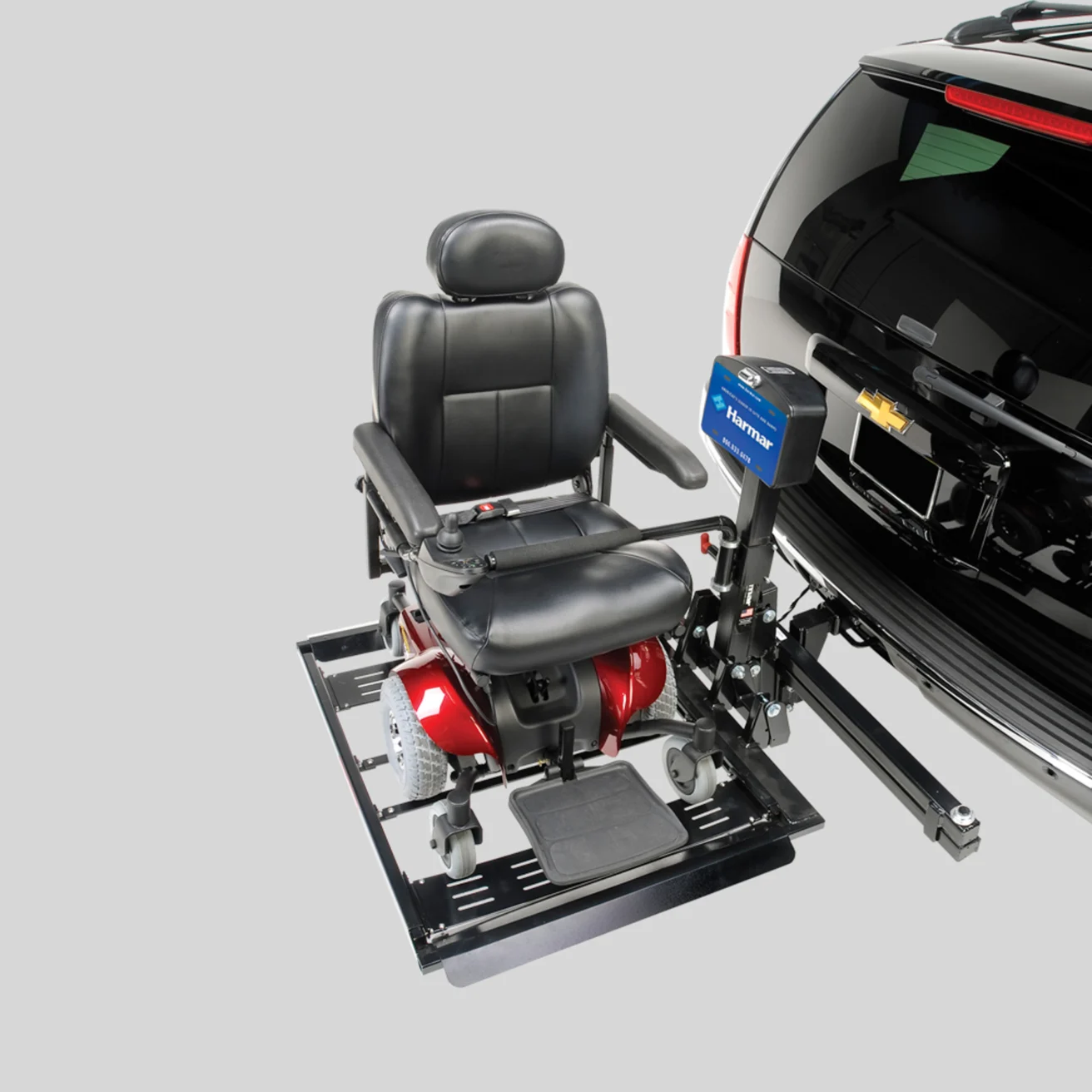
These are the most common entry points for families managing a manual or folding power wheelchair. A hitch carrier attaches to the trailer hitch on the back of an SUV, truck, or minivan and holds the folded chair during transit. The user transfers into the vehicle seat before the chair is loaded.
The primary advantage is cost and compatibility, most standard vehicles can be fitted with a hitch receiver if they do not already have one, and carriers are available in both manual and power-fold configurations. Power-assisted models let the caregiver load and unload the chair with minimal physical effort.
The tradeoff: the user must be able to transfer to a vehicle seat independently or with assistance. This option does not work for someone who stays seated in the chair during transport.
Under-Vehicle Platform Lifts
These lifts use a retractable platform that lowers from beneath the vehicle floor, allowing a power wheelchair or scooter to be driven onto the platform and hoisted into a storage bay below the vehicle. They are most commonly fitted to minivans and some full-size vehicles with adequate undercarriage clearance.
The benefit is that the equipment is stored out of sight and does not affect rear visibility or vehicle aesthetics. The limitation is that the vehicle itself needs adequate clearance underneath, and the lift mechanism requires professional installation and periodic service.
In-Vehicle Lifts for Vans
For a parent who cannot transfer out of their wheelchair, an in-vehicle lift is the most functional solution. These lifts are built into minivans or converted vans and allow the user to remain seated in the wheelchair while the lift raises them into the vehicle. The wheelchair is then secured for travel.
This is the highest-investment option, but it provides the most independence, particularly for a parent who will eventually be traveling with reduced caregiver involvement. It is also the option most commonly associated with full vehicle conversion programs.
See 101 Mobility’s full range of vehicle accessibility solutions at 101mobility.com/products/wheelchair-carriers.
How to Match the Right Lift to Your Parent’s Vehicle and Needs
Before booking a consultation, it helps to work through a few key variables. None of these require technical knowledge, they are practical questions about how transportation actually works in your family’s situation.
- What type of wheelchair does your parent use? Manual chairs fold and are lighter; power chairs are heavier and often do not fold, which affects which carriers and lifts are compatible.
- Does your parent transfer to a vehicle seat, or do they need to stay in the chair? This is the first sorting question for lift type.
- What vehicle are you working with? Sedans have limited hitch capacity and no undercarriage clearance; minivans and SUVs have more options.
- Do you have garage height restrictions? Some outside-mounted carriers add height to the vehicle profile and may not clear low garage entrances.
- How often do your parents travel? High-frequency use favors a more convenient loading mechanism, such as a power-assisted carrier or an in-vehicle lift.
A local specialist can work through these questions with you in a single in-home assessment and give you a clear recommendation with no obligation to buy on the spot. Pricing across vehicle lift options is also available at 101mobility.com/pricing.
What to Expect from Professional Installation
Vehicle lift installation is not a weekend project. The components need to be fitted to your specific vehicle, calibrated for weight distribution, and tested before they are safe to use regularly.
Here is what the process looks like with a certified installer:
- Vehicle assessment: the technician evaluates the vehicle in person, confirms hitch receiver specifications, checks undercarriage clearance if relevant, and verifies the carrier or lift model is compatible.
- Hitch installation: if the vehicle does not already have a receiver hitch, installation is scheduled as a separate step before the carrier is fitted.
- Carrier or lift fitting and calibration: the unit is mounted, wired if motorized, and adjusted for smooth operation.
- Final walkthrough: you see the system in operation and learn how to load and unload safely. Any questions about daily use are answered before the technician leaves.
Improper installation may affect warranty coverage and could create safety or fit issues. A poorly secured carrier can cause damage to the wheelchair or the vehicle during transit. Certified installation is not optional for this category of equipment.
Why a Local Installer Makes the Difference
If you are balancing a parent’s care needs with a full schedule of your own, the last thing you need is to manage three vendors for a single purchase. A company that handles the assessment, the installation, and the follow-up service through the same team is worth significantly more than a mail-order option that requires you to source a separate installer.
101 Mobility’s franchise model is built for exactly this situation. Locally owned locations carry manufacturer-certified technicians who do the assessment, perform the installation, and are reachable when you have a question afterward.
For families who are managing multiple accessibility needs at once, a parent who uses a wheelchair and also needs home modifications, 101 Mobility covers that range too. See the full product line at 101mobility.com/products.
Frequently Asked Questions
What is the best vehicle lift for a power wheelchair?
For power wheelchairs, the right lift depends on the chair’s weight and folding capability. Heavier, non-folding power chairs typically require an under-vehicle platform lift or an in-vehicle van lift. A certified installer will assess the chair’s specifications alongside your vehicle to confirm compatibility before recommending a solution.
Can I install a wheelchair carrier myself?
Manual hitch-mounted carriers with no electrical components are sometimes described as DIY-friendly, but professional installation is still strongly recommended. Improper mounting can damage the vehicle hitch receiver, void warranties, or create safety issues during highway driving. For powered or in-vehicle lifts, professional installation is required.
Do vehicle lifts for wheelchairs fit any car?
Not all vehicles are equally compatible. Sedans have limited options compared to SUVs, minivans, and trucks. The vehicle’s towing or hitch capacity, available hitch receiver class, and undercarriage clearance all factor into which lift types are viable. An in-home vehicle assessment is the fastest way to get a clear answer for your specific situation.
How much do vehicle lifts for wheelchairs cost?
Pricing varies significantly by type. Hitch-mounted carriers start at a lower price point, while in-vehicle van lifts represent the highest investment. Installation labor is a separate cost from the product itself. For a full breakdown, see 101mobility.com/pricing.
How long does vehicle lift installation take?
Installation time varies by vehicle and carrier type. Your installer can give you a more clear estimate. More complex in-vehicle lift installations may take a full day. Your installer will give you a specific timeline based on your vehicle and the product being installed.
Ready to Find the Right Vehicle Lift for Your Parent?
Sorting through vehicle lift options on your own takes time you probably do not have. A 20-minute phone call with a local specialist followed by a single in-home assessment will get you to a clear, confident answer without requiring another round of research.
| 101 Mobility carries multiple vehicle lift solutions and installs them locally through certified technicians. No subcontracting, no scheduling maze, no guesswork.Schedule a free consultation at 101mobility.com/get-free-consultation and let a local specialist match the right solution to your parent’s vehicle and lifestyle. |