Quick Takeaways:
- Straight stairlifts typically run $3,000 to $6,000 installed; curved models usually start around $8,000 and go higher.
- A fair quote covers equipment, installation, delivery, and warranty in one number, not as separate surprises.
- Brand choice affects price, but warranty terms and local service availability matter just as much as upfront cost.
- Buying online may look cheaper, but it almost never includes installation, and improper setup can void the warranty.
- Ask every provider the same five questions before you sign anything.
If you’ve started shopping for a stairlift, you’ve probably noticed something frustrating: prices vary a lot, and most companies won’t give you a number until you’ve sat through a consultation. That gap between “I just want a ballpark” and “someone needs to come measure your stairs” is real, and it’s enough to make anyone wonder whether they’re about to get taken advantage of.
The short version is that stairlift pricing isn’t arbitrary. It’s driven by specific variables, and once you understand them, evaluating any quote becomes much more straightforward. This guide walks through what drives cost, what a solid quote should include, and the questions to ask before you commit to anyone. No jargon, no runaround.
What Determines the Price of a Stairlift?
Stairlift pricing comes down to a handful of select variables. The biggest one is the stair type.
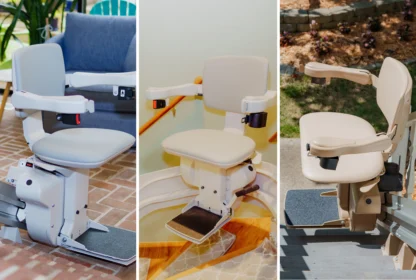
Straight staircases are the simplest case. The rail runs in a single direction, components are largely standardized, and installation is faster. Most straight stairlift installations land in the $3,000 to $6,000 range fully installed. You can see a breakdown at the straight stairlift pricing guide.
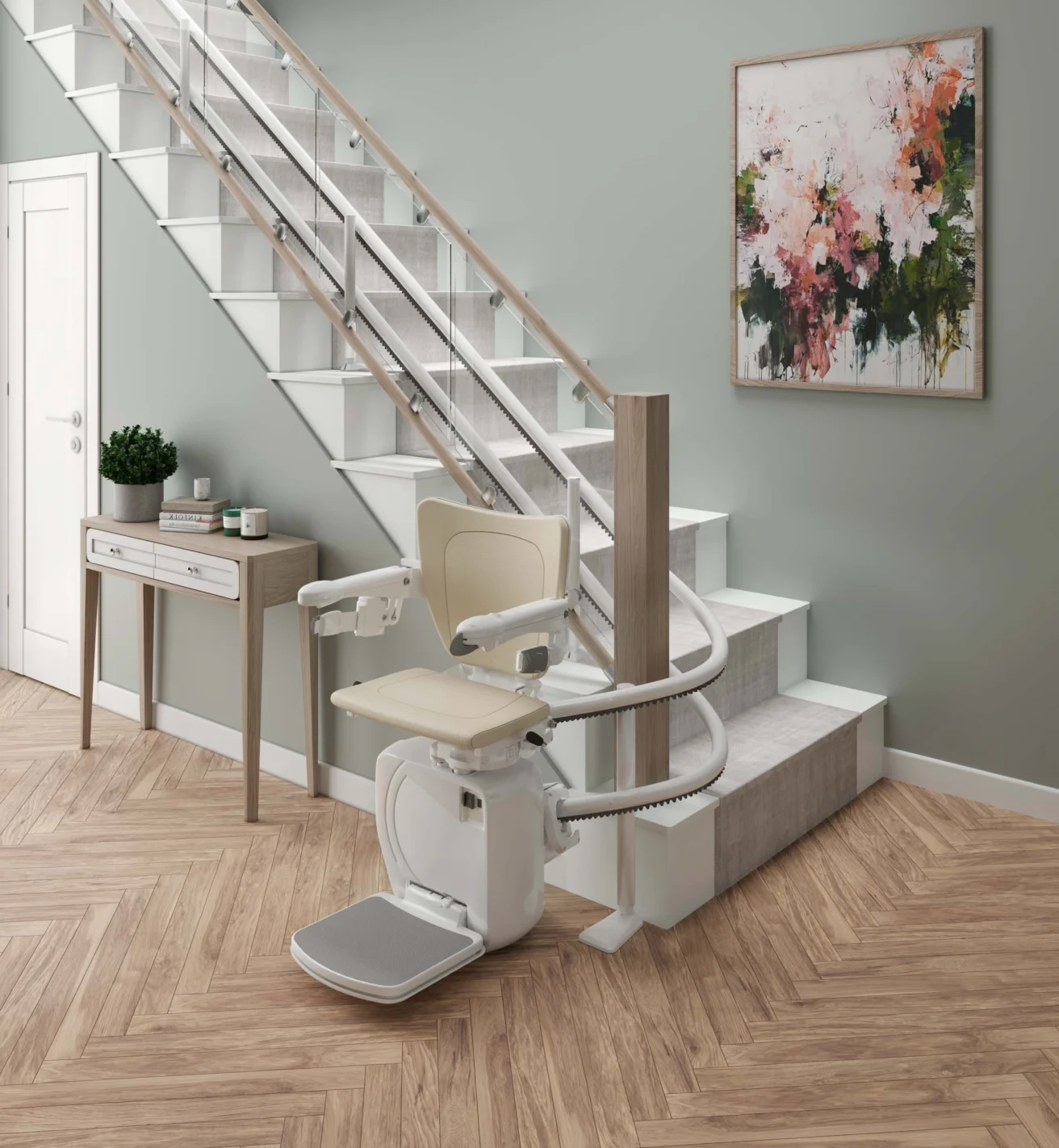
Curved staircases are a different story. Every curved rail is custom-fabricated to fit the specific geometry of your staircase, which means longer lead times and higher costs. Expect curved stairlift pricing to start around $8,000 and go considerably higher depending on rail complexity and length.
Beyond stair type, the other cost drivers are rail length (longer stairs cost more), weight capacity (heavy-duty models carry a premium), brand, and installation labor. That last one is where shoppers often get caught off guard. The advertised price is frequently the equipment cost only. The total installed cost can be meaningfully different. A good provider will quote you the full number upfront, not piece it together later.
| A note on ranges: the figures above are honest starting points, not guarantees. Final pricing always depends on your specific staircase configuration and needs to be confirmed with an in-home assessment. Any provider who quotes a final number over the phone without measuring your stairs is guessing. |
What a Fair Quote Actually Includes
A low number is not necessarily a fair quote. A fair quote is a complete quote.
When you receive a written estimate from any provider, it should clearly break out the following:
- Equipment cost (specific model, weight capacity, and any options)
- Installation labor
- Delivery and freight
- Warranty coverage (duration, what’s covered, who services it)
- Removal and disposal of an old unit, if applicable
The table below shows how a transparent quote compares to a low-ball one:
| Line Item | Fair Quote Includes | Low-Ball Quote May Omit |
| Equipment | Model, brand, weight capacity | Add-ons billed later |
| Installation labor | Listed separately, included in total | Charged day-of as a surprise fee |
| Delivery | Included or clearly stated | Hidden or billed on arrival |
| Warranty | Years, parts and labor specified | Vague or separate add-on cost |
| Old unit removal | Addressed upfront | Not mentioned |
Two questions to ask any provider before moving forward: “Is installation included in this total?” and “What exactly does the warranty cover and for how long?” These two questions will tell you most of what you need to know about how that company operates.
How Brand Affects Home Accessibility Solutions Pricing
Brand is a real cost driver, but it’s often misread as a quality indicator when it’s actually a set of tradeoffs.
The major players in the stairlift market include Bruno (American-made, strong dealer network) and Acorn (UK-based, widely distributed). They price differently, warranty differently, and are serviced differently. A detailed stairlift brand comparison can help you understand the practical differences. The short version: a lower-priced brand isn’t automatically the wrong choice. What matters is whether your local provider can actually service it after the sale.
Warranty Length and What It Really Covers
This is where buyers consistently underestimate long-term cost. Two quotes that are $500 apart on day one can look very different in year three.
When comparing warranties, look for these specifics: How many years does it run? Does it cover parts only, or parts and labor? Who performs the service, a local technician or a national dispatch? Does the warranty require you to ship any components back, or is in-home service included?
A warranty serviced by a local provider who knows your unit is worth more than a longer warranty that requires you to coordinate shipping. This is a genuine differentiator between local installation companies and national online retailers.
Online Purchase vs. Local Installation: The Real Cost Comparison
The obvious appeal of buying online is a lower sticker price. What those prices typically don’t include: professional installation, home measurement, and any post-sale support. You’re buying a product; you’re handling everything else. In practice, this means hiring a separate contractor for installation, which introduces its own cost and risk. Improper installation is not just a safety concern. It frequently voids the manufacturer’s warranty.
If you want a sense of what working with a local provider actually looks like from a customer perspective, the verified customer reviews are worth reading. The thing people mention most is having someone local to call when something needs attention months after install.
Questions to Ask Before Accepting Any Quote
Treat these as a checklist. Ask every provider the same questions, and pay attention not just to the answers but to how willingly they’re given.
- Is installation included in the total you’re quoting me?
- What does the warranty cover, and who handles service calls locally?
- Are there any fees not reflected in this quote?
- How long has your team been installing this specific brand?
- Do you offer financing options?
A provider who hesitates or gets vague on any of these is telling you something with their lack of transparency.
Frequently Asked Questions
How much does a stairlift cost on average?
For a straight staircase, expect $3,000 to $6,000 for a fully installed unit. Curved staircases start around $8,000 and can run significantly higher depending on the rail configuration. These are real-world installed figures, not equipment-only prices.
Does Medicare cover stairlifts?
Generally, no. Traditional Medicare does not cover stairlifts because they’re considered a home modification rather than durable medical equipment. Some Medicare Advantage plans have started offering limited home modification benefits, so it’s worth checking your specific plan. Medicaid programs and state-level assistance programs can also vary by location.
What’s the difference between a stairlift and a home elevator?
A stairlift attaches to the staircase wall or stairs and carries a person in a chair along the existing staircase. A home elevator is an enclosed lift that travels through a shaft cut into the home. Stairlifts are significantly less expensive, faster to install, and don’t require structural modification. Elevators make sense for multi-story homes where a seated lift isn’t practical, but they’re a substantially larger investment.
How long does a stairlift last?
Most stairlifts are built to last 10 years or more with normal use and basic maintenance. Battery backup systems (standard on most modern units) tend to need replacement every few years. The brand, usage frequency, and quality of servicing all affect lifespan. This is another reason warranty terms matter: ongoing service from a local technician who knows the unit will extend its life.
Can I get a stairlift quote over the phone?
You can get a general price range, but not an accurate final quote. Stairlift pricing depends on staircase length, configuration, and any site-specific factors that only show up during an in-home visit. Providers who give firm prices before measuring your stairs are estimating. Budget accordingly, and get the final number in writing after the assessment.
Getting a Quote You Can Trust
Once you understand what drives pricing, evaluating quotes becomes methodical rather than stressful. Know your stair type. Get a fully itemized number. Compare warranty terms alongside the price, not just the price alone. Ask the same questions of every provider and notice who answers them directly.
| A trustworthy local provider will be comfortable with every question on that list. They’ll give you a written quote that covers everything, explain their warranty in plain language, and have a local technician ready when you need follow-up service. That’s the standard worth holding any installer to. Schedule a free consultation with a local 101 Mobility provider at 101mobility.com/get-free-consultation. |