Caregiver Transfer Planning in Port Allen: How I Plan Handicare-Assisted Transfers at Home
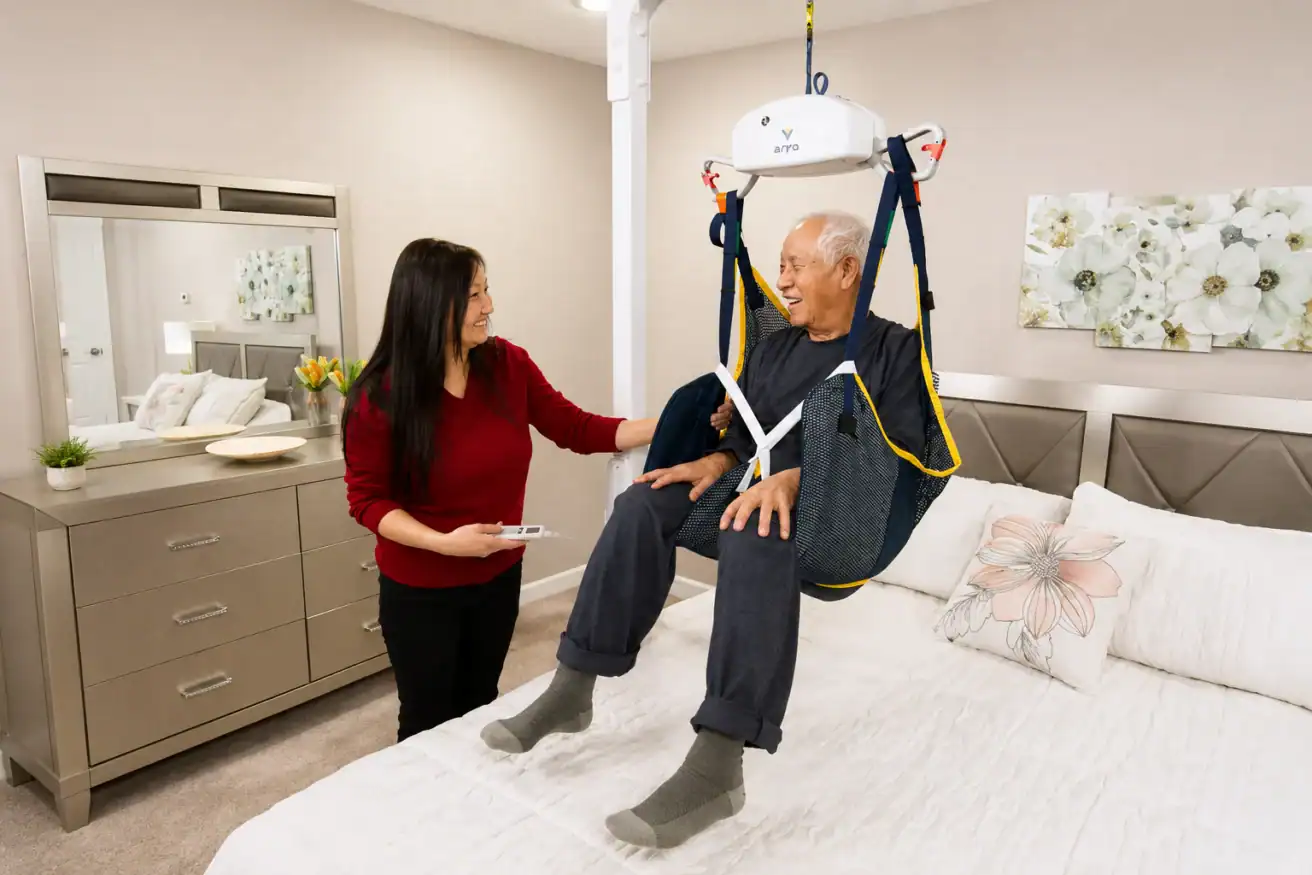
When I help a family with caregiver transfer planning in Port Allen, I do not begin by choosing a patient lift. I begin by looking at what actually needs to happen during the day.
Where does the person transfer from? Where are they going? How much room does the caregiver have? Can the equipment approach the bed or chair properly? Is the bathroom route practical? What type of sling or transfer aid will be used?
Those questions help me determine whether a patient-handling solution can work comfortably within the home and routine.
My role is focused on the equipment and physical environment. Medical or clinical decisions about whether a particular transfer method is appropriate should come from the person’s qualified healthcare professionals.
What I Review During Caregiver Transfer Planning in Port Allen
A good transfer setup needs more than a lift that technically fits inside a room.
I look at the complete process.
| What I Review | Why It Matters |
|---|---|
| Primary transfer points | Shows where equipment will actually be needed |
| Bed, chair, and wheelchair access | Determines how closely the lift can approach |
| Available floor space | Affects positioning and maneuverability |
| Sling and lift compatibility | Helps ensure components are designed to work together |
| Caregiver reach | Determines whether controls and transfer areas are accessible |
| Doorways and hallways | Helps identify route restrictions |
| Bedroom-to-bathroom route | Reveals turns, thresholds, and tight spaces |
| Destination area | Confirms there is enough room to complete the transfer |
| Training needs | Helps caregivers understand operation and routine use |
Looking at these factors together gives families a much clearer picture than shopping for caregiver equipment based on a product description alone.
I Start With the Transfers That Happen Every Day
The first question I ask is simple:
Which transfers are actually creating difficulty?
For one household, the priority may be moving from the bed to a wheelchair in the morning. Another family may be most concerned about getting from a chair to the bathroom.
Common transfer points include:
- bed to wheelchair
- bed to chair
- chair to wheelchair
- bedroom to bathroom
- wheelchair to another seated surface
- transfers connected with toileting or bathing routines
I then look at how often those movements occur and how the rooms connect.
This keeps the plan centered on everyday use rather than assuming that one piece of equipment will solve every transfer challenge.
I Check Whether the Patient Lift Fits the Space
A patient lift assessment in Port Allen should include the room itself.
Portable patient lifts need enough floor area to approach the transfer point and enough room for the caregiver to operate them. Beds, nightstands, dressers, rugs, chairs, and other furniture can all influence how usable that space becomes.
I usually review:
- usable floor area beside the bed
- access around the chair or wheelchair
- furniture placement
- flooring and thresholds
- door clearance
- turning areas
- the approach to the destination
Sometimes rearranging a room creates a better working area. In other situations, the layout may make a different type of patient-handling equipment worth considering.
101 Mobility offers both portable patient lifts and overhead systems, including Handicare ceiling lifts. The right category depends on the transfer routine, space, equipment requirements, and guidance provided for the person receiving assistance.
Sling Compatibility Is Part of the Equipment Plan
A lift and sling should never be treated as unrelated pieces of equipment.
When I review a setup, I want to know what lift is being considered, what attachment system it uses, and whether the proposed sling is designed to work with that equipment.
Factors may include:
- lift model
- attachment style
- sling type
- sling size
- intended transfer
- manufacturer requirements
I do not determine clinical sling needs. Those decisions should reflect manufacturer instructions and guidance from the appropriate healthcare professional when necessary.
From an accessibility-planning standpoint, my job is to make sure the equipment being considered can work together and within the physical space available.
Caregiver Reach and Positioning Matter
Home transfer safety involves the caregiver’s working area too.
I look at whether the person providing assistance has enough room to reach the controls, position the equipment, guide the transfer, and move around the bed or chair.
A lift might physically enter a room but still be difficult to use if a caregiver becomes trapped between the equipment and a wall.
That is why I look beyond basic measurements.
I want to understand where the caregiver will stand at the beginning, during the transfer, and at the destination.
A workable setup should support the routine rather than require someone to repeatedly work around furniture or tight corners.
I Look at the Entire Bedroom-to-Bathroom Route
Bedroom bathroom transfers are often more complicated than the individual transfer itself.
The route between the two rooms may include:
- narrow doorways
- hallway turns
- flooring changes
- raised thresholds
- furniture
- tight bathroom entrances
- limited space near the toilet or other destination
I walk that entire path whenever it is relevant.
For portable equipment, we need to know whether the lift can move through the route and whether there is enough room at the destination to position it.
For an overhead system, planning may involve evaluating where transfers occur and how the lift or track configuration would support those movements.
The objective is not simply to get someone off the bed. The complete transfer needs a usable starting point, route, and destination.
Training Is Part of the Plan
Even well-matched transfer equipment needs to be understood by the people using it.
That is why I consider training part of the planning process.
Depending on the equipment, caregivers may need instruction on:
- basic controls
- equipment positioning
- sling attachment points
- transfer preparation
- emergency features
- charging or battery routines
- storage
- basic care of the equipment
101 Mobility’s approach includes helping customers understand how their accessibility equipment works rather than simply leaving the equipment in the home.
The goal is for the household to have a clear routine built around the specific product installed.
Comparing Common Patient-Handling Options
Different transfer situations may call for different equipment.
| Option | What I Consider |
|---|---|
| Portable patient lift | Floor space, maneuvering room, transfer points, and storage |
| Ceiling or overhead lift | Transfer locations, room configuration, and planned coverage |
| Sit-to-stand lift | Whether this equipment category matches professional recommendations and the intended routine |
| Transfer sling | Compatibility with the lift, attachment system, intended use, and sizing requirements |
| Other transfer aids | The specific task being supported and how the aid fits the caregiver’s routine |
For example, the Handicare MiniLift 200 is a sit-to-stand patient-handling option, while Handicare overhead systems use a different approach to moving between transfer points.
Neither category should be selected simply because it appears easier or more compact.
The equipment has to fit the person’s established transfer plan, the caregiver’s needs, and the home.
When to Schedule a Patient Lift Assessment in Port Allen
A home evaluation can be especially useful when a family knows transfer assistance is becoming necessary but is unsure which equipment will fit.
I recommend starting the conversation when:
- bed-to-chair transfers are becoming more difficult to manage
- the existing transfer method requires awkward positioning
- caregivers are unsure whether there is enough room for a lift
- the bathroom route creates complications
- a family is comparing portable and overhead options
- new equipment has been recommended and the home needs to be evaluated
- caregivers need a clearer plan for how equipment will fit into the daily routine
You do not need to know which lift or sling you need before scheduling a consultation.
That is what the planning process is for.
Frequently Asked Questions
What happens during caregiver transfer planning in Port Allen?
I review the transfer points, caregiver working area, floor space, room layout, travel routes, equipment fit, sling compatibility considerations, and training needs. The goal is to determine how patient-handling equipment may fit into the home’s existing routine.
How do I know whether a portable patient lift will fit in a bedroom?
The room needs to be evaluated based on usable floor space, furniture placement, bed access, turning room, and the lift’s approach to the transfer point. Measuring only the room’s overall dimensions may not give the full picture.
Can a patient lift be used for bedroom-to-bathroom transfers?
Some patient-handling systems are designed to support transfers involving beds, wheelchairs, chairs, toilets, and other locations. Whether a particular system is suitable depends on the equipment, route, available space, and the individual’s established transfer requirements.
How do I choose the right transfer sling?
Sling selection should account for compatibility with the lift, attachment method, correct sizing, intended transfer, manufacturer instructions, and any guidance provided by the person’s qualified healthcare professional.
What if our bathroom is too small for a portable lift?
A tight bathroom does not automatically determine the answer. I look at the doorway, approach, available floor area, transfer destination, and surrounding route. That information helps determine which equipment categories deserve further consideration.
Does 101 Mobility provide medical transfer assessments?
No. My role is to evaluate the home environment, accessibility needs, and equipment fit. Medical or clinical decisions should come from the appropriate healthcare provider.
Should caregivers receive training before using patient-handling equipment?
Caregivers should understand the specific equipment they will be operating, including its controls, sling connections, positioning, safety features, and manufacturer instructions. Training needs should be addressed as part of the equipment plan.
Build a Transfer Plan Around the Home and Routine
The right transfer solution starts with the transfer itself—not with a product catalog.
When I work with Port Allen families, I review the bedroom, bathroom, caregiver working area, floor space, transfer routes, and equipment requirements before making a recommendation.
That helps us narrow the options to equipment that makes sense for the home and the daily routine.
If your family is beginning to compare lifts, slings, or other transfer aids, explore 101 Mobility’s Patient Handling Solutions or connect with 101 Mobility of Baton Rouge & Lafayette.
Book a Free Consultation to have your home and transfer routes reviewed.
About the Author
Jonas Boutte is the owner of 101 Mobility of South Louisiana. With hands-on accessibility-equipment training, he helps Baton Rouge-area families evaluate their homes, compare practical mobility solutions, and coordinate equipment that fits their space and everyday routines.