Bathroom Transfer Safety in St. Gabriel: Helpful Updates Beyond Grab Bars
When people think about bathroom safety, they often start and stop with grab bars. They can help, but they are only one part of a safer transfer routine.
For many households in St. Gabriel, the bigger issue is how a person moves through the bathroom as a whole. Stepping into the shower, turning in a tight space, sitting down at the toilet, standing back up, and managing wet floors all place different demands on balance, strength, and coordination. The safest bathroom is not just the one with support mounted on the wall. It is the one designed around the actual movement path.
If you are planning for aging in place, supporting recovery, or helping a loved one stay safer at home, it helps to look beyond basic hardware and focus on bathroom transfer safety in St. Gabriel from a practical, everyday perspective.
Why Bathroom Transfers Deserve More Attention
Many bathroom falls do not happen because a room has no support at all. They happen during transitions.
That includes moments like:
- Stepping over a tub edge
- Shifting from standing to seated
- Rising from the toilet
- Turning on a wet floor
- Reaching for support that is too far away
- Trying to assist someone in a space that is too tight
These are movement problems, not just product problems. A bathroom can have a bar on the wall and still feel difficult to use if the entry, seating, lighting, and spacing are not working together.
Bathroom Transfer Safety in St. Gabriel Starts with the Full Movement Path
A better bathroom safety plan starts by looking at the sequence of movement from the doorway to the fixture and back again.
Quick bathroom transfer check
| Area to Review | What to Look For | Why It Matters |
|---|---|---|
| Entry path | Clear floor space, easy approach, low clutter | Reduces hesitation and awkward positioning |
| Shower or tub access | Step-over height, stable entry point, seated option | Helps lower risk during one of the most difficult transfers |
| Toilet area | Comfortable seat height, nearby support, turning room | Makes sit-to-stand movement safer |
| Floor surface | Slick spots, water spread, unstable mats | Supports fall prevention bathroom goals |
| Lighting | Shadows, dark corners, poor nighttime visibility | Helps with foot placement and confidence |
| Assistance zone | Enough space for a caregiver to stand and help | Improves safety for both people |
This wider view often reveals why a bathroom still feels unsafe even after a few basic changes.
Helpful Updates Beyond Grab Bars
Shower entry support
Shower entry is one of the most common trouble points. Even a small threshold or tub wall can create a difficult transfer when balance, leg lift, or endurance is limited.
A safer setup may include a more stable place to hold, a seated transfer option, or a layout that reduces the need to step and turn at the same time. For some homes, shower transfer support means adding a bench. For others, it may mean using a transfer chair or sliding system that allows the user to stay seated through the movement.
The best choice depends on how the person enters the shower, how much help they need, and how much room the bathroom provides.
Toilet transfer support
Toilet safety is often overlooked because the transfer seems short and familiar. In reality, it may happen many times a day, often when the user is tired, rushing, or moving at night.
Helpful updates can include improved seat height, better nearby support, and a layout that allows the user to approach and stand with less twisting. If the person needs assistance, the space around the toilet matters just as much as the support itself.
A toilet area should make it easier to lower, stabilize, and rise with control.
Safer bathroom seating
Not every person should be expected to remain standing throughout bathing. Seating can reduce fatigue, improve stability, and make transfers more controlled.
Depending on the layout, that may mean:
- A shower seat for steady seated bathing
- A transfer bench for entering over a tub edge
- A sliding transfer solution for harder step-over situations
- A mobile bath system for more complex needs
The right seating choice should fit both the bathroom and the person using it. A bulky option in a tight room can create a new problem, while a well-fitted option can make daily bathing much more manageable.
Non-slip surfaces and water management
Slip prevention should be part of any bathroom safety St. Gabriel plan. Wet flooring, overspray, and unstable mats can quickly undermine other safety upgrades.
Focus on surfaces that stay more predictable underfoot and on ways to keep water from spreading into transfer zones. The goal is not to fill the room with accessories. It is to make the floor more reliable where movement actually happens.
Better lighting and visibility
Good lighting supports safer foot placement, better depth perception, and more confident transfers.
Pay attention to:
- Entry lighting near the bathroom door
- Fixture lighting around the toilet and shower
- Nighttime visibility for early-morning or overnight use
- Contrast between flooring, fixtures, and support points
This is a simple update, but it often makes a noticeable difference.
Caregiver space and layout fit
If a spouse, family member, or caregiver may help with transfers, the room needs enough usable space for that support to happen safely.
That means asking practical questions:
- Can someone stand beside the user without blocking movement?
- Is there enough turning room for mobility equipment?
- Can a helper reach the person without leaning dangerously?
- Does the transfer path feel cramped or awkward?
A safer bathroom is not only easier for the user. It is also easier for the helper.
When Simple Updates May Not Be Enough
Some bathrooms need more than surface-level adjustments.
If stepping over the tub wall is still difficult, if the user cannot manage a standing transfer reliably, or if the space demands seated movement from one point to another, a more specialized solution may be the better fit.
Examples can include:
| Challenge | Possible Direction to Explore |
|---|---|
| Trouble stepping into a tub | Transfer bench or seated tub-entry solution |
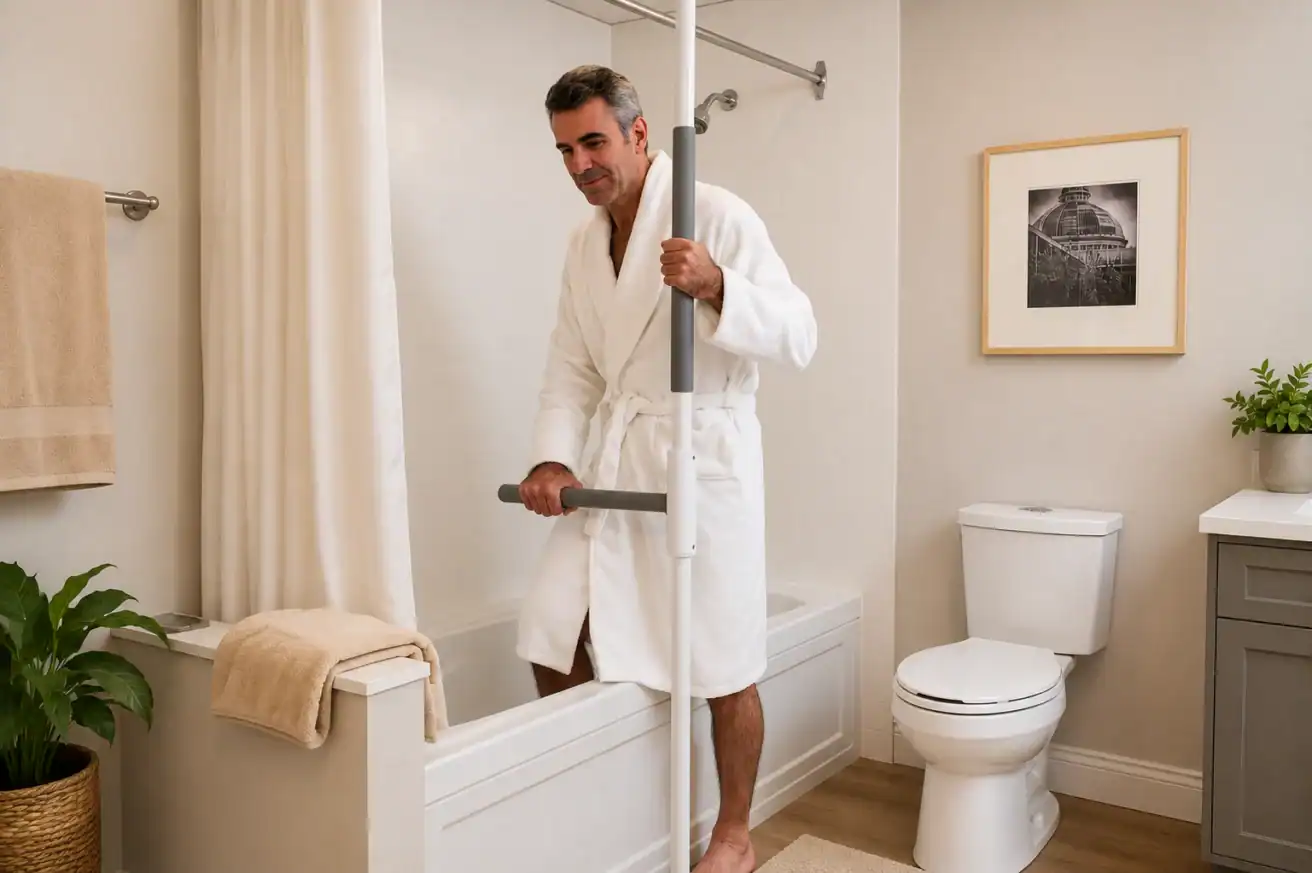
| Need for more centralized standing support | Floor-to-ceiling support pole or pivoting support bar |
| Tight bathroom layout | Compact transfer equipment designed for limited space |
| Need to stay seated through the movement | Sliding or rolling bath transfer system |
| Repeated strain during daily transfers | Layout-based bathroom safety consultation |
This is where professional guidance helps. What works well in one bathroom may not fit another, even if the need sounds similar.
How to Choose the Right Bathroom Safety Updates for Your Home
The right solution usually comes down to four things:
1. The user’s transfer ability
Can the person step over a threshold? Pivot safely? Rise from sitting without help? Tolerate standing during bathing?
2. The bathroom layout
A narrow room, adjacent toilet-and-tub arrangement, or limited turning space may change what is realistic.
3. The support available
If family or caregivers will be assisting, the room should support that safely.
4. The long-term goal
Some households need a short-term recovery setup. Others are planning for long-term accessibility and want a solution that will keep working as needs change.
That is why it helps to start with a consultation instead of guessing from product photos alone. A well-matched recommendation can improve safety, comfort, and day-to-day confidence without overbuilding the room.
For households comparing options, 101 Mobility offers bathroom safety solutions along with personalized guidance based on the person, the layout, and the transfer challenge.
If you are in the Baton Rouge area, including St. Gabriel, you can also explore local support through 101 Mobility Baton Rouge.
Key Takeaways
| Priority | Why It Matters |
|---|---|
| Look beyond the bar | Transfer safety depends on the full movement path |
| Prioritize shower and toilet transfers | These are frequent, high-risk motions |
| Match the solution to the room | Layout fit matters as much as product type |
| Make seating and support intentional | Seated transfers can improve control and confidence |
| Think about the helper too | Caregiver space is part of safe bathroom design |
FAQ
Are grab bars enough for bathroom transfer safety?
Not always. Grab bars can help, but they do not solve every transfer challenge. Shower entry, toilet height, seating, floor traction, lighting, and available space all affect bathroom transfer safety.
What helps when stepping over a tub feels unsafe?
A seated transfer option may help when stepping over a tub edge becomes difficult. Depending on the layout and user needs, that could include a transfer bench, sliding transfer system, or another bath access solution.
How do I know whether a bathroom layout is too tight?
If the user has to twist awkwardly, reposition repeatedly, or rely on unstable movement to reach the toilet or shower, the layout may need a different support plan. Tight bathrooms often benefit from a consultation before equipment is chosen.
What if a caregiver helps with bathroom transfers?
Then the room should be evaluated for caregiver space as well as user support. Safe assistance depends on having enough room to stand, guide movement, and avoid overreaching.
Where can I learn more before scheduling?
You can review FAQs, browse the resource library, or read more about how to choose the right mobility solution.
Book a Free Consultation
If you are evaluating bathroom transfer safety in St. Gabriel, the best next step is to assess the full routine, not just one fixture.
101 Mobility can help you compare options for shower transfer support, toilet safety, seating, and layout-aware bathroom updates that fit the home and the person using it.
Book a Free Consultation to discuss safer bathroom access and practical next steps.