Threshold Ramp Planning in Carencro: Fixing Small Steps That Slow Down Daily Access
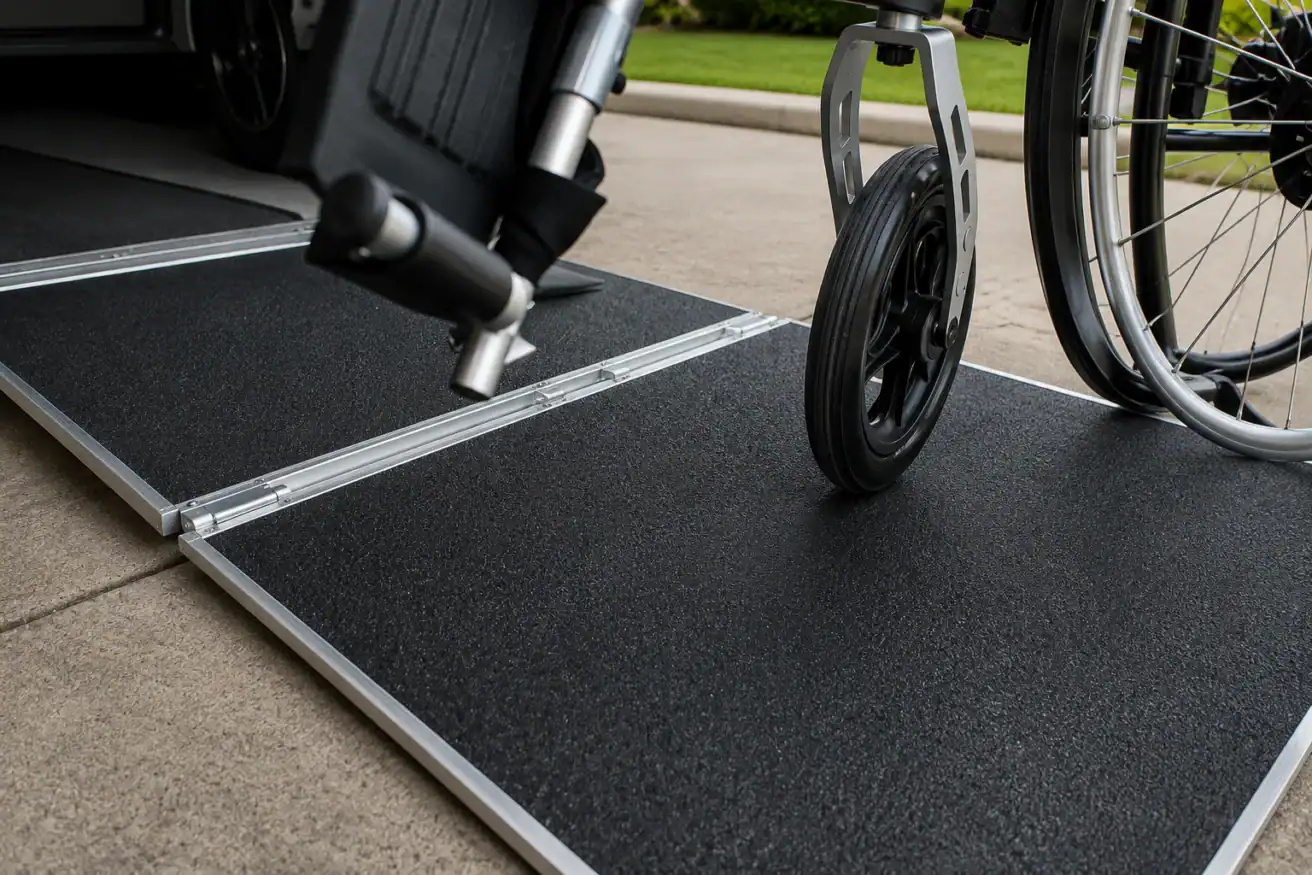
A big accessibility problem does not always start with a full staircase. Sometimes it starts with a doorway lip, a porch edge, a garage step, or a small height change that catches a foot, blocks a walker, or makes wheelchair access more frustrating than it should be.
That is why threshold ramp Carencro searches are so practical. In many homes, the most effective upgrade is not major construction. It is a better transition at the exact point where movement keeps getting interrupted.
If a single step or uneven threshold is slowing down daily access, a threshold ramp or short ramp solution may be the right next step.
Why Small Entry Barriers Matter More Than People Expect
Small height changes can create outsized problems.
A raised threshold may be manageable when someone is moving slowly and carefully. But over time, the same spot can become a repeated source of strain, hesitation, or instability. That is especially true for people using walkers, wheelchairs, scooters, or simply trying to move more safely at home.
These small barriers often show up at:
- Front and back doors
- Garage entries
- Porch transitions
- Patio or side-door access points
- Sliding glass doors
- Interior floor height changes
The issue is not only convenience. It is consistency. If the same small obstacle interferes with movement every day, it is worth fixing.
Threshold Ramp Carencro Planning Starts With the Right Problem
Not every entry challenge needs the same solution.
A threshold ramp is typically best for minor vertical changes where the main goal is creating a smoother path over a raised edge or small lip. It can help improve accessible transitions without requiring a full ramp system.
A short ramp or larger home entry ramp may make more sense when:
- There is a full single step
- The vertical rise is more significant
- The user needs a longer, gentler approach
- The access point must support frequent wheelchair or scooter use
Good planning starts with identifying what is actually slowing movement down.
Common Access Issues Around Carencro Homes
| Access issue | Why it causes problems | Likely solution |
|---|---|---|
| Raised doorway threshold | Stops wheels, catches shoes, interrupts smooth entry | Door threshold ramp |
| Single step at an entry | Creates a full height change that may be unsafe or inaccessible | Short ramp or larger entry solution |
| Garage lip into the home | Makes rolling access or steady footing harder | Threshold ramp or short transition ramp |
| Uneven porch edge | Creates instability at the entry point | Ramp solution based on height and layout |
| Sliding door track | Adds a small but repeated barrier | Low-profile threshold ramp |
When a Door Threshold Ramp Makes Sense
A door threshold ramp is often the right answer when the height change is relatively small but still disruptive.
This kind of ramp may work well for:
- Metal or raised door saddles
- Sliding glass door tracks
- Minor transitions from garage to home
- Uneven floor changes between rooms
- Entry points where wheels need a smoother path
The biggest advantage is simplicity. A threshold ramp can solve a targeted access problem without making the solution larger than it needs to be.
When a Short Home Entry Ramp May Be the Better Option
A threshold ramp is not the best fit for every situation.
If the issue involves a true step up or down, a short home entry ramp may be the better solution. This is especially true when the entry is used often, the rise is more substantial, or the goal is reliable wheelchair or scooter access.
This is also where single step access Carencro needs become more specific. One home may need a compact ramp at a side entry. Another may need a better approach at a garage door. Another may need a solution at a porch edge where the landing and step height require more than a simple threshold product.
The right answer depends on the rise, the available space, and how the entry is used every day.
How to Plan Safer Accessible Transitions
Before choosing a ramp solution, it helps to look at the access point as a daily-use problem, not just a measurement problem.
Key planning questions include:
- How high is the threshold, lip, or step?
- Is the user walking, using a walker, or using a wheelchair or scooter?
- Is this an indoor or outdoor transition?
- Does the surface need better traction?
- Is the goal occasional convenience or dependable daily access?
These details matter because the best ramp solution should match both the space and the person using it.
If you are starting to compare options, the 101 Mobility Lafayette team can help assess what kind of upgrade makes the most sense. If you want to review ramp types first, you can also explore ramp solutions for a broader look at entry and transition options.
Key Takeaways
- Small steps and thresholds can create major daily access frustrations.
- A threshold ramp is often the right fit for minor height changes.
- A short entry ramp may be better for full single-step access problems.
- The best solution depends on rise, layout, and mobility needs.
- Fixing one small transition can make daily movement easier and safer.
FAQ
What is a threshold ramp used for?
A threshold ramp is used to smooth out small height changes at doorways, garage entries, sliding door tracks, and other minor transitions.
Is a threshold ramp enough for a single step?
Not always. A full single step may require a short ramp or another entry solution rather than a simple threshold ramp.
Where are threshold ramps most useful?
They are most useful at raised door thresholds, garage lips, sliding door tracks, and uneven transition points that interrupt smooth movement.
What is the difference between a threshold ramp and a home entry ramp?
A threshold ramp is designed for smaller height changes. A home entry ramp is typically used for larger rises, including single steps and more substantial entry barriers.
How do I know which ramp solution fits my home?
The best choice depends on the height of the barrier, the available space, and whether the user is walking or using a mobility device.
Book a Free Consultation
If a doorway lip, single step, or uneven entry is making movement harder than it should be, a small access upgrade may make a meaningful difference. The right ramp solution can improve comfort, safety, and day-to-day usability without overcomplicating the fix.
Book a Free Consultation to talk through threshold ramp and entry access options for your Carencro home.