When a Home Elevator Makes Sense in Gretna: Long-Term Accessibility Planning
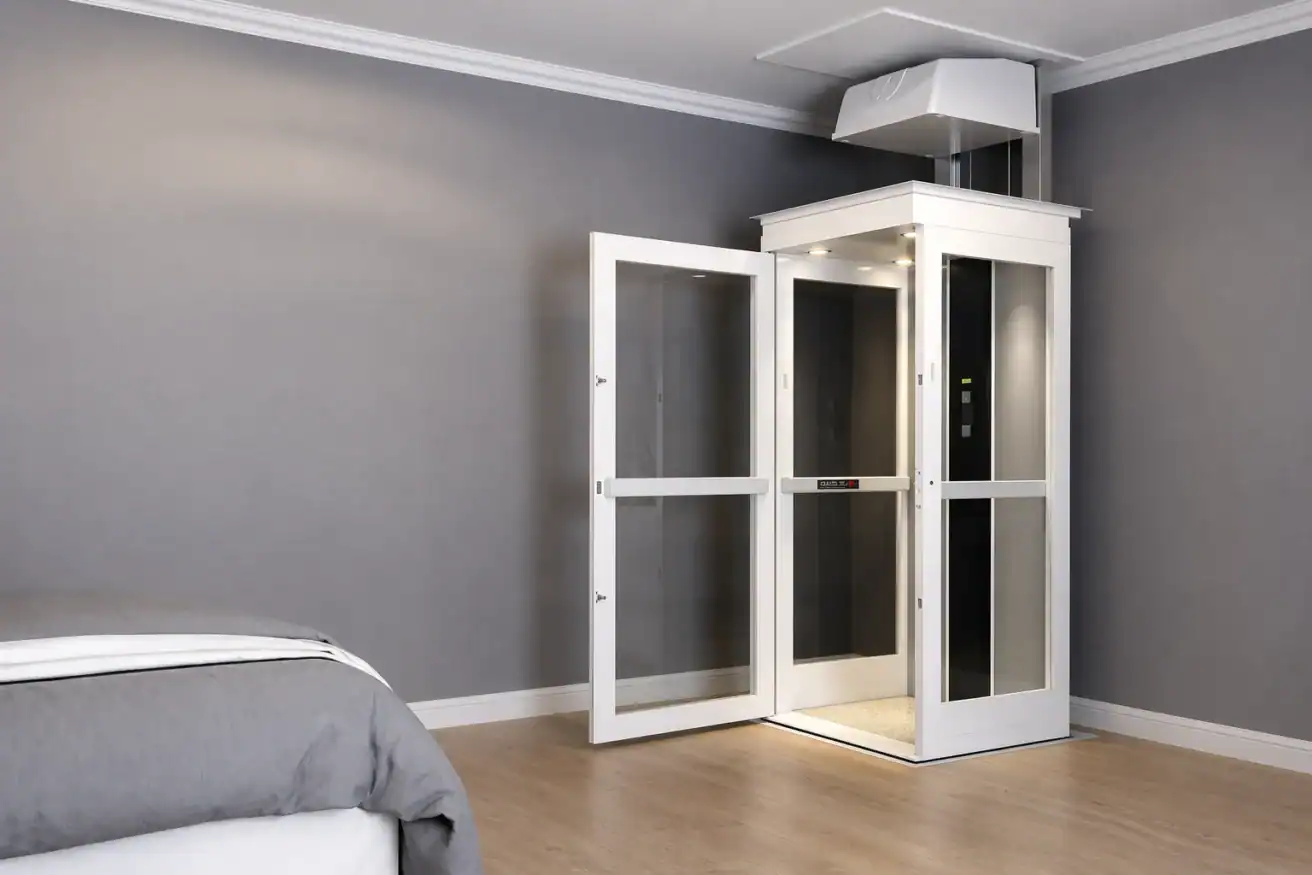
A multi-level home can be comfortable and beautiful, but it can also become harder to navigate over time. If stairs are starting to feel less practical, a home elevator in Gretna may be worth considering as part of a long-term accessibility plan.
For many homeowners, this is not just about mobility today. It is about making the home easier to live in for years to come. A residential elevator can support safety, convenience, and independence while helping you stay in the home you already love.
Why More Gretna Homeowners Are Planning for Accessibility Earlier
Accessibility planning often starts before a major issue appears. That is especially true in multi-story homes where bedrooms, laundry, or main living areas are separated by stairs.
Planning early gives homeowners more flexibility. Instead of waiting until stairs become a daily obstacle, families can evaluate solutions that support comfort now and reduce stress later. In many cases, that means looking at home lift options that fit the home’s layout and long-term goals.
A residential elevator is often the right conversation when the goal is not just getting by, but creating a home that works better over time.
Signs a Home Elevator in Gretna May Be the Right Fit
Not every household needs the same solution. But there are several situations where a residential elevator starts to make a lot of sense.
Stairs are becoming harder or less comfortable
You do not have to be unable to use stairs for them to become a problem. Sometimes the first signs are slower trips upstairs, discomfort carrying items, or worry about repeated daily use.
If stairs are creating friction in daily life, a home elevator in Gretna may be a more comfortable long-term answer than simply adjusting routines around the problem.
The home’s main living spaces are split across floors
Many homes place bedrooms upstairs and key living areas downstairs. That setup works well until frequent trips between levels start to feel tiring, inconvenient, or limiting.
A residential elevator can make it easier to move between floors without having to rethink how you use your home.
Aging in place planning is a priority
For homeowners focused on aging in place planning, accessibility upgrades are often about preserving options. A home elevator can help make a forever home more functional as needs change.
Rather than waiting for a move or major renovation later, some families choose to invest in access now so the home continues to support them over time.
The household wants a solution that feels permanent and convenient
Some accessibility products are designed for specific needs or shorter-term use cases. A residential elevator is usually considered when homeowners want a more integrated, long-term solution that supports regular daily use and fits naturally into the home.
How a Residential Elevator Supports Multi-Level Home Accessibility
A home elevator does more than connect one floor to another. It can improve the overall experience of living in a multi-story home.
Key benefits often include:
- Easier daily movement between levels
- Better support for long-term accessibility goals
- Greater convenience when carrying household items
- More comfortable access for aging adults and family members
- A solution that can feel built into the home rather than added as a temporary fix
For families thinking about multi-level home accessibility, this matters. The right solution should help the home stay usable, comfortable, and welcoming without making daily routines harder.
Home Elevator vs Other Home Lift Options
There is no one-size-fits-all answer. The best solution depends on the home, the user, and the long-term goal.
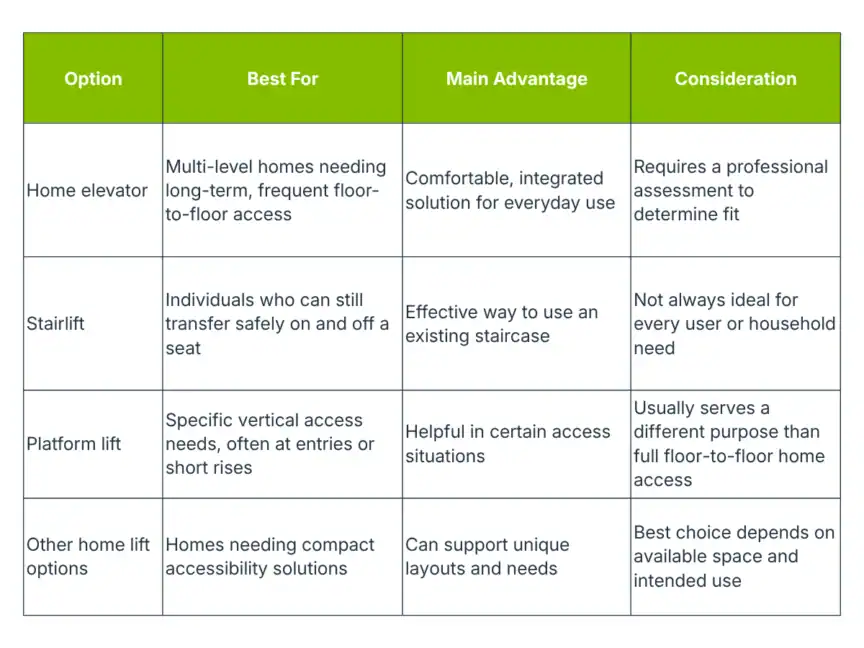
If the goal is full, repeated access between levels in a lived-in home, a residential elevator in Gretna is often the stronger long-term option.
What to Think About Before Installing a Residential Elevator in Gretna
Before choosing a solution, it helps to look at the home from both a practical and long-range perspective.
1. How the home is used every day
Which rooms matter most? If the kitchen, bedroom, laundry, or main bath are on different levels, better floor-to-floor access may have an immediate impact.
2. Who needs to use it now and later
Some homeowners are planning for themselves. Others are thinking about a spouse, parent, or future household needs. A solution that works well now should also support likely changes later.
3. The available space and layout
Different homes call for different configurations. A professional consultation helps identify what type of system best fits the home without guessing.
4. Whether convenience matters as much as accessibility
For many households, this is not only about safety. It is also about making the home easier to live in every day. That combination is one reason more families consider a home elevator earlier in the planning process.
Why Work With 101 Mobility for Home Elevators
Choosing a home elevator is not just about selecting a product. It is about understanding the home, the need, and the best path forward.
101 Mobility focuses on customized accessibility solutions designed to help people stay safe, comfortable, and independent at home. That includes helping families evaluate the right option for their space, goals, and daily routine.
If you are exploring a home elevator in Gretna, the process should feel clear and practical. A professional consultation can help you understand:
- Whether a residential elevator is the right fit
- Which configuration best matches your home
- What other home lift options may be worth comparing
- How to plan for long-term accessibility without overcomplicating the decision
You can start by exploring 101 Mobility New Orleans or learning more about home elevators before booking a consultation.
FAQs
When does a home elevator make more sense than a stairlift?
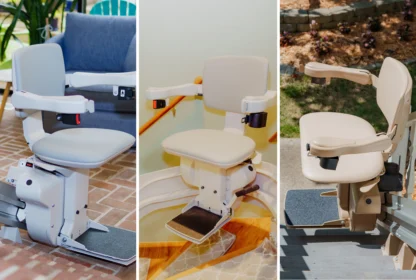
A home elevator often makes more sense when the goal is long-term, convenient floor-to-floor access in a multi-level home, especially when homeowners want a more integrated accessibility solution.
Is a residential elevator only for people with major mobility limitations?
No. Many homeowners look into a residential elevator in Gretna before mobility becomes a major issue. It is often part of proactive aging in place planning and long-term home usability.
Are home elevators only for new construction?
Not necessarily. Some residential elevator and home lift systems can be considered for existing homes as well as new builds. The best fit depends on the home’s layout and accessibility goals.
What should I compare when looking at home lift options?
Focus on how often the solution will be used, who will use it, how the home is laid out, and whether the goal is short-term access or a lasting accessibility upgrade.
What is the first step if I am considering a home elevator in Gretna?
The best first step is a professional consultation. That helps determine whether a home elevator is the right fit for your home and what solution makes the most sense for your needs.
Plan for Long-Term Accessibility With Confidence
If stairs are becoming less practical, or you are thinking ahead about safer multi-level living, a home elevator may be the right next step.
Explore 101 Mobility New Orleans to see local accessibility solutions or learn more about home elevators and what they can offer. When you are ready, Book a Free Consultation to discuss the right solution for your home.