What to Expect from a Free Accessibility Consultation in Slidell
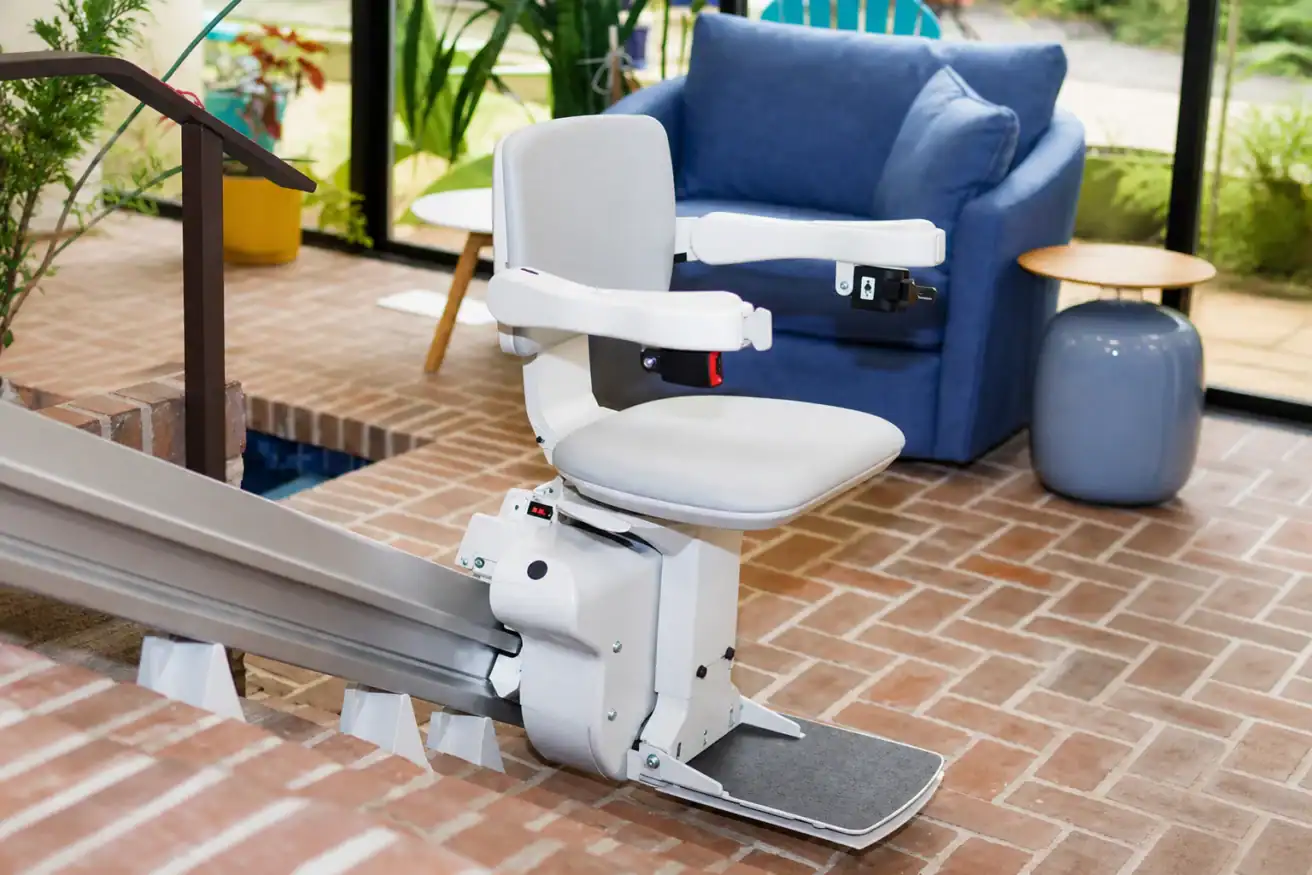
If you are researching a free accessibility consultation Slidell families can trust, the most important thing to know is this: the consultation should give you clarity. It should help you understand the mobility challenge, the safest options for your home, and what the next step would look like if you decide to move forward.
At 101 Mobility, the process is designed to be practical and personalized. Instead of pushing a one-size-fits-all product, the goal is to assess your home, understand your needs, and recommend the right path forward.
Why Schedule a Free Accessibility Consultation in Slidell?
A consultation is helpful when everyday access is becoming harder, less safe, or more stressful than it should be.
That may include:
- Difficulty getting in and out of the home
- Trouble managing steps, thresholds, or uneven entry points
- Increased fall concerns
- A new wheelchair, walker, or scooter that changes how the home needs to function
- Planning ahead for aging in place
- Preparing for a return home after surgery or injury
For some households, the consultation confirms that a simple threshold solution may help. For others, it may point to a larger accessibility upgrade. Either way, the value is in getting a professional opinion based on the home, the user, and the long-term goal.
What Happens During the In-Home Consultation in Slidell?
A quality in-home consultation Slidell homeowners schedule should focus on both the person and the space.
Mobility Assessment
The first step is understanding how the mobility challenge affects daily life.
That usually includes questions about:
- How the person currently moves through the home
- Whether they use a wheelchair, walker, scooter, or other device
- Which areas feel unsafe or difficult
- Whether the need is temporary, long-term, or expected to change
- What level of independence the household wants to preserve
This part of the visit functions as a real mobility assessment, not just a product conversation. The right solution depends on who will use it, how often, and what barriers are getting in the way.
Home and Entry Review
Next, the consultant evaluates the physical environment.
That may include reviewing:
- Front, side, garage, or patio entry points
- Stairs, steps, landings, and elevation changes
- Door thresholds and doorway clearances
- Available space for ramps or other equipment
- Surface conditions and safety considerations
- How the proposed solution would fit into everyday use
This on-site review matters because accessibility products must match both the user’s needs and the home’s layout.
What Recommendations Can You Expect?
After the assessment, the consultant should explain which options make sense and why.
In many cases, the best recommendation comes down to the type of barrier you need to solve.
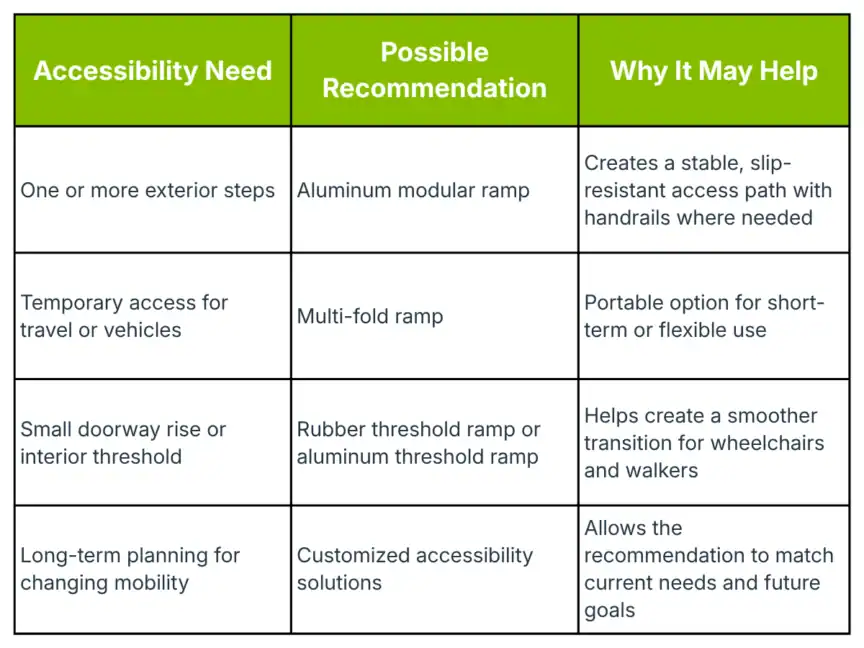
The key is that the recommendation should be tailored. Some homes need a permanent ramp system. Some need a compact threshold solution. Some need a broader accessibility plan that addresses more than one barrier.
That is where customized accessibility solutions matter most.
Understanding the Accessibility Installation Process
Once a recommendation is made, the next question is usually: what happens after the consultation?
A typical accessibility installation process includes the following steps:
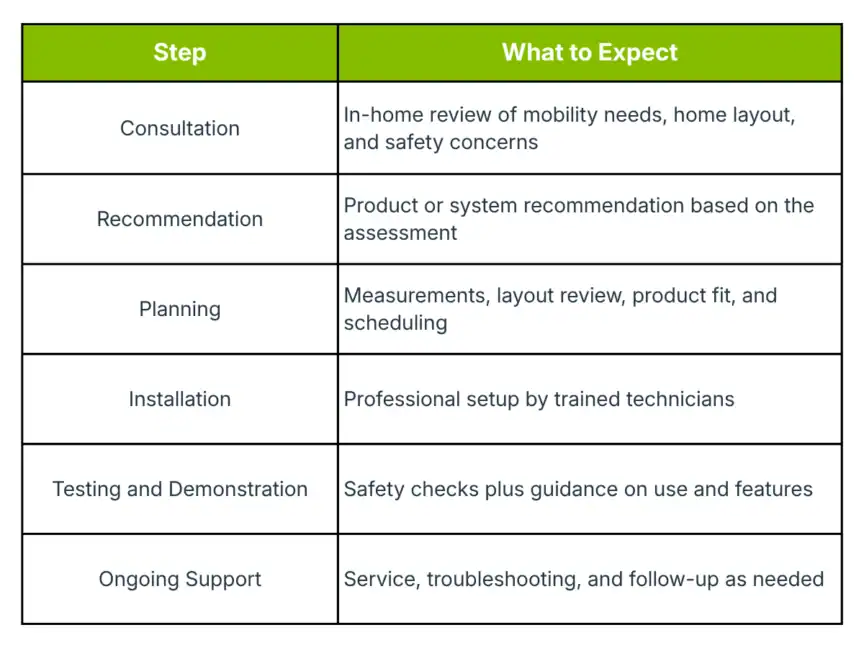
This process matters because accessibility equipment is not just about delivery. It needs to be installed correctly, checked for safety, and explained clearly so the user feels confident.
What Happens After Installation?
A strong provider does not disappear after install day.
Once the equipment is in place, you should expect:
- A walkthrough of how the solution works
- Basic safety guidance
- An opportunity to ask questions
- Information on warranty and service
- A clear point of contact if support is needed later
That long-term support is especially important for households making a permanent home modification. When you are investing in access and safety, you want to know there is help available after the project is complete.
How to Prepare for Your Free Accessibility Consultation
A little preparation can make the visit more productive.
Bring these details to the conversation if possible:
- The main area of concern in the home
- The mobility device currently being used
- Any recent changes in health, recovery, or daily routine
- Whether the need is temporary or long-term
- Photos or notes about entrances that feel difficult to use
It also helps to ask practical questions, such as:
- What solution best fits this entryway?
- Is this designed for temporary or long-term use?
- How much space will the solution require?
- What does installation involve?
- What kind of service or follow-up support is available?
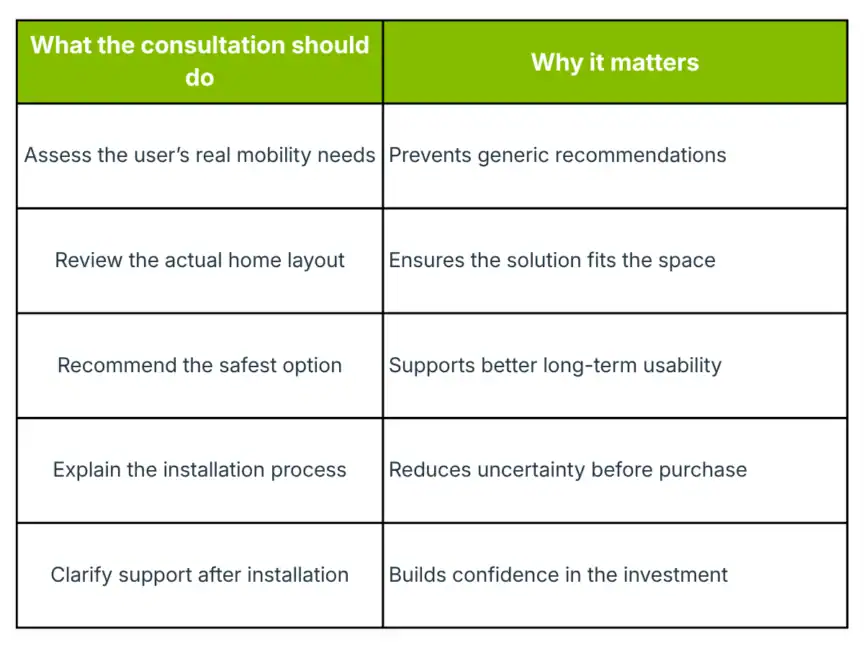
Quick Takeaways
FAQ
What is included in a free accessibility consultation in Slidell?
A consultation typically includes an in-home review of mobility needs, safety concerns, entry points, layout limitations, and the accessibility options that best fit the home and user.
How long does an in-home consultation take?
The exact timing varies by home and need, but the visit is usually long enough to evaluate the space, discuss goals, and explain recommended options clearly.
Will I get product recommendations during the consultation?
Yes. A good consultation should end with clear recommendations based on the user’s mobility needs, the home’s layout, and the best fit for safety and daily use.
Do I need to know which product I want before scheduling?
No. In many cases, the consultation is most helpful when you are still deciding. The purpose is to identify the right solution, not to force you to choose in advance.
Can a consultation help with both short-term and long-term needs?
Yes. Some recommendations are ideal for temporary recovery situations, while others are better for long-term accessibility planning and aging in place.
What if more than one area of the home is difficult to access?
That should be discussed during the visit. If there are multiple barriers, the consultant can help prioritize which issue to solve first and whether a broader accessibility plan makes sense.
Ready to Take the Next Step?
If you are dealing with steps, thresholds, or other mobility barriers at home, a consultation can help you move from uncertainty to a clear plan.
Visit the New Orleans 101 Mobility location to learn more, or go straight to the free consultation page to Book a Free Consultation.