Threshold Ramp Planning in Harvey: Fixing Small Steps That Slow Down Daily Access
A home does not need a full flight of stairs to create an access problem. In many Harvey homes, the issue is smaller and easier to overlook: a raised doorway, a single porch step, a garage lip, or an uneven transition between surfaces. These small changes in height can interrupt everyday movement, make mobility devices harder to use, and create unnecessary hesitation at the places people use most.
That is where thoughtful threshold ramp planning can help. The right solution can improve access at the front door, side entry, garage, or patio without overbuilding the space. For many households, the goal is not a major renovation. It is a cleaner, safer path in and out of the home.
If you are comparing options in the area, start with 101 Mobility of New Orleans and their local wheelchair ramp solutions.
Why Small Entry Barriers Cause Big Daily Friction
Small elevation changes tend to cause recurring problems because they sit in the middle of routine movement. A doorway used several times a day becomes frustrating when wheels catch, walkers hesitate, or footing feels uneven.
Common examples include:
- A raised front door threshold
- One step at a porch or side entry
- A lip between the garage and the home
- A short rise from patio to back door
- Uneven surface changes at landings
These barriers may not seem significant at first, but they can affect daily confidence, convenience, and safety. They are also the kinds of issues families often want to solve before access becomes more urgent.
Where Harvey Homes Often Need Better Accessible Transitions
Many access issues start at transition points rather than long stair runs. That is why threshold ramp planning often begins with a walk-through of the most-used entrances.
Front doors and raised thresholds
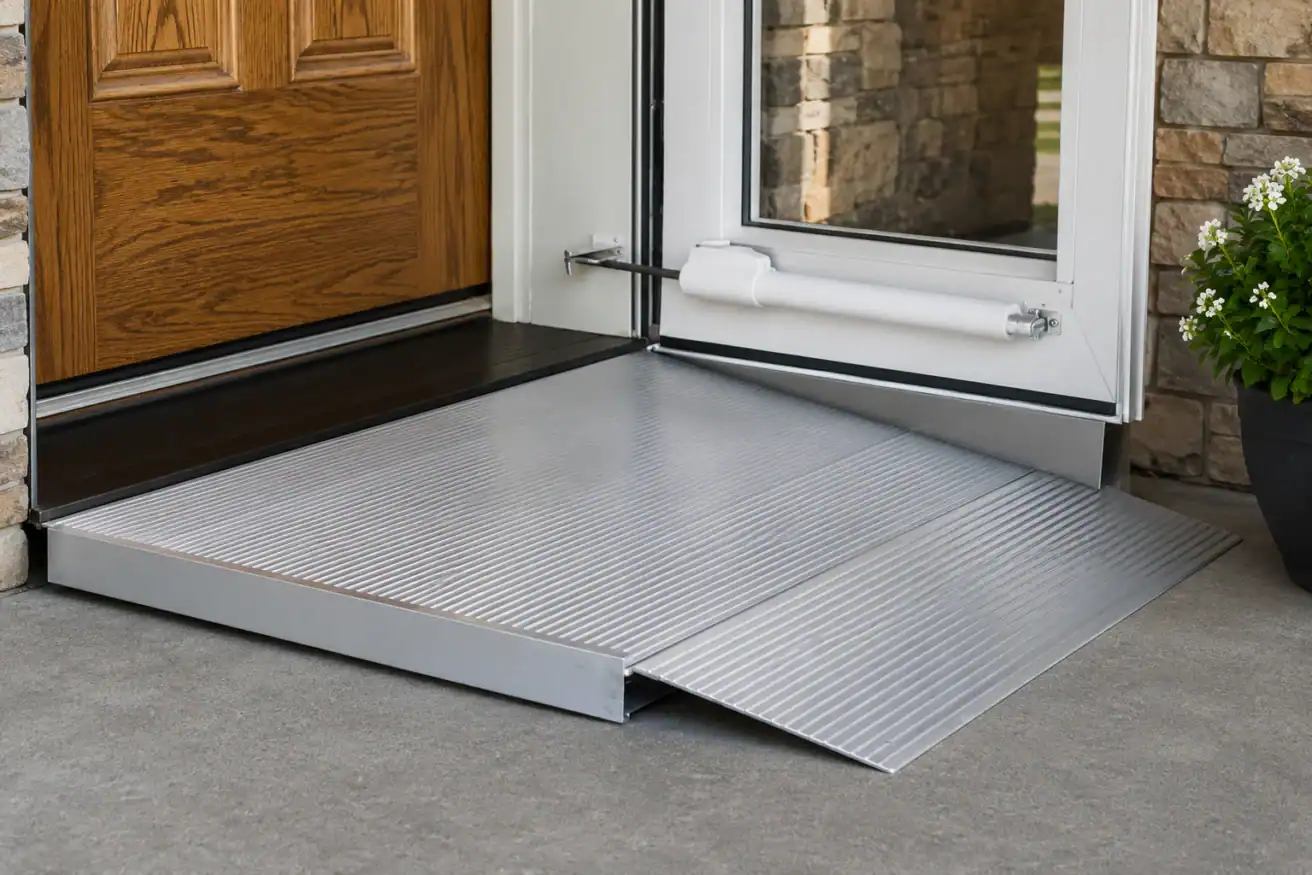
A raised threshold can slow down a wheelchair, walker, rollator, or even everyday foot traffic. A door threshold ramp can help create a smoother crossing where the change in height is relatively small.
Single steps at porches and side entries
A single step may not call for a full ramp system in every case, but it still needs the right fix. Depending on the height and available space, a short ramp or modular entry ramp may be more appropriate than a basic threshold piece.
Garage lips and uneven floor changes
Garage entries often create awkward transitions because the garage slab and interior floor do not always meet cleanly. These spots can be especially frustrating when someone enters through the garage every day with a walker, wheelchair, or scooter.
Choosing the Right Threshold Ramp Harvey Homeowners Should Consider
The best solution depends on the height change, the entry layout, and how the space is used.
A threshold ramp is often a strong fit when the problem is concentrated at the doorway itself. This can work well for small rises at entry thresholds where the goal is to smooth out a short, abrupt change in height.
A short home entry ramp may be the better fit when the barrier extends beyond the threshold, such as a single step, porch edge, or short landing transition. In those cases, the issue is less about the door edge alone and more about creating usable approach space.
For practical ramp categories, 101 Mobility’s local New Orleans page currently highlights:
- Aluminum modular ramps
- Multi-fold ramps
- Rubber threshold ramps
- Transitions Modular Entry Ramp from EZ Access
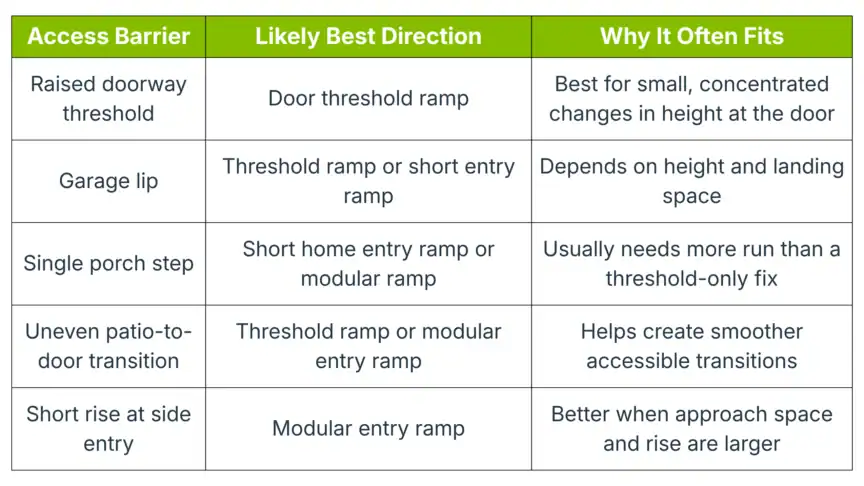
Quick Comparison Table: Barrier Type vs Best Ramp Direction
What to Measure Before Selecting a Ramp
Before choosing a product, measure the entry carefully. Even a small access fix works best when it matches the actual layout.
Check these points first:
- Rise: How high is the threshold, lip, or step?
- Width: How wide is the doorway or usable path?
- Landing space: Is there enough room to approach and clear the ramp comfortably?
- Door swing: Will the door open fully once the ramp is in place?
- Surface conditions: Is the location indoors, outdoors, or exposed to weather?
This is one reason consultation matters. A ramp that sounds right online may not be the best fit once width, slope, and clearance are considered together.
When a Threshold Ramp Is Enough and When You Need More
A threshold ramp is often enough when the barrier is small and localized. That can include many doorway transitions and low lips between adjoining surfaces.
A larger solution may be needed when:
- The rise is taller than a typical threshold issue
- There is a full step rather than a small lip
- Approach space is limited
- The entry needs handrails or a more defined path
- Multiple connected elevation changes are involved
In other words, a threshold ramp solves the right problem well. It is not meant to solve every entry challenge.
Product Direction for Common Small-Step Problems
For smaller transitions, a rubber threshold ramp may be a practical option where a durable, low-profile entry fix is needed. For doorway rises that need a more structured aluminum solution, a modular threshold-style ramp may be more appropriate.
Readers who want to explore those product types can review:
These are helpful starting points, but the best selection still depends on the exact rise, entry width, and use case at the home.
Why Professional Guidance Helps
Small access barriers are easy to underestimate. The challenge is not just choosing a ramp category. It is choosing the right size, fit, and layout for the way the home is used every day.
Professional guidance can help with:
- Identifying the real barrier, not just the visible one
- Matching the ramp to the entry conditions
- Avoiding poor fit at the doorway
- Planning for wheelchairs, walkers, scooters, or caregiver assistance
- Finding a cleaner solution that feels integrated with the home
That is especially useful for families trying to improve single step access Harvey homeowners deal with before it turns into a larger mobility interruption.
FAQ
What is a threshold ramp?
A threshold ramp is a short ramp designed to bridge a small change in height at a doorway or similar transition point.
When is a door threshold ramp the right choice?
A door threshold ramp is usually a good fit when the barrier is small, localized, and centered at the doorway rather than spread across a full step or larger rise.
Can a threshold ramp help with single step access?
Sometimes, but not always. If the entry includes a full step or needs more approach space, a short modular or home entry ramp may be the better option.
What areas of the home commonly need accessible transitions?
Front doors, garage entries, porch edges, side doors, and patios are all common areas where accessible transitions can improve daily movement.
How do I know whether I need a threshold ramp or a larger ramp?
Start with the rise, width, landing space, and door clearance. If the transition is small and tight to the doorway, a threshold ramp may work. If the rise is larger or extends beyond the threshold, a more complete ramp solution may be needed.
Fix the Small Barrier Before It Becomes a Bigger Daily Problem
A small step, raised threshold, or uneven entry does not need to keep slowing down daily access. The right ramp solution can make movement into and out of the home more practical, more comfortable, and easier to trust.
If you are exploring threshold ramp Harvey options or need help comparing a door threshold ramp with a larger home entry ramp, visit 101 Mobility of New Orleans or review their local wheelchair ramp solutions. When you are ready for next-step guidance, Book a Free Consultation.