Summer Caregiver Support in Belle Chasse: Mobility Equipment That Helps Daily Routines

Summer can make caregiving more complicated than families expect. School breaks, vacations, changing work schedules, and extra household activity can all disrupt a routine that usually works. In Belle Chasse, that can mean more handoffs between family members, less consistency in daily care, and more physical strain during transfers, bathing, and mobility support.
That is why summer caregiver support in Belle Chasse should include more than scheduling help alone. The right mobility equipment can make everyday routines safer, more manageable, and less physically demanding for both the person receiving care and the caregiver providing it.
Why summer caregiver support in Belle Chasse matters
Caregiving often depends on rhythm. One person helps in the morning, another covers evenings, and everyone learns the routine. Summer can interrupt that rhythm fast.
A daughter may be out of town for a week. A grandchild may be home during the day. A spouse may suddenly take on more lifting, turning, or bathroom assistance than usual. When coverage changes, physical tasks that already require care can become harder and riskier.
That is often when families notice the same problems repeating:
- Transfers feel unstable
- Bathing takes too much effort
- One caregiver is doing most of the lifting
- The bathroom setup no longer fits the person’s needs
- Daily care depends too much on strength instead of support
The answer is not always more effort. Often, it is better planning and better equipment.
Where caregiving routines usually get harder in summer
Transfers between bed, chair, and bathroom
Transfers are one of the most physically demanding parts of home care. When routines change, a substitute caregiver may not know the safest method, or may not have the strength to assist comfortably.
That is where transfer safety becomes a real issue. A rushed or awkward transfer can strain the caregiver and leave the care recipient feeling unsteady or uncomfortable.
Bathing and toileting support
Bathrooms are one of the hardest rooms to manage safely. Slippery surfaces, tight layouts, and the need to step over a tub wall can turn a normal routine into a daily challenge.
Summer can magnify that challenge when different family members rotate in and out of care and need a setup that is easier to use consistently.
Coverage changes during vacations and school breaks
When family coverage shifts, the home setup matters even more. A routine that works for one experienced caregiver may not work for another person helping for only a few days at a time.
That is why home care support should include the environment itself. A better setup reduces guesswork and helps each caregiver follow a safer process.
Mobility equipment that can reduce strain and improve transfer safety
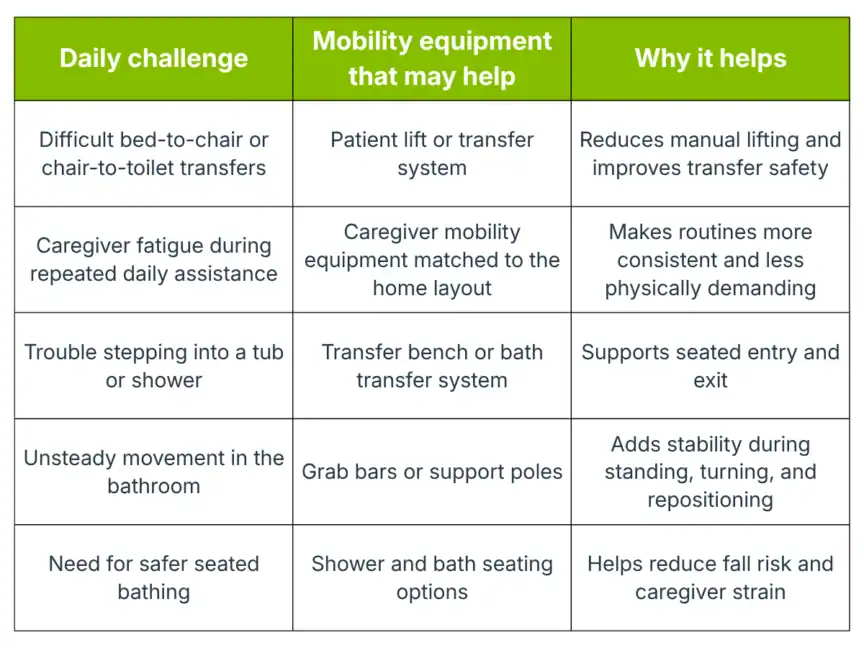
The best equipment depends on the person’s mobility, the caregiver’s role, and the layout of the home. In many cases, families benefit most from solutions that reduce lifting, improve stability, and make bathing less stressful.
Patient lift options for higher-risk transfers
A patient lift Belle Chasse families consider is often part of a bigger question: how can we make transfers safer without relying on raw strength?
Patient lifts can be especially helpful when:
- The person has limited weight-bearing ability
- One caregiver is managing most transfers
- Fatigue is making daily routines harder
- The family wants a more repeatable, safer process
Instead of forcing caregivers to compensate physically, a lift can support more controlled movement between surfaces.
Bathroom safety equipment for seated bathing
For many households, the bathroom is the first place where summer caregiving stress shows up. Seated bathing and transfer-focused bathroom equipment can help when stepping into a tub or repositioning in a shower has become difficult.
Depending on the setup, families may benefit from:
- Transfer chairs
- Sliding bath transfer systems
- Seated shower access solutions
- Added support around the toilet or tub area
These kinds of upgrades can make one of the most difficult daily tasks far easier to manage.
Grab bars and support poles for steadier movement
Not every solution needs to be complex. Sometimes the right support in the right place changes the whole routine.
Grab bars and floor-to-ceiling support poles can help with:
- Standing from a seated position
- Turning safely in the bathroom
- Moving between nearby surfaces
- Reducing the need for a caregiver to act as the only support point
These tools are especially helpful when families want to improve safety without a major remodel.
How to choose the right caregiver mobility equipment
The best caregiver mobility equipment is the equipment that fits the person, the caregiver, and the home.
Start with these questions:
- Which daily task is the hardest right now?
- Is the main issue lifting, balance, bathing, or access?
- How much help does the person need during a transfer?
- Is the current setup safe for more than one caregiver to use?
- Is this a short-term recovery need or part of a longer-term plan?
It is also important to look at the layout itself. Tight bathrooms, narrow paths, tub walls, and uneven entry points all affect what will work well.
That is why a consultation is often the smartest next step. A professional can look at the real environment and recommend equipment that fits the home instead of forcing the family into a one-size-fits-all solution.
A simple summer planning checklist for home care support
Before summer gets busier, families can review a few basics:
- Identify which caregiver tasks feel hardest right now
- Watch for any transfer that feels rushed, awkward, or unstable
- Review the bathroom setup for safer entry, exit, and seated use
- Make sure backup caregivers understand the daily routine
- Consider whether the current setup depends too heavily on physical strength
- Plan equipment needs before travel, schedule changes, or added household activity begin
Small changes made early can prevent bigger problems later.
Why local guidance matters
Families looking for summer caregiver support in Belle Chasse usually do not need generic advice. They need practical help that matches a real home, a real care routine, and a real schedule.
That is where local support matters. 101 Mobility serves the New Orleans area and helps families evaluate mobility challenges, compare options, and choose solutions that improve safety and reduce caregiver strain. Whether the need involves bathroom access, safer transfers, or a patient lift Belle Chasse households can use more confidently, the goal is the same: make daily routines easier to manage.
FAQ
What is the best equipment for safer transfers at home?
That depends on the person’s mobility and the type of transfer involved. Some homes need a patient lift, while others benefit from support poles, grab bars, or transfer-focused bathroom equipment. The right choice depends on safety, layout, and caregiver ability.
When should a family consider a patient lift?
A patient lift may make sense when transfers are becoming physically demanding, unpredictable, or unsafe. It can also help when one caregiver is doing most of the lifting or when the person receiving care has limited ability to bear weight.
Can bathroom changes really reduce caregiver strain?
Yes. Many daily caregiving challenges happen in the bathroom. Better access, seated bathing options, and properly placed support equipment can make routines smoother and reduce the physical effort required.
Is caregiver mobility equipment only for long-term conditions?
No. Some families need support during recovery after surgery or illness, while others are planning for long-term aging in place. The right equipment can help in either situation.
How do we know what will fit our home?
The safest approach is an in-home assessment. That allows a professional to evaluate the layout, understand the mobility needs, and recommend equipment that fits both the space and the care routine.
Book a Free Consultation
If summer schedule changes are making caregiving harder, now is a good time to plan ahead. 101 Mobility can help you evaluate transfer challenges, bathroom safety concerns, and equipment options that support safer routines at home.
Explore local solutions through the New Orleans 101 Mobility location or learn more about patient handling solutions. When you are ready for next steps, Book a Free Consultation.