Porch Lift vs. Ramp in Westwego: Choosing Access for Raised Entries
When a home has a raised porch, deck, or garage entry, the main question is not just how to add access. It is which solution makes the most sense for the space.
For many Westwego homeowners, the choice comes down to a ramp or a vertical platform lift. Both can improve safety and usability. The better option depends on your entry height, available space, porch layout, and how the solution will be used every day.
This guide breaks down the difference so you can compare both options clearly and make a more confident decision.
Porch Lift vs. Ramp in Westwego: What’s the Difference?
A ramp creates a gradual path over a height change. It can be a strong option when there is enough room to extend the ramp at a workable slope and add the landings needed for safe entry and exit.
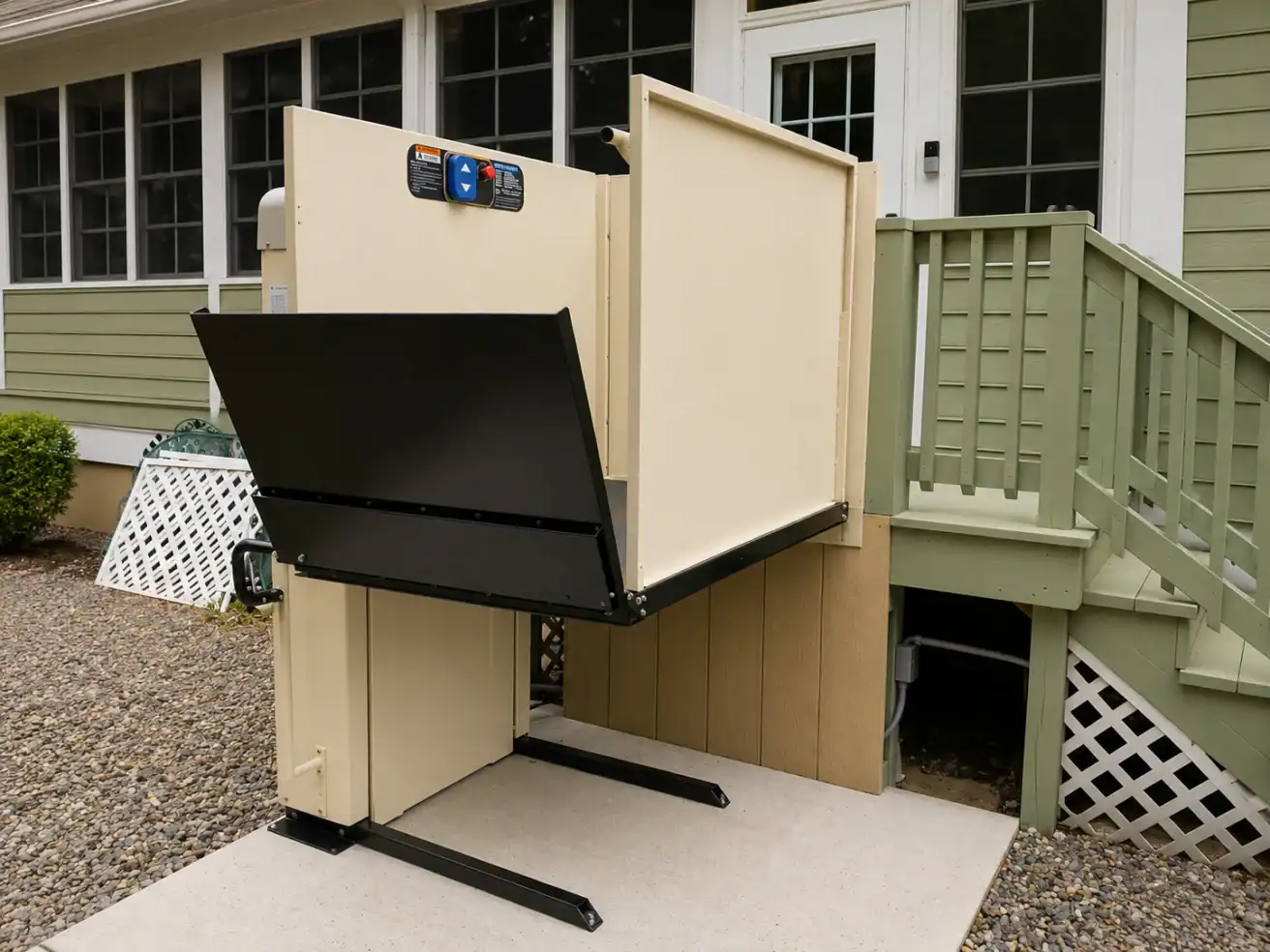
A vertical platform lift, sometimes called a porch lift, raises and lowers the user between levels on a platform. It can be a smart solution for raised entry access when a ramp would take up too much room or create an awkward layout.
Neither option is automatically better. The right choice depends on the home.
When a Ramp Makes Sense
A ramp is often the right fit when the property has enough space to support the run of the ramp and the needed turning or resting areas.
A ramp may make sense when:
- The elevation change is modest
- The yard or walkway allows a longer approach
- The entry area can support a clean ramp layout
- The user needs smooth wheeled access throughout the day
- The household prefers a simple path rather than a lifting system
For some homes, wheelchair ramp options are straightforward. A front entry with enough side yard or a garage approach with usable width may allow a ramp design that feels natural and easy to use.
When a Vertical Platform Lift May Be Better
A vertical platform lift Westwego homeowners consider is usually most appealing when the home has a raised entry but not enough room for a long ramp.
A porch lift may be the better fit when:
- The porch sits higher than a short ramp can reasonably serve
- The lot or walkway is tight
- The front approach is narrow
- A long ramp would dominate the yard or block circulation
- The user wants direct raised entry access without a long travel path
This is especially common for porch access, deck access, and garage entries where the change in height is clear but the footprint is limited.
Key Factors to Compare Before You Choose
1. Space and slope
This is often the deciding factor.
Ramps need enough length to handle elevation safely. The higher the entry, the more space the ramp system usually needs. That includes landings, turns, and approach clearance.
A porch lift uses a smaller footprint because it moves vertically instead of extending outward. When space is limited, that difference matters.
2. Entry height
Small height changes may work well with a ramp. Larger rises can quickly push a ramp into a layout that feels too long or too intrusive.
If the entry is significantly raised, a vertical platform lift may provide a more practical route than trying to fit a long ramp around the home.
3. Porch and landing layout
The layout at the top matters just as much as the route to get there.
A ramp needs enough landing space for safe approach and entry. A lift also needs a usable landing, but it may work better when the porch is compact and the route below is tight.
4. Daily use and household needs
Think about how the solution will be used in real life.
Questions to consider:
- Will the user access the porch several times a day?
- Is the main goal wheelchair ramp options for independent wheeled entry?
- Is the user entering from the front porch, side deck, or garage?
- Will caregivers or family members be assisting?
- Is the home being planned for long-term use?
The answer is often less about the product category and more about how the home functions day to day.
5. Long-term planning
The best solution should work now and continue to make sense later.
If the household is planning for aging in place, recovery support, or changing mobility needs, it helps to choose a solution that fits both the current layout and future use.
Side-by-Side Comparison
| Factor | Ramp | Vertical Platform Lift |
|---|---|---|
| Best for | Longer available approach areas | Raised entries with limited space |
| Space needed | More horizontal space | Smaller footprint |
| Works well for | Gradual access path | Direct vertical travel |
| Good applications | Front entries, side approaches, larger yards | Porches, decks, garages, tighter layouts |
| Entry height impact | Higher entry usually means longer ramp | Higher entry may still work without a long run |
| Layout consideration | Needs room for run and landings | Needs landing and lift placement |
| Daily experience | Continuous rolling path | Direct up-and-down access |
Common Westwego Entry Situations
Raised front porch
If the front porch sits above grade and the walkway is short, a porch lift may be easier to fit than a long ramp with turns.
Back deck access
A deck may have a clear landing area but limited yard depth. In that case, a vertical platform lift can make the route more direct.
Garage entry
For some homes, the garage offers the most practical access point. If there is a step-up from the garage into the home, the best solution depends on the height change and available clearance.
Tight front approach
Some homes simply do not have enough room for a long exterior ramp without affecting parking, landscaping, or pedestrian flow. That is where raised entry access planning becomes more important than choosing on assumption.
How to Decide with More Confidence
A simple way to narrow the choice is to ask:
- How high is the entry?
- How much usable space is available outside?
- Is the route straight, narrow, or obstructed?
- Will the solution be used mostly with a wheelchair or scooter?
- Does the household want the most compact option possible?
If the answer points toward limited space and a raised porch or deck, a vertical platform lift may deserve stronger consideration. If the property can support a comfortable ramp layout, a ramp may still be the better path.
In many cases, the smartest next step is not guessing from photos. It is having the layout evaluated in person.
Frequently Asked Questions
Is a ramp always the more practical option?
Not always. A ramp can be excellent when there is enough room. But when the entry is high or the approach is tight, a vertical platform lift may be more practical.
Can a porch lift work for wheelchair users?
Yes. A vertical platform lift is designed to move the user vertically on a platform, which can be especially useful for porch access, deck access, and other raised entry access situations.
What if the porch area is small?
A small porch does not automatically rule out either option, but it makes layout more important. Landing size, approach direction, and surrounding space all matter.
How do I know which option fits my home?
The best choice depends on entry height, porch layout, available space, and daily use. A consultation helps compare both options against the actual home instead of relying on general assumptions.
Book a Free Consultation
If you are comparing a porch lift vs ramp Westwego homeowners often consider, the most useful next step is a site-specific recommendation.
101 Mobility of New Orleans can help evaluate your raised entry, explain whether a ramp or vertical platform lift makes more sense, and recommend a solution that fits the home and the way it is used.
Book a free consultation to compare your options for porch access, wheelchair ramp options, and safer raised entry access.