Lift Chair or Patient Lift: How I Separate Two Very Different Needs
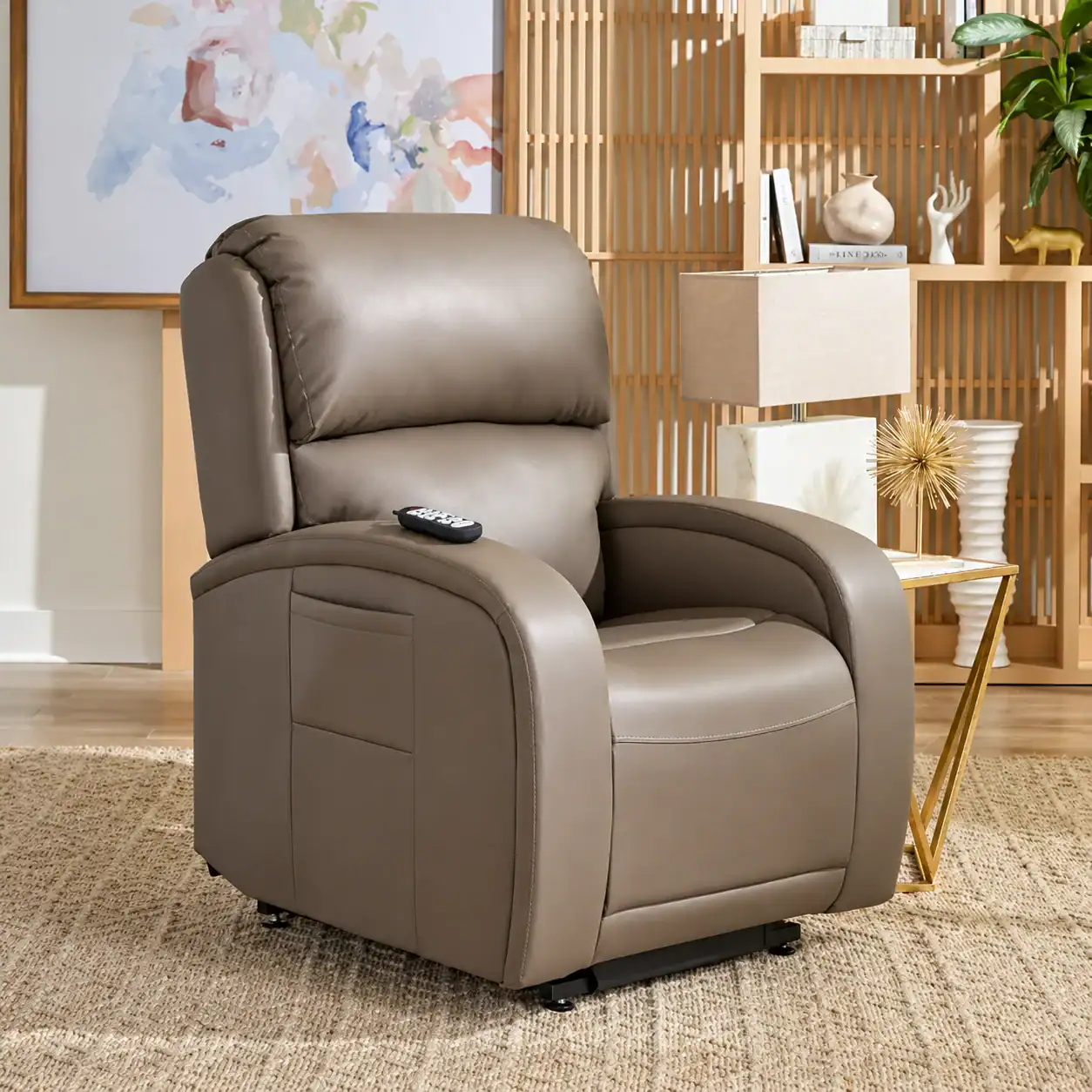
 A lift chair and a patient lift have their own distinct uses. A lift chair helps a user sit to stand from the chair. A patient lift helps a user move from one surface to the other, like a bed to a chair. When assessing patient needs, I address the problem of movement first, before identifying product solutions.
This distinction becomes important to families in Metairie, Kenner, Harahan, or Gretna when looking for caregiver transfer equipment. If we think of equipment according to its function rather than its form, we are able to make sure the equipment we provide actually addresses their problem.
When considering a lift chair, I want to know what happens before assistance is needed, and where the user is needing to go next.
When a Lift Chair Fits the Daily Routine
Difficulty moving into or out of a seated position from a chair is where a lift chair fits in.
A lift chair provides easier transitions than traditional lifts to standing. Unlike lifting a person from a bed or moving a person between various surfaces, a lift chair is designed to assist in transitions to standing from a seated position.
For a lift chair in Metairie, I want to know the daily routine and the chair’s position within this routine.
Where do they spend part of the day? Is the biggest problem standing from a seated position? Can the chair be positioned where there is enough room for its movement? Is there accessible power in the area? What happens after they reach the standing position?
101 Mobility of New Orleans offers Lift Chairs by Golden Technologies that assist with standing from a seated position and have a variety of reclining options. Some models offer even more and include lumbar support, heating, and massaging as well as battery backup.
Lift Chairs by Pride Mobility provide powered assistance for standing, but also have adjustable positioning and reclining options depending on the model.
These considerations may help determine the best lift chair for a person’s preferences and the room available.
A lift chair is still a chair.
A lift chair is not meant to aid in reverible chores, like picking a patient from a bed or moving a patient from one surface to another, or aid as a patient-handling system.
| Daily Problem | Category I Would Evaluate First |
|---|---|
| Difficulty rising from a recliner | Lift chair |
| Difficulty lowering into a chair | Lift chair |
| Transfer from bed to chair | Patient lift |
| Transfer from chair to another surface | Patient lift |
| Trouble reaching another floor | Neither, evaluate the stair or floor-to-floor route |
| Bathroom route is inaccessible | Neither, evaluate the bathroom and access route |
Where a Patient Lift Is the Correct Category
A patient lift in New Orleans belongs in a different conversation.
I need to understand the whole process to understand how difficult it is to move between two surfaces, rather than just standing.
Where does the process begin?
Where does it end?
During the process, how much can the caregiver participate? Do they have any restrictions? How much furniture and fixtures are around the process area? Is the same process repeated to move between the bed, chair, wheelchair or other locations?
One product we could look at is the Handicare Eva450. It’s a portable patient lift and designed for the transfer of a patient to/from a floor, chair, or bed. The features listed by 101 Mobility include a 450 lb weight limit, adjustable base, charging, and emergency lowering.
Features are important, but all of the listed features don’t give me an answer as to whether the Eva450 is the right lift for the given situation.
A patient lift still needs usable space down on the floor. The equipment needs to be able to approach the transfer area. The caregiver needs space to work and position the equipment. The transfer also needs to match the protection and support needs of the person.
I don’t decide clinically if someone needs the use of the transfer method. Part of the positioning, participation, and transfer suggestions of a therapist and care professionals also need to be addressed as part of the equipment.
I make sure the equipment and transfer methods fit the space andtransfer process.
Space Planning, Transfer Direction, and Storage
Sometimes a product that looks good on paper becomes a problem when you take into account all of the elements of a real-world situation.
In patient-handling equipment design, I consider the space occupied by the person, but I also consider:
- Where the caregiver stands
- Transfer direction
- Clearance on the furnishings next to the bed or chair
- Clearance in the doorways
- Floor surfaces and the path of the transfer
- Where the equipment will be stored
- Where charging will be done
- Can the lift or transfer equipment be maneuvered to the locations in which it will be needed
For example, when considering a patient lift for a bedroom in Metairie, it is important to consider the position that the patient lift will be used in to transfer the patient and not assume that all furniture, doors, or other impediments can be ignored. This is true in Kenner, Harahan, and Gretna.
Lift chairs have space requirements too. A powered recliner needs the space to reach all of its reclining positions.
Storage is a consideration also, since a lift chair becomes furniture like all other furniture. A portable patient lift could have to be moved from one room to another or be stored out of the way.
That daily routine becomes very important when the equipment gets delivered.
When Neither Product Solves the Actual Barrier
Sometimes the best solution is neither a lift chair nor a patient lift.
A lift chair will not fix the route around a barrier if someone can stand from their chair but can’t reach the bedroom because of the stairs.
A patient lift addressing the bathroom threshold or doorway will not resolve the overall difficulty if the controlling barrier is getting through the doorway.
If someone needs seating support and does not have a transfer problem, a patient lift would be an unnecessary addition to the household.
I would prefer to identify this issue early on.
Comparing products by category alone has its limitations, and both can be useful if the problem and the respective equipment match.
I usually evaluate a situation based on four questions to identify the problem.
Does movement start from this particular location?
Where is the destination?
Does the problem include standing from this chair or transferring from one surface to the other?
Do stairs, doorways or bathroom access control the overall barrier?
The last question changes the entire plan.
It is possible that the barrier can be solved with the patient lift and the lift chair. However, if a patient lift will address the actual problem, I would not advise using a lift chair, even though it may provide extra assistance. The patient lift will not perform the same function as a lift chair if the person requires transfer from a surface to another.
Specifics of Post-Delivery and Setup
Once we’ve delivered your lift chair, we take the time to ensure you have an understanding of not just its controls, but how the chair functions, and where the chair should be positioned. As with any of our equipment, it is important to consider how the chair’s movement will interact with the space as you want the chair to help with the movement within the space, not impede it.
With the patient handling equipment, we are taking a different perspective of how we review the setup. We consider path analysis for movement of the equipment and controls; the location of charging and storage; and the equipment’s transfer path.
The operation of the equipment poses a greater risk of getting a patient injured if not operated correctly.
Should you have any questions post setup or have concerns with our provided accessibility equipment, complete service and support is part of our package.
Unsure whether a lift chair, patient lift, or any other accessibility equipment is required, book an appointment for our free in-home consultation. We can review the home and the daily routine of the person in need. We analyze the route and the caregiver’s available space while recommending the equipment.
FAQ: Lift Chair vs. Patient Lift in New Orleans
What is the primary difference between a lift chair and a patient lift?
In the case of a lift chair, assistance is offered in sitting down or standing up. For a patient lift, assistance is offered while transferring to and from different surfaces. Help is offered for the movement that is causing the most difficulty.
Can I use a lift chair to help me get from the bed to the wheelchair?
You can’t. A lift chair is meant to help people get from a seated to a standing position. If what you need help with is the transition from bed to wheelchair, I would look into patient transfer equipment, not patient handling equipment.
When do I need to look into using a patient lift?
A patient lift is useful when the needs are related to a bed to chair transfer. The requirements include patient and caregiver needs, the room size, the transfer direction, and the plan.
How much space do I need to have a patient lift setup?
You would need to have the base of the lift, the patient, the caregiver, and some room for movement of the lift and some maneuverability around furniture and fixtures.
Can one house have a lift chair and patient lift?
Not for the same problem, but if you had different problems that justified both pieces of equipment then yes. A lift chair is used for assistance getting up from a recliner. Patient handling equipment is used for transferring in other areas of the home. I would not recommend both because they are both available for your use.
How do I choose the best option for my family member?
Describe what assistance you need, and from there you can figure out what specific pieces of equipment serve your described need. For instance, if someone has difficulty standing up from a seated position in a chair, you can begin to look at lift chairs. For people with difficulty transferring between different surfaces, patient lifts would be something to consider. From there, you’d evaluate space, caregivers, and the path the person takes, as well as the direction of their care team.
About the Author
Jonas Boutte is the owner of 101 Mobility of South Louisiana and has hands-on training from accessibility-equipment manufacturers including Bruno, Harmar, Stiltz, Staying Home, EZ-ACCESS, National Ramp, and others. He works with families throughout Greater New Orleans to evaluate home layouts and recommend stairlifts, ramps, lifts, bathroom-accessibility products, and other mobility solutions based on how the space needs to function.