How long does a home elevator take? A planning reference for a straightforward shaftless project is about six to eight weeks from order to installation. A traditional, shafted project may take several months to a year after accounting for drawing, manufacturing, site preparation, permitting, inspection, and installation. In Baton Rouge, I would work backwards from when you need access.
At 101 Mobility of Baton Rouge, I break the project down into stages because “installation time” on its own can be misleading.
The actual installation of the elevator usually takes a crew only a few days. The longer part of the project schedule usually happens before the equipment even arrives.
Breaking Down a Home Elevator Project into Stages
These are ballpark figures, not project schedules, for the Baton Rouge area. Type and manufacturer of the elevator can affect the schedule, as can the amount of construction work, revisions to drawings, local approvals, and readiness of the site.
Breaking the project schedule down into stages also helps highlight the lead times involved. This can help us better manage the expectations of clients when trying to meet a specific date or schedule a deadline.
Manufacturing
Shaftless systems can move faster. Stiltz, a reference manufacturer, roughly quoted 6-8 weeks from order to installation. Traditional custom home elevators may take approximately 8-10 weeks of manufacturing time after final drawings are approved.
Permitting and Inspections
Depends on the Project; Scheduling inspections can take several weeks.
Permitting, plan review, construction inspections, and final elevator inspection have to be worked into the project schedule. If the Louisiana State Fire Marshal’s office is performing the inspection, they recommend requesting the inspection 2-3 weeks in advance.
Installation and Commissioning
1-several working days after site is ready, depending on system.
The elevator system is assembled and adjustments are made. Testing is performed to ensure the elevator is safe for public use. A shaftless lift can be installed in 1-2 days and systems with a shaft may take several days.
It’s important to understand how the stages overlap on a case-by-case basis. For example, a new home may have 6 months of construction occurring while a home elevator is being manufactured. A retrofit may be different as the construction has to be worked around a completed home that is already occupied.
What Speeds Up a Home Elevator Project?
Projects can be sped up if the equipment fits the home with little to no structural changes and major decisions are made early on.
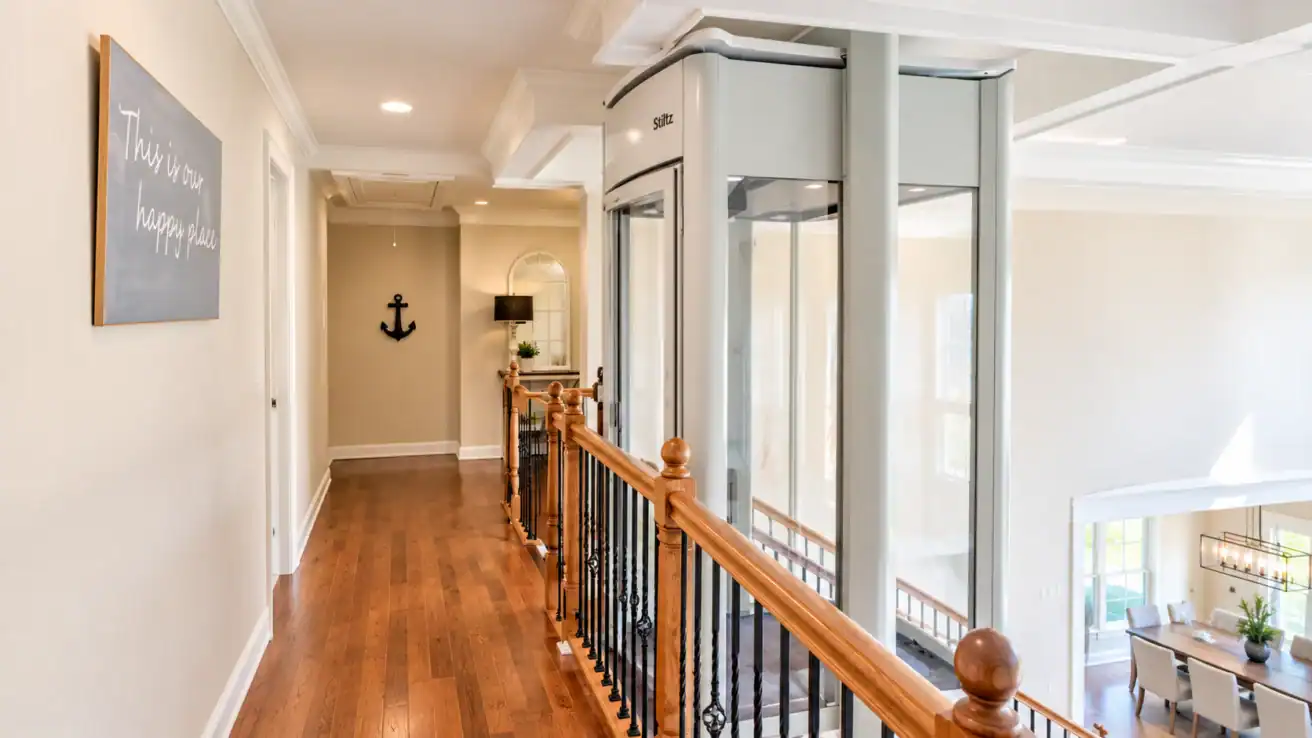
A Stiltz shaftless home lift is a good example of how a different type of elevator can change the scheduling of a project.
Because a shaftless lift has a different structure from a full shafted elevator, its construction is not as time-consuming. The traditional hoistway of a full shafted elevator requires more time to construct. A shaftless lift normally takes less time to construct than a traditional shafted elevator. The main things needed prior to the construction of a shaftless lift are the opening for the lift in the required floor and site preparation.
While the construction of a shaftless lift can be time consuming, that does not mean that a traditional elevator, such as one that has a shaft, can be time consuming as well.
A traditional elevator can also be time consuming for the following reasons:
- the shaft has to be built
- the pit and over-head clearance are not as needed
- doors and surrounding construction do not correspond with the approved drawings
The finish of the cab can also take a long time to construct because the lead time can not be moved forward until drawings and selections are finalized.
The more custom the project becomes, the less useful a generic delivery estimate becomes.
What Usually Slows the Timeline Down?
One delay is changing the project after shop drawings have been approved.
If the finishing of the cab changes or the number of stops changes, the drawings will need to change as well.
Site readiness is also a large issue.
A system can be ready to go, but if the house is not ready to receive the system, the delivery will be delayed.
There are also issues with demolition and rebuilding of parts of the structure around the elevator during a retrofit.
One of the reasons a home elevator built into new construction has a simpler construction path than one inserted into a completed house is because a home elevator constructed into new construction does not encounter the issues with demolition and rebuilding that a retrofit does.
The Holiday Reality: Sometimes an Elevator Is Not the Right Answer
Stairs are an immediate accessibility problem for a parent coming for Thanksgiving. Ordering a home elevator in late October is very tight.
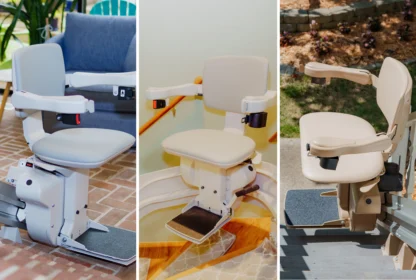
If the parent can transfer into a stairlift chair and the stairs are straight, stairlifts in Baton Rouge should be seriously considered. Straight stairlifts are not as complicated as a residential elevator and generally move through ordering and installation faster.
In the context of the holiday, an immediate solution is needed for getting one person up and down one straight staircase, and if a $40,000+ elevator is not the right answer, then an elevator may not be the right solution for the long term.
If the person needs to remain in a wheelchair, and there are similar horizontal distance obstacles to be dealt with, a vertical platform lift should also be compared.
Urgency matters.
Planning includes choosing the right equipment for the problem.
What is the Cost While Planning the Timeline for a Home Elevator?
Present day home elevator pricing can range from approximately $40,000 to $100,000 depending on the selection.
Modifying an existing home typically costs more than a new construction since the home will require some changes to accommodate the elevator.
The price depends on various factors including:
- Elevator type
- Number of stops
- Drive system
- Cab configuration
- Finishes
- Structural modifications
- Site prep
- Electrical
- Construction
The price and timeline typically align.
Some projects may be more construction intensive while others may require a longer decision making process.
It depends on the priorities of the client if they want the longest access, the fastest, or a combination of several factors.
What if I Have a Specific Deadline?
If you have a surgery, a move, a renovation, or other date that motivates your project, tell me during your first consultation.
I can work backward from that date to develop a plan to help you meet your goal.
What I really want to know is this:
- When do you need it functional?
- Is that date flexible?
- Is there space dedicated for it in the home?
- Are there contractors working in the home?
- Do you need one floor of access or multiple?
- Does the user need to be in a wheelchair?
- Would a stair or platform lift resolve the issue sooner?
A product that is shipped and arrives after the date you needed access does not resolve your issue and may create a greater problem.
What Happens After Installation?
It is crucial to understand that the elevator installation is just the beginning of a lengthy and complicated process.
After the elevator system is installed, it is tested, and the customer is given a demonstration of the operation of the equipment. From this point, maintenance becomes part of ownership.
101 Mobility suggests that the equipment, similar to other mechanical devices, requires routine service to provide safe and continued operation. Our service and support team provides preventative maintenance and repair.
Annual maintenance is suggested to plan for a home elevator. Based on the local jurisdiction’s requirements and the elevator and manufacturer, other service may be necessary.
If the equipment fails to operate later, I don’t want the customer to have to start the process over with a different company and try to figure out the diagnosis of the system on their own.
It is important to consider who will provide the continuing service relationship when selecting the elevator provider.
QUESTIONS AND ANSWERS
How long does it take to install a residential elevator?
A basic home elevator can take one to two days to install, while a traditional elevator can take several working days or require multiple installation visits. The project as a whole takes longer due to the time required for planning, permitting and inspection.
What is the lead time for a residential elevator?
A manufacturer planning reference states a shaftless elevator can take six to eight weeks from order to installation. Traditional elevators may have a lead time of roughly eight to ten weeks after the final construction drawings are approved, before all local permitting, inspection and scheduling issues are resolved.
Can a home elevator be installed before Thanksgiving if I start now?
It’s unlikely a full home elevator project could be completed by Thanksgiving if you start now. However, if your situation is only temporary, and the only obstacle is a straight run of stairs and you can transfer, a better and possibly faster solution may be the installation of a new stair lift at a cost of approximately $2,800 to $8,000 installed.
Is a shaftless elevator faster to install?
A shaftless elevator can generally be installed faster since it doesn’t require traditional hoistway construction. A shaftless home elevator may be installed in as little as one to two days after building preparations are completed.
What can lead to delays in a residential elevator project?
Drawing revisions, structural changes, delays in electrical, site work, and construction completion can all lead to delays. A traditional shafted retrofit can take more construction coordination than a straightforward shaftless installation.
What is the cost of a home elevator in Baton Rouge?
A home elevator generally starts around $40,000. If a retrofit is being done on a completed house, it can be more due to the cost of modifying existing walls, floors, and utilities, as well as modifying the structure of the house.
If you have a time frame in mind, the first thing to do is to schedule a free in-home consultation. I can assess your house, the barriers to access, and the time frame to determine if an elevator, stairlift, or a different product would best assist you.
About the Author
Jonas Boutte is the owner of 101 Mobility of South Louisiana and has hands-on training from accessibility-equipment manufacturers including Bruno, Harmar, Stiltz, Staying Home, EZ-ACCESS, National Ramp, and others. He helps Baton Rouge-area families evaluate home elevators, stairlifts, platform lifts, ramps, and other accessibility solutions and remains involved from consultation through recommendation, installation coordination, and ongoing support.