How I Evaluate Stairlift Fit in Denham Springs: Space, Comfort, and Daily Use
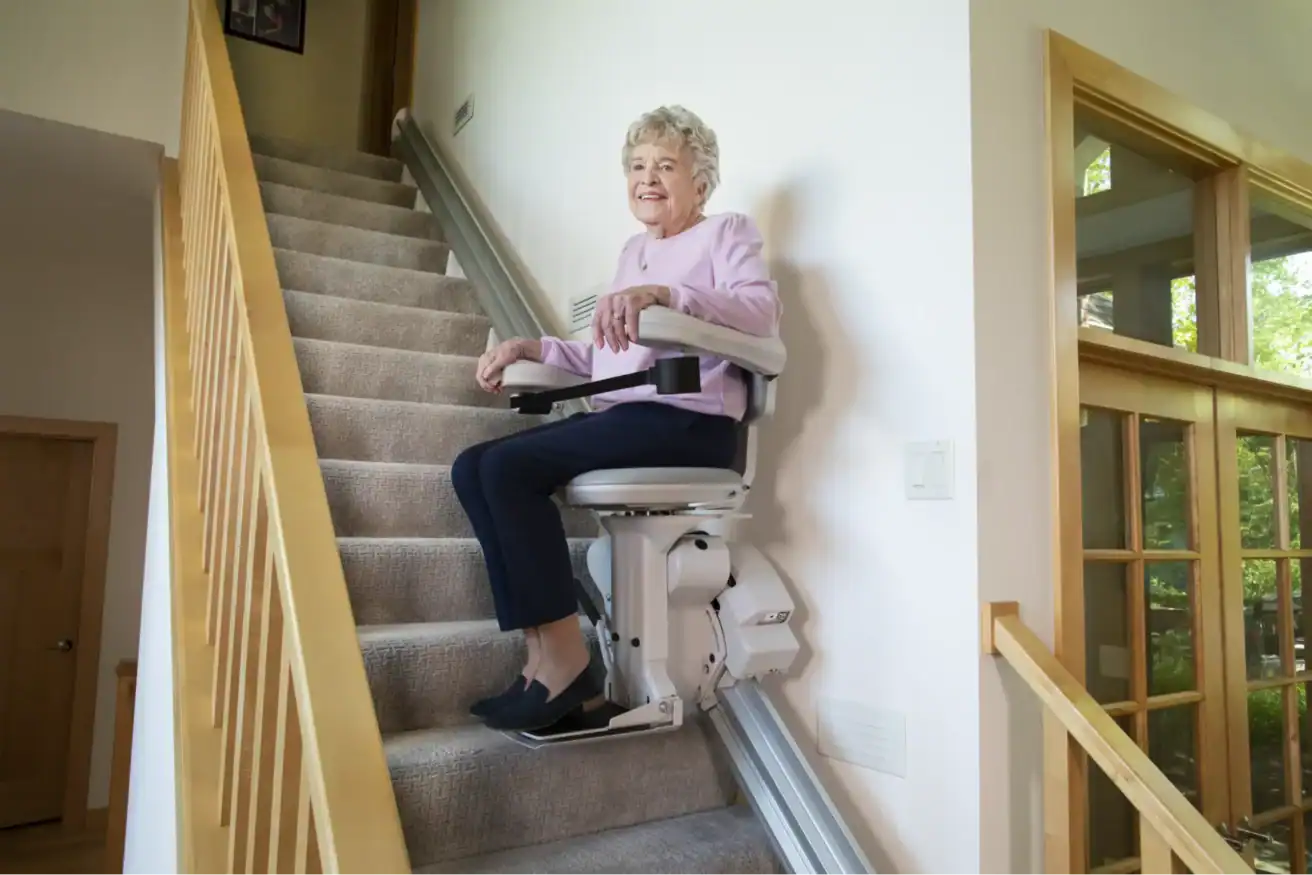
When I evaluate stairlift fit in Denham Springs, I do not begin by choosing a brand or model. I begin with the staircase, the person who will use the lift, and what must happen safely at the top and bottom of every trip.
A stairlift may physically fit on the steps but still be inconvenient or uncomfortable in daily use. The seat could be difficult to enter, the rail could interfere with a doorway, or the parked chair could restrict other family members who use the stairs.
That is why I recommend an in-home evaluation before making a decision. A proper assessment helps determine whether a stairlift fits the space, supports safe transfers, feels comfortable, and remains practical over time.
Key Takeaways
- Staircase shape determines whether a straight or custom-curved rail is required.
- Stair width alone does not confirm fit; folded clearance and household traffic also matter.
- The top and bottom landings must provide safe space for entering and leaving the chair.
- Seat height, armrest width, footrest position, and controls should fit the individual user.
- Battery operation, charging locations, and parking habits affect everyday reliability.
- Long-term service should be considered before installation—not after a problem develops.
What Determines Stairlift Fit in Denham Springs?
A good stairlift fit is the combination of four elements:
- The staircase: Its shape, width, length, incline, turns, and landings.
- The user: Their height, strength, balance, seated position, and transfer ability.
- The household: Doors, hallways, furniture, caregivers, pets, and other people using the stairs.
- The equipment: Its rail configuration, folded profile, controls, power system, seating options, and service requirements.
During a stairlift assessment in Denham Springs, I examine all four. That gives me a more complete picture than measurements alone.
The goal is not simply to install a chair that travels up and down the steps. The goal is to create a practical route that the person can use comfortably and confidently every day.
My Seven-Part Stairlift Assessment
1. I Identify the Staircase Shape
The first question is whether the staircase has one straight, uninterrupted run or includes curves, turns, intermediate landings, or changes in direction.
A straight stairlift is generally intended for a staircase without turns. A curved stairlift uses a custom rail designed around bends, corners, and landings.
I also look beyond the most obvious turn. A staircase may appear straight but have:
- A small step or offset at the bottom
- A doorway near the first tread
- An obstruction at the top
- A narrow transition onto the landing
- A rail that must extend past the stairs to create a safer exit point
These details influence both product selection and rail design.
2. I Measure Stair Width and Household Clearance
Stair width helps determine whether the user can ride without contacting the wall, railing, or opposite side of the staircase. However, it is not the only clearance measurement that matters.
I consider:
- The user’s seated knee position
- The chair’s open and folded dimensions
- Rail placement on the steps
- Existing handrails
- Trim, ledges, or windowsills
- Whether another person must continue walking on the stairs
- Whether a caregiver needs room to assist nearby
Many stairlifts include folding seats, armrests, and footrests. These features can help preserve walking space when the lift is parked, but I still check the actual household routine. A staircase used frequently by several people may require different planning than one used only occasionally.
3. I Evaluate Both Landings
Safe stairlift use begins and ends at the landings.
At the bottom, I check whether the user can approach the chair without stepping around the rail, backing into a hallway, or blocking a nearby doorway. At the top, I look for a stable location where the seat can swivel, and the user can stand without facing the open staircase.
Important landing considerations include:
| Assessment Area | What I Check |
|---|---|
| Bottom approach | Clear path to the chair and enough room for a walker or cane |
| Top exit | Stable floor area away from the stair opening |
| Seat rotation | Space for the chair to swivel into a safer transfer position |
| Door clearance | Whether the rail or parked chair interferes with a door |
| Hallway access | Whether household traffic can continue safely |
| Rail ending | Whether a folding or extended rail may be appropriate |
Landing clearance is particularly important because getting on or off the chair usually requires more movement than riding it.
4. I Check Seat Comfort and Body Position
Comfort is not an optional upgrade. If a seat feels unstable, cramped, too high, or too low, the user may avoid using the lift or develop unsafe habits.
I evaluate:
- Seat height
- Seat width and depth
- Armrest spacing
- Footrest size
- Knee clearance
- Back support
- Ability to sit upright
- Ability to reach the controls
- Ability to fasten and release the seat belt
The correct seat height should allow the user to approach, sit, and stand with as much control as possible. Adjustable seating components can be especially helpful when a standard position does not match the user’s height or mobility.
I also ask the person to consider how the chair feels—not simply whether they can fit into it.
5. I Review Controls, Charging, and Power
A stairlift should have controls the user can operate consistently. Many models use an armrest-mounted switch or control that must be held while the lift travels.
I confirm whether the user can:
- Reach the control comfortably
- Maintain pressure throughout the trip
- Understand the direction of travel
- Use the seat belt
- Recognize normal operating sounds
- Respond if the lift stops
- Use a remote call/send control when needed
I also review where the lift charges and where it should be parked. Many stairlifts use batteries that remain charged through designated charging points or sections of the rail. Battery operation may allow limited continued use during a household power outage, but the lift still needs to be parked and charged correctly.
The exact power and charging arrangement depends on the selected model and staircase configuration.
6. I Assess Transfers and Mobility Aids
The ride itself may be simple. Transfers often require more careful evaluation.
I ask how the person currently:
- Sits down and stands up
- Turns before sitting
- Maintains balance
- Uses a cane or walker
- Moves after reaching the other floor
- Receives assistance from a caregiver
- Manages fatigue, pain, or weakness at different times of day
A swivel seat can help position the person away from the staircase before standing. However, the user still needs a workable transfer plan at both ends.
I also ask where mobility aids will be kept. Someone who uses a walker may need one on each floor unless a caregiver regularly moves it.
The National Institute on Aging recommends addressing home hazards as part of a broader approach to preventing falls and fall-related injuries. A stairlift can address stair access, but surrounding walkways, lighting, flooring, and transfer areas should also be considered.
7. I Plan for Installation, Service, and Future Needs
Good stairlift installation planning includes what happens after the equipment is installed.
I discuss:
- Who will operate the lift
- How frequently it will be used
- Whether mobility needs are changing
- Whether a caregiver may need to assist
- How household members will share the staircase
- Who to contact for service
- What warranty and support are included
- Whether replacement parts can be obtained
- Whether the equipment can be adjusted later
I prefer to recommend a solution that supports both present needs and reasonably foreseeable changes. That does not mean buying unnecessary features. It means avoiding a configuration that could quickly become impractical.
Customers can review available stairlift products and learn about 101 Mobility’s service and support before making a final decision.
Straight vs. Curved Stairlift: How I Decide
The difference between a straight vs. curved stairlift is determined mainly by the rail path—not by which design the customer prefers.
| Factor | Straight Stairlift | Curved Stairlift |
|---|---|---|
| Staircase shape | One straight, uninterrupted flight | Turns, bends, corners, or intermediate landings |
| Rail | Manufactured in straight sections | Custom designed for the staircase |
| Measurement needs | Standard length and site measurements | Detailed staircase mapping and custom measurements |
| Landing travel | Usually serves one flight | Can continue around turns or across landings |
| Installation planning | Generally more standardized | Requires custom rail design and fabrication |
| Customization | Seating and rail options may be available | Rail path is customized in addition to seating options |
| Best fit | Simple straight staircase | L-shaped, U-shaped, spiral, or multi-flight staircase |
A staircase with a landing does not automatically require a curved rail. In some homes, separate straight lifts may be considered. However, that arrangement requires the user to transfer between chairs at the landing.
I evaluate whether that transfer would be safe and practical before presenting it as an option. For many users, continuous travel on a custom-curved rail may provide a more manageable route.
Stairlift Installation Planning for Everyday Use
A stairlift becomes part of the household, so I look at the entire daily environment.
Doors and Walkways
A rail placed near the bottom of the stairs can affect a doorway or narrow hallway. Depending on the equipment and layout, a manual or powered folding rail may help preserve access.
Other Stair Users
I check whether the folded chair and rail leave adequate space for family members to use the stairs. Existing handrails and the needs of other residents should remain part of the plan.
Parking Position
The chair should have a clear, convenient parking location where it can charge properly without creating an obstruction.
Pets and Children
Households with pets or children may need additional discussion about remotes, moving components, and keeping the stairway clear.
Caregiver Assistance
When a caregiver assists with transfers, the landing needs enough space for that person to stand securely without leaning over the staircase.
Everyday Objects
Laundry baskets, walkers, canes, oxygen equipment, and other items may need to move between floors. A stairlift transports a seated person; it does not automatically solve the movement of every household item.
These practical details often determine whether an installation feels natural or disruptive after the first few weeks.
Questions I Ask During a Stairlift Assessment in Denham Springs
A useful consultation includes questions about the home and the person using the equipment.
I commonly ask:
- Which staircase is creating the greatest difficulty?
- Does the user need access to the entire staircase or only one flight?
- Can the user sit down and stand up without assistance?
- Is one side stronger or easier to transfer from?
- Does the user rely on a cane, walker, or caregiver?
- Are there doors at either end of the stairs?
- Who else regularly uses the staircase?
- Is the need expected to be temporary, progressive, or long term?
- Has the user experienced dizziness, weakness, or previous falls?
- Who will handle maintenance and service calls?
The answers help me distinguish between a product that technically fits and one that supports real daily use.
When a Stairlift May Not Be the Best Fit
A stairlift is an effective solution for many people who can transfer safely into a seated position. It may not be the best option for every home or mobility need.
Another solution may deserve consideration when:
- The user cannot transfer safely to and from the seat
- Remaining in a wheelchair is necessary
- A caregiver must physically lift the user
- The staircase cannot provide adequate clearance
- The destination floor is not accessible after leaving the chair
- Mobility needs are changing rapidly
- Several household members need wheelchair access
- A broader long-term accessibility plan is required
Depending on the situation, alternatives could include a platform lift, home lift, patient transfer equipment, or changes to how rooms are used.
101 Mobility provides several stair access solutions and can evaluate whether a stairlift or another accessibility product better matches the home.
Frequently Asked Questions
How wide does a staircase need to be for a stairlift?
There is no single width that applies to every model and user. The assessment must account for the rail, open chair, user’s knees, folded chair dimensions, handrails, and space needed by other people using the staircase.
Can a stairlift fit stairs with a turn?
Yes. A custom-curved stairlift can be designed for many staircases with turns, bends, or intermediate landings. The staircase must be measured carefully so the rail follows its specific configuration.
Is a stairlift attached to the wall?
Most residential stairlift rails are supported by brackets or feet secured to the stair treads rather than being suspended from the wall. The precise installation method depends on the product and staircase.
Will a stairlift operate during a power outage?
Many stairlifts are battery-operated and may complete a limited number of trips during an outage when their batteries are properly charged. Capacity and operation vary by model, so the power system should be reviewed during the consultation.
What happens during an in-home stairlift assessment?
I inspect and measure the staircase, examine both landings, discuss transfers and mobility aids, evaluate seating and controls, identify possible obstructions, and explain suitable equipment options.
How much does a stairlift cost?
Pricing depends on staircase geometry, rail type, model, seating options, weight capacity, power features, and installation requirements. The stairlift pricing guide explains the main factors, but an in-home assessment is needed for an accurate recommendation and quote.
Who services the stairlift after installation?
Service arrangements should be confirmed before purchase. I recommend asking who performs repairs, what warranty applies, how replacement parts are handled, and whether the provider supports the installed equipment locally.
Find the Right Stairlift Fit for Your Home
The right stairlift should fit more than the staircase. It should fit the user’s body, transfer ability, household routine, landing space, and long-term needs.
My role is to examine those factors, explain the available options clearly, and recommend a solution based on how the equipment will actually be used.
For a professional evaluation of stairlift fit in Denham Springs, contact 101 Mobility of Baton Rouge and Lafayette and book a free consultation.
About the Author
Jonas Boutte is the owner of 101 Mobility of South Louisiana. With hands-on training from leading accessibility-equipment manufacturers, he helps customers evaluate stairlifts, platform lifts, home elevators, ramps, and other mobility solutions. He remains involved from the initial consultation through product selection, installation coordination, and long-term customer support.