Lift Operation During a Power Outage
Because stairlifts are battery powered, they can operate during a power outage. This is not the case with home elevators and some wheelchair lifts. The type of wheelchair lift and home elevator will determine the method of operation during a power outage. Some will only lower the wheelchair during a power outage, while others can raise and lower the wheelchair using the battery.
During hurricane season, which is from June through November in the state of Louisiana, stair lifts, like other devices, should be included in one’s plan during a power outage. Other devices to consider include battery powered lights, medications, and food.
At 101 Mobility of New Orleans, we can also explain how the backup system works on the specific equipment installed in your home.
Are Stairlifts Powered by Electricity?
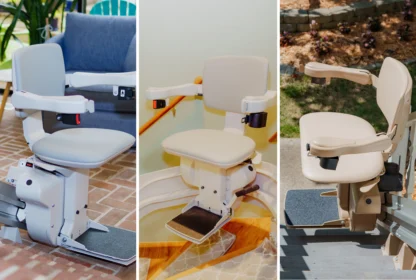
Stairlifts in New Orleans operate using electricity and batteries. The batteries are charged by the electricity in the home. If there is a power outage, the batteries will power the stairlift for a period of time. Newer stairlift models charged using battery power will operate for an extended period of time without electricity.
Stairlifts charge their batteries using the electricity in the home. Charging can occur while the stairlift is parked in a designated location. Depending on the location of the rails, other charging systems can charge the battery.
An empty chair left away from a charging location may lose charge over time, particularly before a storm.
Stairlifts, in general, can provide 10 to 20 trips with backup battery power, according to 101 Mobility.
This is merely a general guide.
How long a battery will last is determined by numerous factors, including the age of the battery, the model of the stairlift, the weight of the user, the distance the stairlift travels, the temperature, and the condition of the battery. Some stairlifts are designed to provide more than 20 trips with backup battery power. For instance, the Harmar Pinnacle stairlift can provide backup battery power to provide 40 trips during a power outage.
I would not expect to get the maximum number of trips.
I would want to ensure the stairlift battery is fully charged before a storm for use if it is necessary.
How does a vertical platform lift (VPL) function during a power outage?
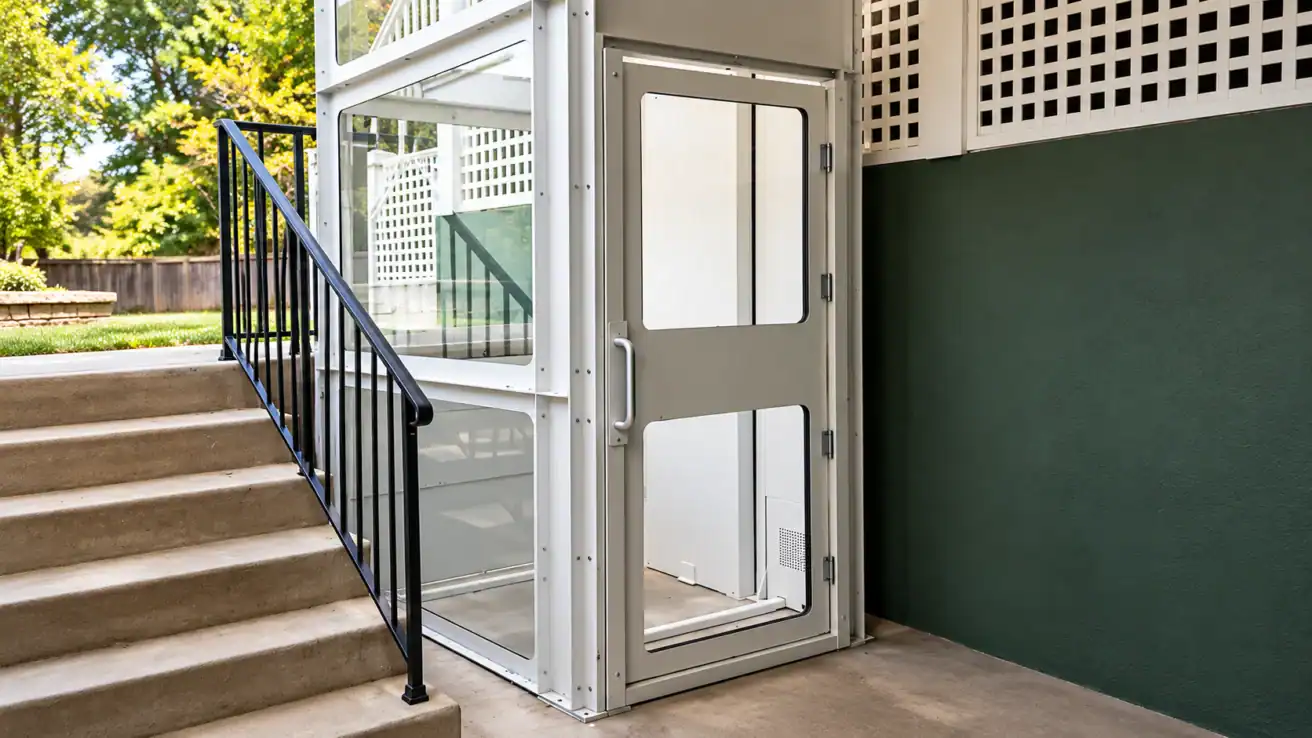
The operation of a vertical platform lift during a power outage depends on the model of the VPL. Some VPLs are designed with a battery backup that allows the lift to function to lower the platform in the event of a power outage. Other VPLs, during a power outage, can operate the lift to raise and lower the platform. Still other VPLs are primarily battery operated, and, during a power outage, the lift function will cease after the battery is fully drained.
I wouldn’t tell just any VPL owner that their lift operates the same way as a traditional hydraulic VPL during a power outage because it doesn’t.
The model and the backup system need to be defined to gain a full understanding of how the system operates.
What happens to a home elevator during a power outage?
Just like a home elevator, a traditional hydraulic home elevator also varies by manufacturer and drive system.
Also like a home elevator, many residential elevators manufactured recently have some form of backup power or an emergency lowering system.
If a residential elevator is designed primarily for emergency lowering, the elevator will not continue to operate normally between floors during a power outage. The backup system is designed to move the elevator car to the nearest landings so the occupants can step out and exit the cab.
There may be other features of the elevator that are powered by a battery, such as a system to provide cab lighting, an emergency telephone, or an alarm.
Emergency lowering may be accomplished by an attendant or by other occupants of the cab via a manual control.
A through-floor home lift may be equipped with a backup power system to lower the lift after the building’s power goes out.
It is best to analyze each system to fully comprehend its capabilities.
I am always happy to walk through your system to explain backup capabilities.
Before-the-Storm Checklist for Your Lift
| Before the Storm | What to Do |
|---|---|
| Charge your Devices | Leave battery powered equipment at its charging station and check that it is charging correctly. |
| Check Your Options | Find out what the backup function is for your stairlift and/or VPL and/or elevator. |
| Decide on a Landing | Decide what floor or landing would be the most helpful if there is a loss of power. Be sure to follow manufacturer’s instructions for parking and charging. |
| Find Controls | Find out where the emergency controls are on your equipment. |
| Do Not Take Chances | Do not use an unfamiliar control to perform a manual lowering function. |
| Equipment Should Not Be Blocked | Stairs and landing areas should be clear. |
| Service Information | Make important information about your product service and service contacts available offline. |
| Think about Alternative Means of Transportation | A backup battery would not be an adequate means of transportation in an emergency. Follow local evacuation and storm mort duties. |
What I Would Not Do
I would not use a battery powered lift repeatedly to perform transportation functions during a long term power outage. Batteries have a finite charge and the lift should be used only for transportation when the charge is most critical.
I would not turn on any of your stairlifts, platform lifts, elevators, controllers, motors, charging devices, or any other electrical/electronic equipment that has come in contact with floodwater, and has now been submerged in it.
Floodwater can rise to the levels where it can make electrical connections and controls. It can also deposit dirt and debris onto and into equipment.
Equipment that is outside can also have the corrosion at contacts, terminals, and other moving and stationary parts.
Equipment that has come in contact with flood water should not be used until it has been inspected.
After a major storm there will likely be a need for inspections of most equipment. Items that would likely require adjustment and inspection would include:
- Controls and Switches
- Motors
- Drive Components
- Electrical Connections
- Wiring
- Gates and Interlocks
- Rails and Platforms
- Drainage
- Visible Corrosion
- Moving Parts
- Lower Level Equipment
- Elevator Pits
- Debris
The outside of a control box may look dry, but it could be shorting or have internal damage that is not obvious.
To make sure your equipment is operational and safe to use, contact our service and support team for assistance.
What equipment do you have? What happened? Did any water get into the equipment? What is the status of the equipment now?
The information above will help us develop a plan.
Some cases may require a service visit, but due to unsafe road conditions, we may not be able to access your location.
In those cases, we would wait for the conditions to improve so that our service and support team may evaluate your equipment.
Equipment may also need maintenance or repair.
Whether you are interested in new equipment and are considering power outages as part of your decision, we invite you to schedule a no cost, no obligation, in-home consultation. During this consultation, we may review the outage operation of the equipment.
If you have additional questions about power outages and our equipment, please contact us.
Will a VPL work if the power goes out?
Many factors affect the answer to this question. Some VPLs lower only under power loss. Others offer full power backup. Still others use batteries to power the lift for normal operation. The type of model in question affects the answer.
What happens to a home elevator if the power goes out?
Like a VPL, some home elevators use a battery backup to lower the car to a designated floor. Other features may include emergency lighting and a telephone.
Can I use my lift after it has been through a flood?
Do not use equipment that has been flooded to operate any of its mechanical or electrical functions until it has been inspected. Floodwater affects the mechanical and electrical components, even if the equipment appears to be dry.
Who do I contact if my stairlift is not working and was floodwater was involved?
Contact the Service Department at 101 Mobility. Provide the model number and describe if there was a power outage, storm, or flood and if the equipment or its wiring was submerged.
About the Author
Jonas Boutte is the owner of 101 Mobility of South Louisiana and has hands-on training from mobili0ty and accessibility manufacturers including Bruno, Harmar, Stiltz, Staying Home, EZ-ACCESS, National Ramp, and others. He helps Greater New Orleans families evaluate stairlifts, platform lifts, home elevators, ramps, and other accessibility equipment and remains involved through consultation, installation coordination, and ongoing support.