Caregiver Back Injury Prevention: How to Protect Your Body While Caregiving
Quick Takeaways:
- Caregiver back injuries usually build up from repeated small strains, not one dramatic incident.
- Keep the load close, bend at the knees, and avoid twisting during any transfer.
- If a transfer requires real physical strain, that’s the signal to bring in equipment, not push through it.
- Patient lifts, stairlifts, and vehicle lifts remove the lifting entirely rather than just reducing it.
- A home assessment can pinpoint exactly where you’re doing the most manual lifting.
Caregiver back injury prevention usually comes up after the strain has already started. Getting a parent in and out of bed, on and off the toilet, and into a car adds up over months of repeated small movements, even when no single lift ever feels like a dramatic injury in the moment.
Better technique helps. Equipment that removes the lifting entirely helps more. Here’s both, starting with the basics.
Why Caregiver Back Injuries Are So Common
Most caregiver injuries aren’t the result of one bad lift. They’re the result of dozens of slightly awkward transfers, often in cramped bathrooms or tight bedroom layouts, done under time pressure before work or between other responsibilities. None of that feels dangerous in any single moment, which is exactly why it goes unaddressed until something finally gives out.
For caregivers juggling a full-time job, their own children, and a parent’s needs, this pattern can be particularly easy to overlook. There’s rarely a pause to notice a strained lower back before rushing to the next transfer, the next appointment, or the next work call. Body mechanics for caregivers matter here because the injury isn’t caused by any one moment of poor form. It’s caused by doing the same imperfect movement dozens of times a week, for months, without ever adjusting the underlying setup. By the time the pain shows up, it’s usually not a new problem. It’s an old one that finally got loud enough to notice.
Body Mechanics That Actually Reduce Strain
The following is general guidance, not a substitute for personalized instruction. A physical or occupational therapist can assess your specific situation and teach technique suited to your parent’s actual mobility level.
Safe Transfer Techniques for Getting Someone Up
These techniques are grounded in the same safe patient transfer principles taught by physical and occupational therapists. While they aren’t a substitute for hands-on training, they can meaningfully reduce the strain on your back and shoulders during the transfers you perform every day:
1. Keep the person as close to your body as possible during any lift or transfer.
2. Bend at the knees and hips, not at the back, and let your legs do the work.
3. Avoid twisting your torso while lifting. Turn your whole body, feet included, instead.
4. Use a gait belt around the waist for stability rather than gripping under the arms.
Get personalized technique guidance from a physical or occupational therapist rather than relying on general tips alone.
When to Stop Trying to Do It Manually
Good technique buys you time, not immunity. There’s a point where a transfer stops being something you can safely manage on your own, no matter how careful your form is. If a transfer leaves you breathless, straining, or aching afterward, it’s a clear sign your body is taking on more than it should. The same is true if your parent can no longer bear meaningful weight through their legs, or if a transfer that used to take a few seconds now involves bracing, pausing, or asking them to help in ways they physically can’t anymore. Dedicated caregivers tend to push through this stage longer than they should, mostly because stopping to bring in equipment feels like one more thing to arrange on an already full plate. But this is exactly the point where a patient lift for home caregiving stops being optional and starts being the thing that keeps you able to keep caregiving at all.
Equipment That Removes the Lifting Entirely
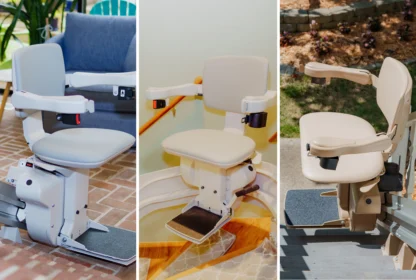
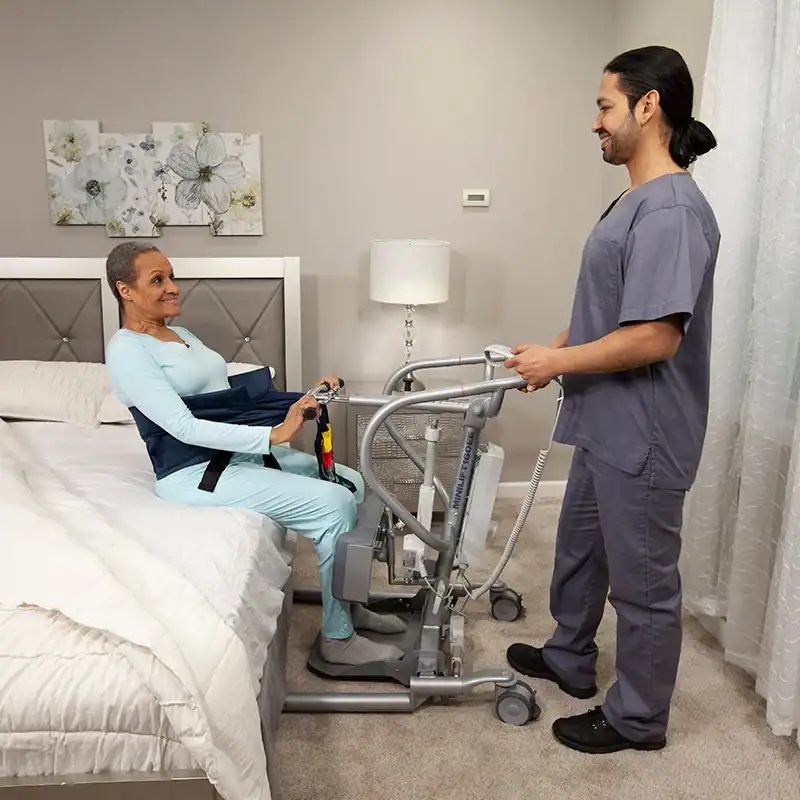
A patient lift handles transfers mechanically instead of relying on your back and shoulders. A stairlift eliminates the need to help someone up and down stairs by hand. A vehicle lift removes the awkward, often unsupported lift of getting someone into a car.
A patient lift, in particular, is often the single highest-impact piece of equipment for a caregiver managing repeated transfers in and out of bed or a wheelchair. Rather than asking your back and shoulders to support someone else’s body weight, 101 Mobility’s patient lift options does that work mechanically, every time, regardless of how tired you are or how rushed the moment feels. Installation comes from local, professionally trained technicians, not a box you have to assemble and figure out yourself. The same logic applies to stairlifts and vehicle lifts: each one targets a specific transfer that would otherwise put outsized strain on your body, one flight of stairs or one twist into a car seat at a time. Covering all three means the highest-risk moments in a caregiving day, not just the most visible ones, get addressed.
There’s also a practical, less obvious reason to make this move sooner rather than later: if you get hurt, the need for caregiving doesn’t stop, it just gets harder for everyone. A caregiver working through their own back injury is a caregiver who has to say no to help they used to give, or who ends up needing outside care themselves. Equipment that removes the physical strain up front protects the whole arrangement, not just your own comfort.
None of this is about giving up on hands-on caregiving. It’s about protecting your own body so you can keep doing it long term without ending up injured yourself.
Get an Assessment Focused on Reducing Physical Strain
A home assessment can look specifically at where you’re doing the most manual lifting, whether that’s the bathroom, the bedroom, or the car, and recommend equipment to remove it, rather than just observing your technique and sending you on your way.
If you’re not sure where to start, that’s exactly what a consultation is for. A member of your local 101 Mobility team can walk through your home, and your daily caregiving routine, to pinpoint exactly where you’re putting your body at risk and which equipment would remove that risk fastest. You don’t need to arrive with all the answers. Schedule a free consultation and leave with a clear, specific plan instead of more guesswork.
Frequently Asked Questions
What is the most common cause of caregiver back injuries?
Repeated small strains from transfers done at awkward angles, often in tight bathrooms or bedrooms, add up over time. It’s rarely one dramatic incident, which is part of why the injury risk gets underestimated.
When should I stop trying to transfer my parent manually?
If a transfer requires real physical strain, or your parent can no longer bear much of their own weight, that’s the point to bring in equipment like a patient lift rather than continuing to push through it.
Does a patient lift actually prevent caregiver injuries?
Yes. A patient lift handles the mechanical work of a transfer, which removes the repeated strain on a caregiver’s back and shoulders that builds up over months of manual lifting.
Should I see a doctor if my back already hurts from caregiving?
If you’re already experiencing pain, that’s worth addressing with a doctor or physical therapist directly rather than waiting to see if it resolves on its own, especially since ongoing caregiving will keep putting the same strain on the injury.
Caregiver back injury prevention works best as a combination: better technique in the moment, and equipment that removes the highest-risk transfers from the equation entirely. Protecting your own body is what makes long-term caregiving sustainable.
| 101 Mobility’s home assessments identify exactly where you’re doing the most manual lifting and recommend equipment to remove it. Schedule a free home assessment with 101 Mobility to find equipment that protects your body while caregiving. |